

TL;DR
“Product sampling platform” covers three distinct categories in the UK: retailer review generators, digital sampling platforms, and enterprise UGC syndication tools. If your goal is verified reviews on Tesco.com or Sainsbury’s, only two platforms (Brand Allies and CheckoutSmart) post reviews directly onto UK grocery PDPs. Global platforms like Bazaarvoice and PowerReviews are built around American retail syndication networks that UK grocers don’t accept. This guide breaks down all ten platforms by what they actually solve, what they cost, and which fits your brand.
At-a-Glance Comparison Table
| Platform | Primary Use | Pricing Model | UK Grocery PDPs? | Best For | Contract |
|---|---|---|---|---|---|
| Brand Allies | UK retailer reviews | Pay-per-verified-review | ✅ Direct | UK FMCG brands, NPD review seeding | No lock-in |
| CheckoutSmart | UK retailer reviews | Quote-based | ✅ Direct | Enterprise FMCG, always-on monitoring | Custom |
| Sampl | Sampling + data | Quote-based (per campaign) | ❌ Indirect | In-home trial + CRM growth | Per-campaign |
| SoPost | Sampling + data | Quote-based | ❌ Indirect | Beauty/CPG sampling | Per-campaign |
| Shopmium | Cashback trial | Brand-funded cashback | ❌ No | Mass trial/cashback | Per-campaign |
| BzzAgent | Word-of-mouth | Product-only compensation | ❌ No | Low-cost WOM amplification | Per-campaign |
| Influenster | Community sampling | Part of Bazaarvoice | ❌ Indirect | Beauty/lifestyle UGC | Varies |
| Home Tester Club | Product testing | Brand-funded | ❌ No guaranteed placement | Household, food, personal care | Per-campaign |
| Bazaarvoice | Global UGC/syndication | $10K–$200K+/yr enterprise | ❌ Syndication only | Global brands, US retail syndication | 3-year typical |
| PowerReviews | US-focused UGC | $79–$249+/mo SaaS | ❌ Limited UK | Mid-market US brands | Annual |
How We Categorised These Platforms
Most product sampling platform comparison UK articles throw every tool into a single list, as if a cashback app and a $200,000/year enterprise syndication platform solve the same problem. They don’t.
The UK FMCG market has a specific challenge that makes it different from the US: Tesco, Sainsbury’s, Asda, Morrisons, and Ocado do not accept syndicated reviews from external platforms. A review must be posted natively by a verified purchaser. This single fact eliminates most global platforms from the conversation if your goal is retailer PDP reviews.
We’ve grouped the ten platforms into three categories based on what problem they actually solve:
Category 1: UK Retailer Review Generators. These platforms get verified reviews posted directly onto UK grocery retailer product pages. They solve the review gap problem.
Category 2: Digital Sampling and Trial Platforms. These platforms ship physical samples or manage cashback trials to drive awareness, collect first-party data, and generate word-of-mouth. They solve the trial and awareness problem.
Category 3: Enterprise UGC and Syndication Platforms. These are software platforms that collect, moderate, and syndicate reviews across retailer networks. They solve the review infrastructure problem, primarily for American retail.
Understanding which category you need is the first decision. Everything else follows from that.
Category 1: UK Retailer Review Generators
These are the only platforms in this comparison that place verified reviews directly onto UK grocery retailer websites.
1. Brand Allies

Best for: UK FMCG brands needing verified reviews on grocery retailer PDPs, especially for NPD launches and review recency gaps.
Brand Allies is a managed-service shopper advocacy platform that uses a 250,000+ UK shopper community to buy, try, and review products on retailer websites including Tesco, Sainsbury’s, Ocado, Asda, Morrisons, Boots, and Holland & Barrett.
Pricing:
- Pay-per-verified-review model
- No SaaS subscription, no platform fees, no syndication charges
- No multi-year lock-in
- Demo only (no free trial)
For a deeper breakdown of what review generation costs across providers, read this review generation pricing guide.
Key features:
- Direct review placement on all major UK grocery retailer PDPs
- Shoppers are pre-verified and geo-indexed, enabling activation in hours rather than weeks
- Three-in-one service stack covering reviews, in-store compliance audits, and discreet product withdrawals
- Backed by Redwigwam’s 10-year track record in workforce management
- Client portfolio includes Coca-Cola, Strong Roots, Little Moons, Bol Foods, and Jordans
Tradeoffs:
- No cross-retailer review syndication (a review on Tesco stays on Tesco)
- Less than two years of trading history under the Brand Allies brand
- No published named case studies yet
Why it matters for UK grocery: The average grocery review rate sits at just 0.1% to 0.3%, compared to 2–5% on Amazon. Products with fewer than 20–30 reviews fall below what researchers call the “credibility threshold,” where shoppers simply don’t trust the product enough to buy. Brand Allies solves this specific gap with verified UK purchasers posting on the retailer sites that matter.
Book a demo with Brand Allies →
2. CheckoutSmart

Best for: Large FMCG manufacturers wanting automated, always-on review monitoring and replenishment across UK grocery.
CheckoutSmart has been operating in the UK digital shopper activation space since 2014 and is the most established player in UK grocery review generation. Their SmartReputation Always On solution continuously monitors SKUs across major retailers and automatically delivers new verified reviews when they’re needed.
Pricing:
- Quote-based, not publicly available
- Enterprise positioning suggests higher minimums than campaign-based alternatives
Key features:
- Always-on monitoring against three benchmarks: minimum 30 reviews per SKU per retailer, top 3 reviews no older than six months, and top 3 ratings within 1.5 stars of the average
- Coverage across Asda, Morrisons, Ocado, Sainsbury’s, and Tesco
- Also offers SmartActivation (cashback-based trial platform)
- Claims ROI of 6x to 12x at gross margin level
Tradeoffs:
- Higher-touch enterprise positioning may not suit smaller brands or one-off campaigns
- No published pricing makes budgeting difficult without a sales conversation
- One App Store reviewer noted an “egregious and unfair 5% withdrawal fee” on the consumer-facing cashback side
Real-world perspective: Brand-side clients praise CheckoutSmart’s proactive account management. One client noted it was “a real eye-opener” working with the platform, suggesting the data insights alone justify engagement for brands with large SKU portfolios.
Category 2: Digital Sampling and Trial Platforms
These platforms focus on getting products into consumers’ hands. They drive trial, collect data, and can generate reviews, but those reviews don’t typically land directly on UK grocery retailer PDPs.
1. Sampl
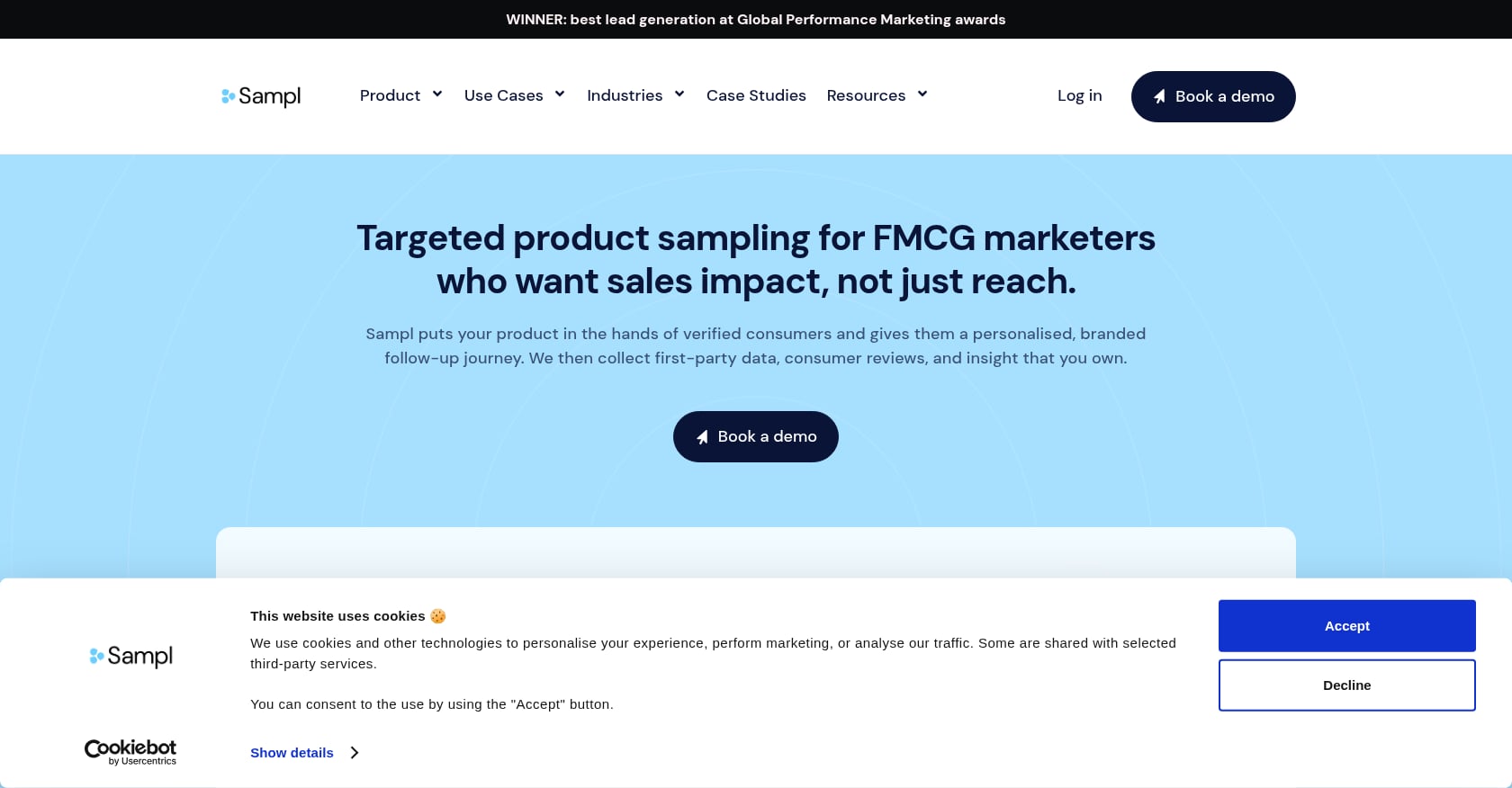
Best for: Brands wanting measurable in-home sampling campaigns with full-funnel data, especially in beauty, food/drink, pet, and household categories.
Sampl is a digital sampling and data insights platform founded in 2019. It helps FMCG and CPG brands deliver samples to real shoppers, gather reviews, collect first-party data, and measure what happens after trial.
Pricing:
- Quote-based, tied to product size, sample volume, and tracking features
- Tiered options for different campaign sizes
- Not publicly disclosed
Key features:
- Used by 250+ brands including Nivea, Estée Lauder, and Royal Canin
- Campaigns generate an average of 1,200 verified reviews per 10,000 samples distributed
- Purchase rates of over 10% post-trial, compared to 2–3% for traditional couponing
- Operates across 35 markets including UK, Europe, North America, and Australia
Tradeoffs:
- Not a UK grocery review-specific solution
- Reviews generated live on the Sampl platform or integrate with Bazaarvoice/PowerReviews, not directly on Tesco.com
- Pricing opacity makes comparison difficult
2. SoPost
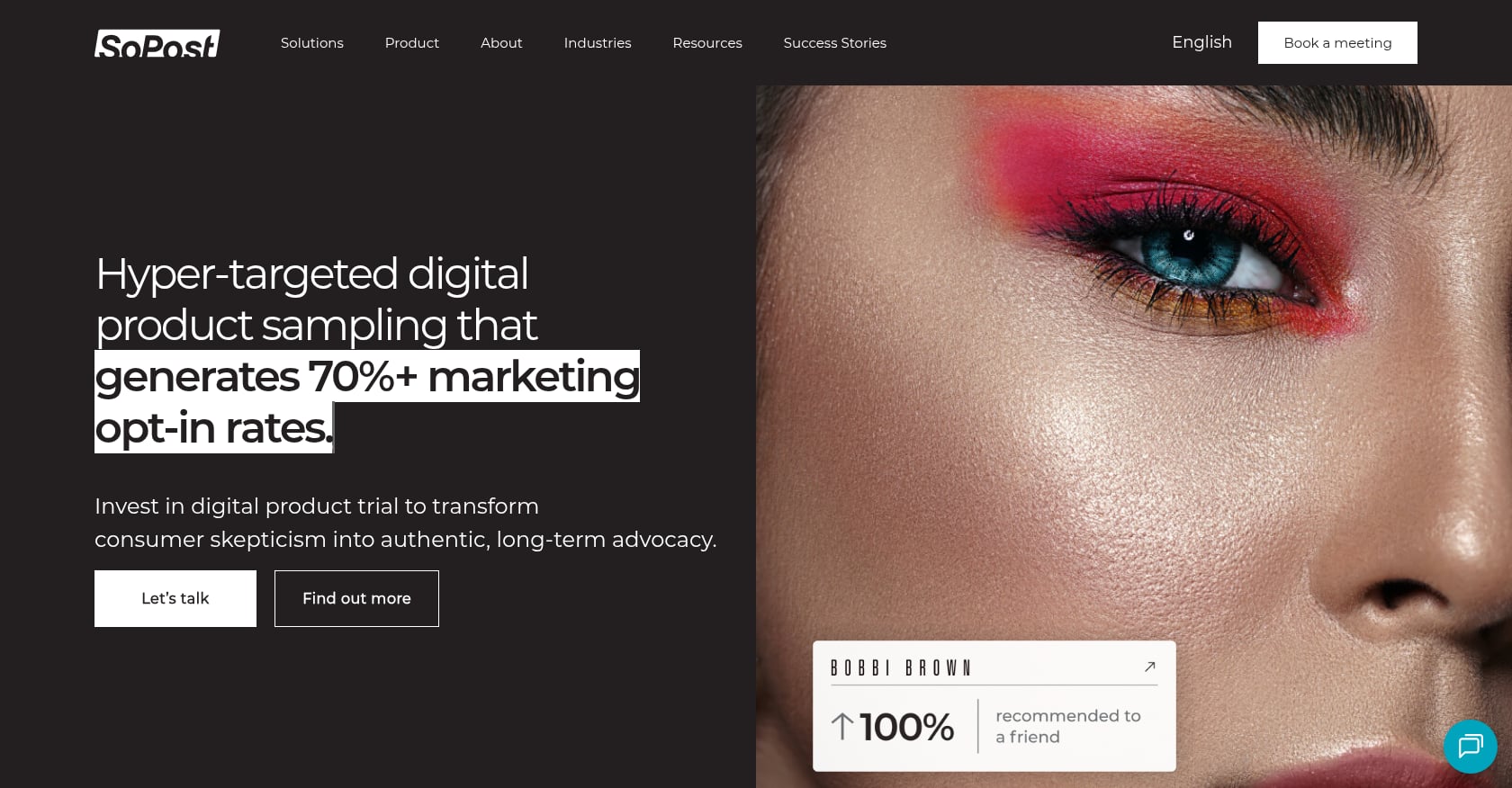
Best for: Beauty, personal care, and premium CPG brands wanting digitally-targeted sample-to-home campaigns with strong data capture.
Founded in 2012 in Newcastle upon Tyne, SoPost serves over 350 global brands with a data-driven approach to product sampling.
Pricing:
- Quote-based per campaign
- Not publicly disclosed
Key features:
- Personalisation engine built on billions of data points
- Clinique achieved a 15% post-trial purchase rate using SoPost’s technology
- Community campaigns generate average review and feedback rates of 36%
- Integrates with Bazaarvoice, PowerReviews, and Yotpo for review syndication
Tradeoffs:
- Stronger in beauty than grocery/FMCG
- Not specifically designed for posting reviews on UK grocery PDPs
- Relies on third-party integrations for review syndication
3. Shopmium
Best for: FMCG brands wanting mass-market trial via digital cashback at UK supermarkets.
Shopmium is a consumer-facing cashback app where shoppers purchase FMCG products in-store and receive a full or partial refund. For a detailed breakdown of how sampling compares to cashback approaches, see our guide on sampling vs cashback promotions.
Pricing:
- Brand-funded cashback (you set the cashback amount per unit)
- Campaign-based pricing
Key features:
- Reaches more than 10% of UK households
- Over 8 million users
- Works with 600+ FMCG companies including Coca-Cola, Nestlé, Britvic, Arla, and Ferrero
- Strong at driving in-store purchase and trial at scale
Tradeoffs:
- Primarily a trial/cashback platform, not a review generation platform
- Drives purchase but doesn’t guarantee retailer PDP reviews
- Shoppers motivated by cashback, not by advocacy or review writing
- No mechanism for targeting specific retailer PDPs
4. BzzAgent

Best for: Brands wanting low-cost word-of-mouth amplification and social sharing.
BzzAgent is a product testing programme where members receive products for free in exchange for word-of-mouth marketing. It operates in both the US and UK.
Pricing:
- Product-only compensation (no cash payment to testers)
- Campaign fees not publicly disclosed
Key features:
- Established word-of-mouth model
- Members keep products and share experiences across social channels
- Open to UK participants
Tradeoffs:
- No pay for reviewers beyond the free product
- US-centric despite UK availability
- No mechanism for targeting specific UK retailer PDPs
- Platform ownership changes have caused service disruption
Real-world perspective: Practitioners on Trustpilot report mixed experiences. One reviewer noted that “BzzAgent used to be good back in the day before they switched hands. Whoever took over these past couple of yrs has failed drastically.” Others remain loyal, calling it “one of the better sampling companies out there.” The inconsistency suggests the platform is in transition.
5. Influenster
Best for: Beauty and lifestyle brands wanting social-first UGC and review generation via an influencer-style community.
Influenster is a free product-testing platform owned by Bazaarvoice. It ships sample boxes (called VoxBoxes) to active members in exchange for honest reviews.
Pricing:
- Part of Bazaarvoice’s ecosystem (pricing varies based on overall Bazaarvoice contract)
Key features:
- Nearly 6 million members globally
- Over 38 million reviews generated as of 2026
- Strong social engagement from beauty-focused community
Tradeoffs:
- Heavily weighted toward beauty and trend products
- Not designed for UK grocery FMCG
- Reviews flow into the Bazaarvoice ecosystem, not onto UK retailer PDPs directly
- For household, food, and personal care testing, Home Tester Club tends to be a stronger fit
6. Home Tester Club
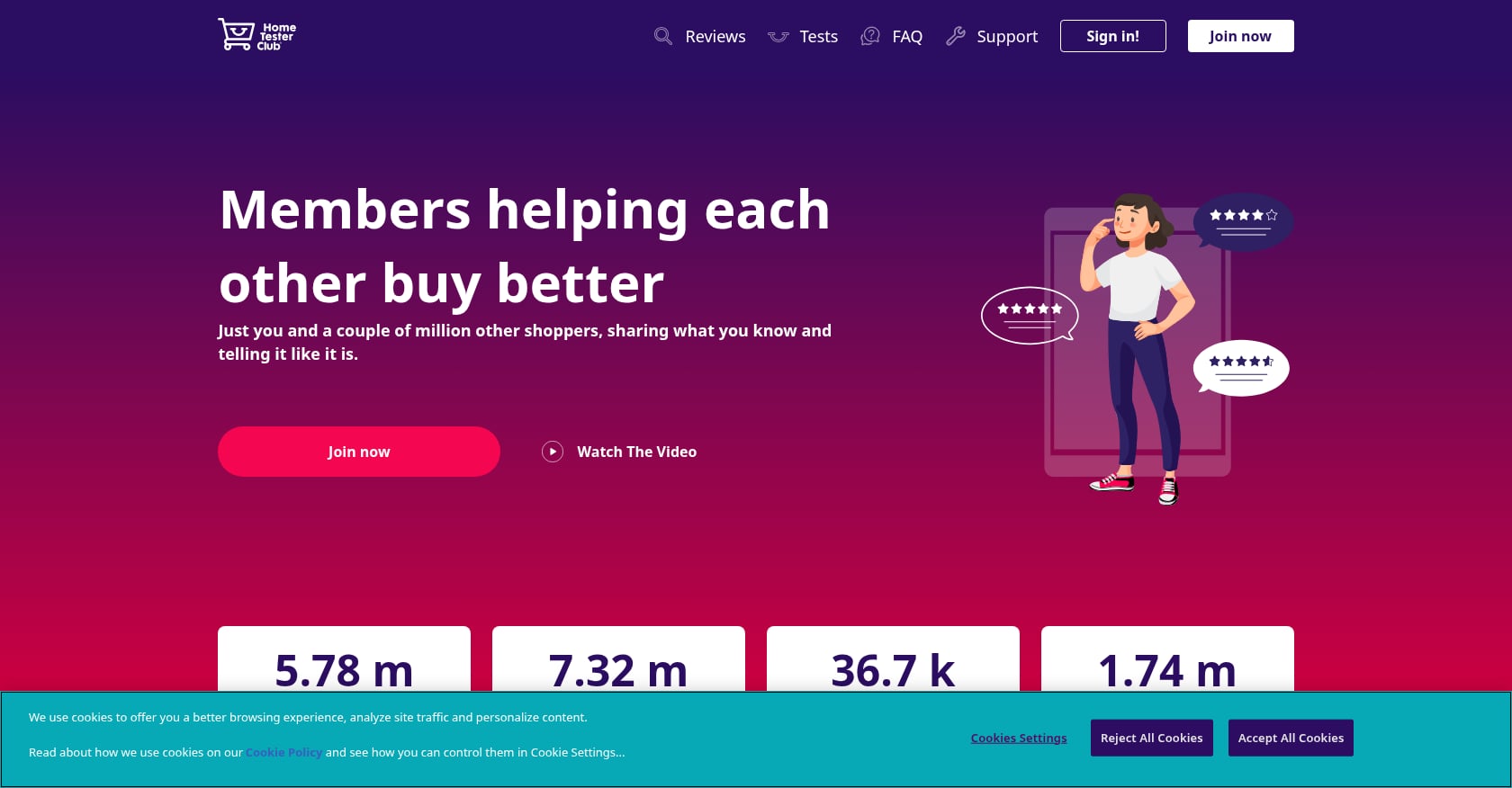
Best for: Household, food, and personal care brands wanting community-driven product testing.
Home Tester Club is a UK-originated product-testing platform where brands post testing opportunities, members apply, and selected testers receive free products with instructions to write detailed reviews.
Pricing:
- Brand-funded campaigns
- Not publicly disclosed
Key features:
- Major CPG brands (Unilever, P&G, Kraft Heinz, Reckitt) regularly run campaigns
- 2026 update: tighter review-quality scoring system where reviewers scoring below thresholds see reduced invite volume for approximately 60 days
- Best known for household, food, and personal care categories
Tradeoffs:
- Reviews typically sit on HTC’s own platform
- Reviews can be directed to retailer sites at the brand’s request, but there’s no guaranteed mechanism for UK grocery PDP placement
- Consumer-facing community means less brand control over timing and targeting
Category 3: Enterprise UGC and Syndication Platforms
These platforms are built for brands that need to collect, moderate, and syndicate reviews across large retailer networks. They solve an infrastructure problem, but their networks are primarily American.
1. Bazaarvoice

Best for: Global brands needing US retail syndication and UGC infrastructure across dozens of American retailers.
Bazaarvoice is the largest enterprise review platform in the world. It collects, moderates, displays, and syndicates ratings, reviews, Q&A, and visual UGC. For brands selling at Walmart, Target, Home Depot, Costco, or Best Buy, Bazaarvoice can push reviews directly to those retailers’ product pages. That capability is genuinely hard to replicate.
Pricing:
- Not officially published, but real-world quotes are widely available
- Small DTC brands: $10,000–$40,000/year
- Mid-market: $40,000–$80,000/year
- Enterprise with full retail syndication: $100,000–$200,000+/year
- Vendr reports a median annual contract value of $36,002
- Implementation and onboarding can add $10,000 to $50,000+
Key features:
- Largest review syndication network in the world
- Includes Influenster community (9M+ global members)
- Full UGC management suite (reviews, Q&A, visual content)
- Capterra UK rating of 4.3/5 based on 32 reviews
Tradeoffs:
- UK grocery retailers like Tesco and Sainsbury’s don’t accept syndicated reviews from external platforms, so Bazaarvoice’s core strength is largely irrelevant for UK grocery
- Three-year contracts are typical, and one Trustpilot reviewer complained about being “locked into a rigid 3-year contract, with no way out”
- Another practitioner reported that after manually checking the syndication list, “the actual useful syndication list is 40–60% smaller than claimed”
- For brands that don’t need the US retail network, Bazaarvoice is dramatically overpriced
For a detailed head-to-head analysis, read our full Bazaarvoice alternative comparison.
2. PowerReviews

Best for: American mid-market retail brands needing review collection and syndication across US retailers.
PowerReviews is a mid-market review management platform focused on ratings, reviews, Q&A, and sampling. It positions itself as a more affordable alternative to Bazaarvoice.
Pricing:
- Published tiers start at $79/month (Lite) to $169/month (Pro)
- But one practitioner reported paying nearly $20,000 annually and still needing to pay extra for photo and video reviews
Key features:
- Over 3,000 industry-tested, category-specific review templates
- Dual-purpose platform covering product reviews and Q&A
- One G2 reviewer noted that “having syndicated reviews helps our customers to see how products function in real life which fosters more trust”
Tradeoffs:
- Syndication network is built around American retail
- Limited UK grocery retailer coverage
- The gap between published starter pricing and real-world costs is significant
- Photo/video review features cost extra
For brands evaluating PowerReviews specifically, our PowerReviews alternative comparison covers the full picture.
UK Review Compliance: What Every Brand Must Know
The regulatory environment for product reviews in the UK tightened significantly with the Digital Markets, Competition and Consumers Act 2024 and the ASA’s updated CAP Code.
The key rules:
- ASA Rule 3.44 bans fake reviews outright. Any platform that generates reviews from people who haven’t actually purchased and used the product is now on the wrong side of the law.
- ASA Rule 3.45 states that ads including reviews must make clear where reviewers have been given an incentive to leave a review.
- Under UK law, businesses cannot pay for reviews without disclosure, incentivise only positive reviews, or suppress negative feedback.
This matters enormously for your product sampling platform comparison UK shortlist. Platforms using verified purchasers (people who actually bought the product through normal retail channels) are inherently safer than platforms that ship free products and hope for social posts.
CheckoutSmart explicitly states that all reviews come from verified purchasers who have genuinely bought and used the products. Brand Allies operates the same model, with shoppers purchasing through normal retail channels before reviewing.
For a complete breakdown of what’s required, see our verified reviews compliance guide and our review campaign compliance guide.
How to Choose the Right Platform for Your Brand
Forget comparing features in isolation. Start with the problem you’re solving.
If you need reviews on Tesco.com, Sainsbury’s, or other UK grocery PDPs: You need a Category 1 platform. Brand Allies and CheckoutSmart are your options. Brand Allies offers pay-per-review pricing with no lock-in, making it accessible for brands of all sizes. CheckoutSmart’s always-on monitoring suits larger manufacturers with hundreds of SKUs that need continuous review replenishment.
If you need in-home trial, first-party data, and awareness: You need a Category 2 platform. Sampl and SoPost excel at measurable sampling campaigns. Shopmium drives massive in-store trial volume. None of these will reliably get reviews onto UK grocery PDPs, but they solve different (and sometimes complementary) problems.
If you need global review syndication at scale: You need a Category 3 platform, but only if you sell through American retailers. Bazaarvoice’s syndication network is built for Walmart, Target, and Home Depot. If your primary concern is UK grocery, these platforms solve the wrong problem at a much higher price point.
Many brands use platforms from multiple categories. A common stack for UK FMCG might combine Brand Allies for retailer PDP reviews with Sampl or Shopmium for broader trial campaigns. These aren’t competing solutions; they serve different stages of the shopper journey.
The pricing model matters too. Pay-per-review removes budget risk for campaign-based work. SaaS subscriptions make sense when you’re managing thousands of DTC SKUs. For most UK FMCG brands running quarterly or seasonal campaigns, pay-per-review is the lower-risk choice.
Final Verdict
For UK FMCG brands whose primary need is verified reviews on grocery retailer product pages, Brand Allies is the strongest fit. The pay-per-verified-review model, UK-only shopper community, and no-lock-in contract structure remove the budget risk and geographic mismatch that plague alternatives. The three-in-one capability covering reviews, in-store compliance, and discreet product withdrawals is unique in this market.
CheckoutSmart is the credible alternative for enterprise manufacturers wanting automated, always-on review monitoring across large SKU portfolios. If budget isn’t a constraint and you need continuous rather than campaign-based review generation, it deserves a serious look.
Bazaarvoice and PowerReviews serve a different market. They’re built for American retail syndication. UK grocery retailers don’t accept syndicated reviews, making these platforms expensive solutions to a problem that doesn’t exist in UK grocery.
Sampl, SoPost, and Shopmium are strong in their lanes (sampling, data, trial) but shouldn’t be confused with review generation platforms. They complement a review strategy rather than replacing one.
The product sampling platform comparison UK market is fragmented precisely because “product sampling” means different things. The brands that get the best results are the ones that match the right platform to the right problem.
Explore Brand Allies’ review generation service →
Frequently Asked Questions
Which product sampling platforms post reviews directly on UK grocery websites like Tesco and Sainsbury’s?
Only Brand Allies and CheckoutSmart reliably place verified reviews directly onto UK grocery retailer PDPs. UK retailers require reviews to be posted natively by verified purchasers. They do not accept syndicated reviews from external platforms like Bazaarvoice or PowerReviews.
How much does a product sampling platform cost in the UK?
Costs vary wildly by category. Brand Allies uses a pay-per-verified-review model with no subscription or lock-in. Bazaarvoice enterprise contracts range from $10,000 to $200,000+ per year. PowerReviews starts at $79/month but real-world costs often reach $20,000/year. Sampl and SoPost price per campaign. For detailed pricing benchmarks, see our review generation pricing guide.
Why don’t Bazaarvoice reviews appear on Tesco.com?
Tesco, Sainsbury’s, and other UK grocery retailers require reviews to be posted by verified purchasers through their own websites. They don’t import or display reviews syndicated from third-party platforms. This is fundamentally different from US retailers like Walmart and Target, which do accept Bazaarvoice syndication.
How many reviews does a product need to be credible on UK grocery websites?
Products with fewer than 20 to 30 reviews fall below what’s known as the “credibility threshold.” Below this number, shoppers are significantly less likely to trust and buy the product. Review recency also matters: a steady flow of new reviews outperforms a one-time spike.
Is it legal to pay for product reviews in the UK?
Under the Digital Markets, Competition and Consumers Act 2024 and ASA CAP Code rules 3.44 and 3.45, brands can facilitate reviews through verified purchase programmes, but they cannot pay for fake reviews, incentivise only positive reviews, or suppress negative feedback. Platforms that use verified purchasers (who actually buy the product at retail) are inherently more compliant than those shipping free products without disclosure.
What’s the difference between product sampling and review generation?
Product sampling gets products into consumers’ hands to drive trial and awareness. Review generation specifically aims to produce verified reviews on retailer product pages. Some platforms (like Sampl and SoPost) focus on sampling with reviews as a secondary output. Others (like Brand Allies and CheckoutSmart) focus on review generation with purchase as the mechanism. For more on this distinction, read our guide on sampling vs cashback promotions.
Can I use multiple product sampling platforms at the same time?
Yes, and many UK FMCG brands do. A common approach combines a retailer review generator (like Brand Allies) for PDP reviews with a sampling platform (like Sampl or Shopmium) for broader trial campaigns. These platforms solve different problems and complement each other rather than competing.
What ROI should I expect from a UK product sampling platform?
ROI depends heavily on the platform type and your goals. CheckoutSmart claims 6x to 12x ROI at gross margin level for their always-on review programme. Sampl reports post-trial purchase rates above 10%, compared to 2–3% for traditional couponing. Products with strong review coverage can see up to 120% higher conversion rates on retailer PDPs.