
TLDR
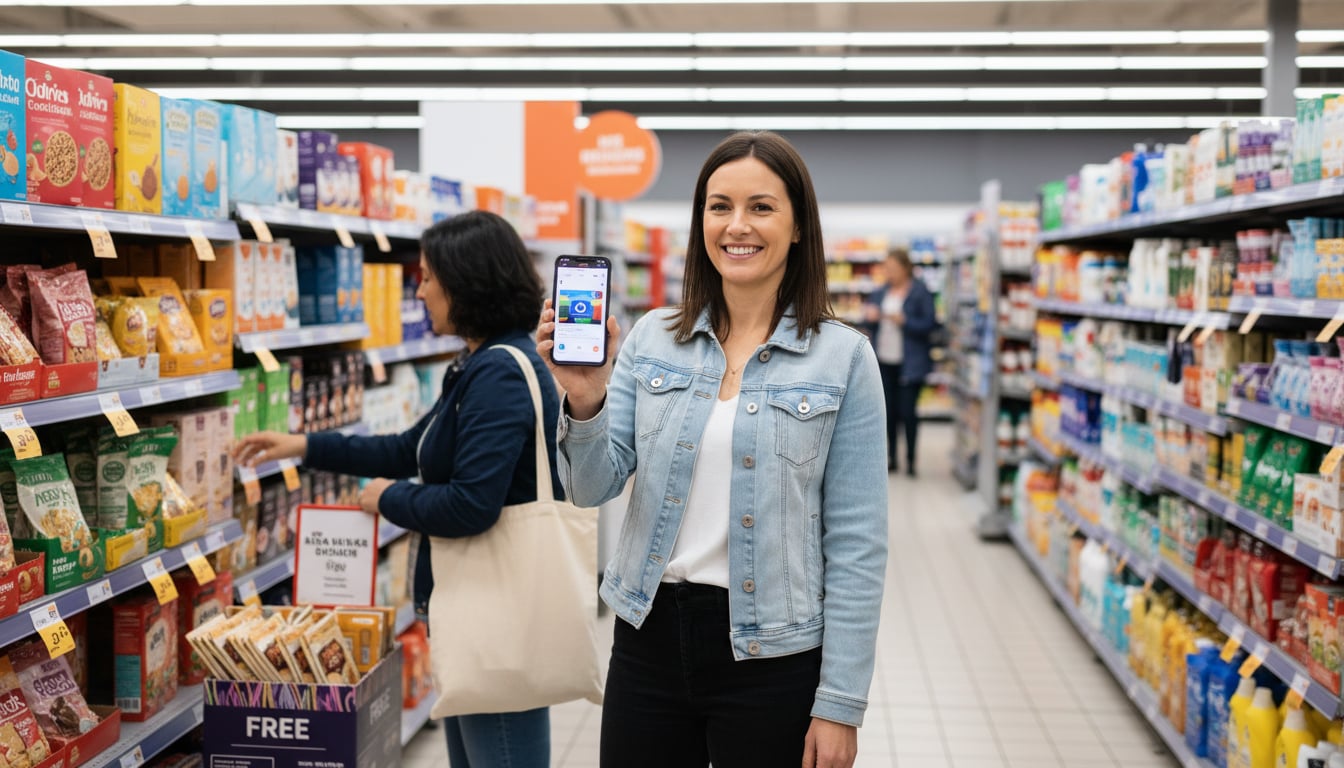
Shopper activation is the set of marketing and retail execution activities that turn a shopper’s attention or intent into measurable action, whether that’s buying, trying, reviewing, or repeating a purchase. It happens on retailer websites, in physical stores, and after product trial. In UK FMCG, it covers everything from verified product reviews and retail media to sampling, POS displays, and store-level compliance checks. The best activation plans join digital and physical proof so brands can show retailers that their activity actually worked.
Shopper Activation: Quick Definition
Shopper activation means turning shopper attention or intent into a measurable action, such as buying, trying, reviewing, redeeming, switching, or repeating a product purchase, online, in-store, or across both.
| Category | Shopper marketing / retail marketing |
| Used by | FMCG, CPG, retail, ecommerce, shopper marketing, and trade marketing teams |
| Goal | Convert shopper intent into measurable behaviour |
| Common tactics | Reviews, retail media, coupons, sampling, POS, field audits, product trials, loyalty-data campaigns |
| Main KPIs | Sales uplift, conversion rate, review volume, star rating, redemption rate, compliance rate, ROAS, repeat purchase |
Shopper Activation in Plain English
Think of shopper activation as the “doing” part of shopper marketing. It’s the campaign, promotion, review programme, display, or field audit that makes the shopper act.
If shopper insight tells you that people hesitate to buy a new plant-based ready meal because they don’t know how it tastes, activation could mean sampling in high-traffic stores, generating recent verified reviews on retailer product pages, adding a mobile coupon for first-time trial, and auditing stores to confirm the product is actually on shelf and correctly priced.
Shopper activation is not one tactic. It’s the system that bridges strategy and measurable shopper behaviour at the moments closest to purchase.
Practitioners on LinkedIn often describe this as the bridge between campaign planning and “the moment someone actually picks up the product.” That framing is useful because it keeps the focus on action, not just awareness.
Shopper Activation vs Shopper Marketing vs Brand Activation
These terms overlap, and most agency websites blur them together. Here’s a plain distinction.
| Term | What it means | Example |
|---|---|---|
| Shopper marketing | The strategy for understanding and influencing shoppers along the path to purchase | Mapping why shoppers choose premium own-label over branded cereal |
| Shopper activation | The execution that makes shoppers act at a specific moment | Seeding verified reviews on a Tesco product page, running a mobile coupon, auditing promotional compliance |
| Brand activation | Creating a memorable experience with the brand, often emotional or experiential | Pop-ups, influencer events, experiential sampling |
| Trade marketing | Brand-retailer commercial planning | Joint business plans, range support, display agreements, promo calendars |
| Retail media | Paid media within or using a retailer’s ecosystem | Sponsored search on a grocery website, off-site campaigns using loyalty audiences |
| Field marketing | On-the-ground retail execution | POS placement, in-store demos, shelf audits, mystery shopping |
The key distinction: shopper marketing is strategy, shopper activation is execution. Retail media is one type of shopper activation, not the whole thing. And brand activation tends to focus on building emotional connection, while shopper activation is more directly tied to purchase behaviour.
Why Shopper Activation Matters for FMCG Brands
FMCG brands don’t control the full journey
Retailers control the shelf, the product page, the search rankings, the delivery experience, the review display, and most of the customer data. An FMCG brand must influence shoppers through environments it does not own: supermarket aisles, retailer apps, product detail pages, loyalty media, and third-party review systems.
That means activation has to work within retailer rules, retailer formats, and retailer timelines. A great campaign deck means nothing if the product isn’t in stock, the POS never went up, or the product page has zero reviews. Understanding how poor execution leaks revenue is fundamental to getting activation right.
Promotions are expensive and competitive
UK grocery is one of the most promotion-intensive retail markets in Europe. Kantar reported that promotional sales reached 28.2% of total UK grocery spending in the four weeks to 23 March 2025, the highest March level in four years. Retailer price cuts alone accounted for £2.6 billion of that promotional spend, compared with £686 million for multibuy and extra-free offers. Meanwhile, 22% of people surveyed were financially struggling in early 2025. Source: Kantar
When price cuts dominate, shopper activation should not be reduced to discounting. It should help brands drive trial, trust, visibility, conversion, and repeat purchase without always giving away margin.
Retail media is growing because it sits close to purchase
Retail media is one of the fastest-growing UK digital ad channels. IAB UK reported that Online Retail Media hit £1.5 billion in H1 2025, part of a total UK digital ad spend of £18.7 billion. Source: IAB UK
Retail media matters for shopper activation because it uses retailer first-party data (loyalty card data, purchase history) to target specific shopper groups, such as competitor buyers, lapsed buyers, or new category entrants, and then connect those exposed audiences back to sales. The Lane Agency describes this as digital shopper activation, where retailers like Tesco (via Dunnhumby) and Sainsbury’s (via Nectar360) enable brands to reach shoppers through channels including Meta, Google, and Pinterest. Source: The Lane Agency
But retail media creates demand or captures intent. It doesn’t guarantee that the product page has reviews, that the store has stock, or that the POS display actually went up.
Reviews influence trust and conversion
Research from Northwestern’s Spiegel Research Center found that nearly 95% of shoppers read online reviews before making a purchase. In one analysed dataset, a product with five reviews had a purchase likelihood 270% higher than a product with no reviews. Source: Northwestern Spiegel Research Center
Those figures come from a specific retail context and won’t apply uniformly across every UK grocery category. But the direction is clear: reviews reduce purchase risk, and products without them can be invisible on retailer pages. The CMA cited research showing 90% of UK consumers use online reviews and that reviews contributed to £217 billion spent in online retail markets in 2023. Source: CMA
If a product page has no reviews, or only stale ones from two years ago, the shopper has no reason to trust it. That’s why review activation matters, and why unrated products tend to get ignored.
Common Shopper Activation Examples
| Activation type | Example | Best for |
|---|---|---|
| Product review activation | Real shoppers buy, try, and review a product on a retailer product page | NPD launches, low-review SKUs, review recency gaps |
| Retail media | Sponsored search or off-site audience targeting using retailer loyalty data | Awareness, competitor switching, lapsed buyer reactivation |
| Sampling | Shoppers taste or try the product in store or via a trial programme | New flavours, sensory categories, premium products |
| Coupons and cashback | Shoppers get a reward or discount after proof of purchase | Trial, value exchange, first-party data capture |
| POS and display | Shelf strips, FSDUs, aisle fins, end caps, secondary placements | Shelf visibility and impulse conversion |
| In-store audit | Check promo compliance, POS visibility, price accuracy, stock levels | Closing the gap between the plan and what actually happened |
| Post-purchase advocacy | Shopper shares feedback, a review, or a recommendation | Building trust, repeat purchase signals, sentiment insight |
For brands looking to explore in-store activations and promotions, the important thing is matching the tactic to a specific shopper barrier, not running activity for its own sake.
Shopper Activation on the Digital Shelf
Retailer product detail pages (PDPs) are purchase environments. When someone lands on a Tesco or Sainsbury’s product page, they’re often deciding whether to add to basket right now. Reviews, star ratings, review recency, product images, and Q&A content all influence that decision.
PowerReviews data shows that conversion lift tends to rise with review volume across studied categories, though the magnitude varies by product type and price point. Source: PowerReviews
Digital shelf shopper activation includes:
- Generating verified product reviews through authentic shopper trial
- Improving star ratings by increasing the volume of genuine feedback
- Refreshing review recency so product pages don’t look abandoned
- Optimising product content, images, and Q&A
- Running retailer search campaigns to improve PDP visibility
- Benchmarking review coverage against competitors
Understanding the psychology of trust in shopping environments helps explain why review quality matters as much as review quantity.
Review volume alone isn’t enough
Practitioners on Reddit report that shoppers distrust review sections where most reviews are tagged “incentivized,” appear at launch in suspiciously high volumes, or contain only product-packaging copy rather than genuine experience. In Sephora community discussions, users say they filter for verified purchases and discount reviews that look like they were written to complete a task rather than help another shopper. Source: Reddit
In product-testing communities like Influenster and BzzAgent, some reviewers themselves worry about honesty. One BzzAgent discussion noted that the point of review programmes should be testing products and giving honest reviews, “not ‘perfect best product ever’ ratings.” Others complained about low-effort submissions: two-sentence reviews, photos that don’t show actual usage, and summaries of packaging claims rather than real experience. Sources: Reddit
For brands, the takeaway is clear: a good review activation brief should ask for specific usage context (who used the product, what occasion, taste or performance notes, comparisons, value perception, and whether they’d buy again). Detail, recency, verified purchase status, balanced sentiment, and natural language all make a review set more credible.
If you need authentic review coverage on UK retailer websites, Brand Allies’ verified product review service uses real UK shoppers to buy, try, and review FMCG products, with brands paying only for completed, verified reviews.
Shopper Activation In-Store
Physical execution still determines whether many activations succeed or fail. A promotional display that was agreed centrally but never built in 40% of stores is not an activation. It’s a PowerPoint slide.
Contact Field Marketing describes UK field marketing services spanning POS placement, merchandising, in-store demonstrations, product sampling, retail auditing, mystery shopping, and promotional campaigns. Source: Contact Field Marketing
Common in-store activation tactics include product sampling and tastings, POS displays and FSDUs, aisle fins and shelf strips, secondary placements and end caps, staff-led brand ambassador activity, and demonstration stands.
The critical gap is between what was planned and what actually happened. Salesframe argues that retail media and in-store activation serve different moments: digital visibility can drive intent, while physical execution drives conversion at the shelf. Their recommendation is that good in-store activation requires photo verification, structured visit reports, real-time data capture, and outlet-level KPI dashboards. Source: Salesframe
Retail media cannot put a product in the right shelf position, set up a secondary display, confirm the promotional price is visible, or hand a sample to a passing shopper. That’s why in-store compliance checks are a necessary complement to any digital activation plan.
How to Measure Shopper Activation
The right KPI depends on what the activation is trying to achieve. A review campaign and a sampling campaign should not be measured the same way.
| Goal | KPI examples |
|---|---|
| Awareness and visibility | Impressions, reach, share of shelf, share of search, display compliance |
| Trial | Sample uptake, coupon redemption, first-time buyers, proof-of-purchase submissions |
| Conversion | PDP conversion rate, sales uplift, add-to-basket rate, retail media ROAS |
| Trust | Star rating, review count, review recency, verified reviews, sentiment themes |
| Execution | Store coverage, POS compliance, price compliance, out-of-stock rate, photo evidence |
| Repeat and loyalty | Repeat purchase rate, lapsed buyer reactivation, CRM opt-ins |
| Learning | Review themes, shopper objections, competitor comparisons, retailer-level insights |
A review activation should not be judged only by immediate sales lift. It may also improve trust signals, retailer PDP quality, shopper sentiment insight, and long-tail conversion that compounds over months.
What Makes Shopper Activation Effective?
A good activation is:
- Shopper-led. Based on a real purchase barrier, not just a budget to spend.
- Retailer-aware. Fits the retailer, category, and format. A Tesco PDP campaign has different rules than a Sainsbury’s Local sampling stand.
- Specific. Clear task, audience, product, timing, and success metric.
- Compliant. Especially for reviews, incentives, and promotional claims.
- Measurable. Has proof of execution and outcomes, not just a “went live” confirmation.
- Fast enough. Can go live while the commercial opportunity still exists.
- Useful afterwards. Produces evidence and insight for the next retailer conversation or activation cycle.
Compliance: Reviews, Incentives, and Trust
This is the part most agency websites skip. It matters.
Shopper activation increasingly uses reviews, incentives, community panels, coupons, and sampling. That creates trust and regulatory risk if incentives are hidden, reviews are manipulated, or negative feedback is suppressed.
UK regulatory context
The CMA published fake reviews guidance on 4 April 2025, explaining how businesses should comply with consumer protection law. Under the Digital Markets, Competition and Consumers Act regime, fake reviews are explicitly banned. In June 2025, Amazon gave undertakings to the CMA including enhanced fake-review detection and sanctions for non-compliant businesses and reviewers. Source: CMA
In March 2026, the CMA launched five new investigations into fake and misleading reviews across companies including Autotrader, Feefo, and Just Eat. Banned practices include posting fake reviews, paying for reviews without clear disclosure, hiding negative reviews, and presenting inaccurate star ratings. The CMA can impose fines of up to 10% of global turnover. Source: CMA
Tesco’s own ratings and reviews policy prohibits fake reviews, requires incentivised reviews to be clearly and prominently disclosed, states that incentives must not be contingent on a positive review, and warns that non-compliant reviews may be removed. Source: Tesco
Practical compliance checklist
Compliant shopper activation should:
- Use real shoppers, not fake accounts or bots
- Require genuine product experience before any review
- Avoid requiring or incentivising a positive review
- Disclose incentives clearly where required
- Allow negative reviews
- Avoid suppressing criticism
- Keep records of briefs, purchases, submissions, and moderation outcomes
- Follow retailer-specific review policies
Safer language: “generate authentic review coverage,” “increase review volume and recency,” “collect verified shopper feedback.” Avoid language like “guaranteed positive reviews,” “boost your rating,” or “control the review narrative.”
Where Brand Allies Fits
Brand Allies supports shopper activation for UK FMCG brands through three service lines: managed online product reviews, in-store activations, and in-store compliance work. Its review service uses a community of real UK shoppers to buy, try, and review products on retailer websites including Tesco, Sainsbury’s, Ocado, Morrisons, Boots, and others, with brands paying per completed, verified review.
This makes it relevant when a brand needs authentic review coverage for an NPD launch, review recency on existing SKUs, shopper sentiment insight, or store-level execution evidence.
For more on how the service works, visit the Brand Allies FAQs or explore more shopper marketing insights on the blog.
Shopper Activation FAQs
What is shopper activation?
Shopper activation is the execution of marketing and retail tactics that move shoppers to act. That action might be buying, trying, reviewing, redeeming an offer, switching from a competitor, or making a repeat purchase. It happens in-store, on retailer websites, in grocery apps, and after product trial.
Is shopper activation the same as shopper marketing?
No. Shopper marketing is the broader strategy and insight discipline. Shopper activation is the practical execution layer, the specific campaign, promotion, or activity that makes shoppers act.
Is retail media a form of shopper activation?
Yes. Retail media targets shoppers within or through retailer environments close to purchase, using first-party loyalty data. But shopper activation also includes reviews, sampling, POS displays, coupons, field audits, and more. Retail media is one channel, not the whole category.
Are product reviews a type of shopper activation?
Yes, when reviews are used to improve trust and conversion at the point of purchase. Review activation must be authentic, based on genuine product experience, and compliant with both retailer policies and consumer protection law.
How do you measure shopper activation?
Match the KPI to the goal. Use conversion rate and sales uplift for purchase-focused activation. Use review count, recency, and sentiment for trust-focused activation. Use compliance rate and photo evidence for execution-focused activation. Use ROAS for retail media.
What is the difference between shopper activation and brand activation?
Brand activation creates emotional engagement and brand experience. Shopper activation is more specifically focused on influencing a purchase-related action. They can overlap (a sampling event is both), but the measurement lens differs.
What makes shopper activation compliant in the UK?
Real shoppers, genuine product experience, clear disclosure of any incentives, no requirement for positive reviews, no suppression of negative feedback, and adherence to retailer-specific review policies. The CMA’s 2025 fake reviews guidance and the Digital Markets, Competition and Consumers Act set the legal framework.
What are common shopper activation mistakes?
Treating activation as a synonym for discounting. Running promotions without checking store execution. Buying retail media before fixing PDP content and reviews. Collecting reviews without proper disclosure. Measuring only impressions instead of shopper actions. Ignoring negative reviews instead of learning from them.