

TL;DR
Most FMCG brands searching for mystery shopping actually need a blend of retail audits, mystery shops, and review generation. This guide compares eight providers from the brand buyer’s perspective, not the side-hustle angle that dominates search results. Brand Allies is the top pick for UK FMCG brands that want verified retailer reviews, in-store compliance checks, and product recalls under one contract. Ipsos suits enterprise-scale global programmes, while Roamler and BeMyEye offer strong crowdsourced auditing across Europe.
Why FMCG Brands Can’t Afford to Ignore In-Store Execution
Average UK grocery on-shelf availability sits at just 89.7%, with roughly £2.1 billion of sales at risk from stock gaps each year. One in five shopping trips involves an out-of-stock item. When shoppers hit an empty shelf, 45% will switch to a different brand entirely.
The stakes in UK grocery are uniquely high. Around 60% of UK consumers decide on brands at the shelf, the highest rate globally. And research suggests in-store execution non-compliance runs as high as 50%, meaning roughly half of what brands agree with retailers never shows up properly at shelf level.
These numbers explain why FMCG brand managers are searching for mystery shopping providers. But here’s the thing most search results get wrong: mystery shopping is only one piece of the puzzle. In a self-service grocery environment where a shopper picks a product from the shelf, scans it at a self-checkout, and leaves, there is almost no staff interaction to evaluate. The questions FMCG brands really need answered (is the product on shelf, correctly priced, properly displayed?) are audit questions, not mystery shopping questions.
The best providers for FMCG brands cover auditing, mystery shopping, and increasingly, review generation on retailer sites. This guide evaluates all three.
At-a-Glance Comparison Table
| Provider | Best For | FMCG Specialism | UK Coverage | Model | Review Generation | Pricing Model |
|---|---|---|---|---|---|---|
| Brand Allies | UK FMCG brands needing reviews + audits + recalls | Core | National (250K+ shoppers) | Managed service | Yes | Pay per verified review |
| Ipsos | Enterprise global CX and pricing intelligence | Core | National | Employed + contracted | No | Bespoke quote |
| Roamler | Pan-European on-demand audits | Core | National (Europe-wide) | Crowdsourced | No | Bespoke quote |
| Shepper | Blended mystery shopping and compliance | Partial | National (UK & Ireland) | Crowdsourced | No | Per visit |
| Field Agent UK | Quick shelf audits + buy-try-review | Core | Major cities + expanding | App-based crowd | Yes | Per task |
| BeMyEye | AI-powered shelf analytics at scale | Core | European cities | Crowdsourced + AI | No | Bespoke quote |
| SmartSpotter | AI image recognition shelf audits | Core | Netherlands, UK, France | Crowdsourced + AI | No | Bespoke quote |
| eXPD8 | Traditional field force merchandising | Core | National (2,500 field team) | Employed field team | No | Retainer |
How We Evaluated These Companies
Every provider was assessed on six criteria: depth of FMCG specialism (core focus vs. incidental), UK geographic coverage, pricing transparency, user reviews from both the brand and shopper side, breadth of services relevant to FMCG, and whether they hold MSPA (Mystery Shopping Providers Association) membership. Where possible, we’ve included shopper-side Trustpilot sentiment as a proxy for operational quality, because companies that underpay or frustrate their shoppers eventually deliver worse data.
The 8 Best Mystery Shopping Companies for FMCG Brands
1. Brand Allies

Best for: UK FMCG brands that need verified reviews on grocery PDPs and in-store compliance checks under one contract, without large SaaS fees.
Brand Allies is a managed-service shopper advocacy platform built specifically for UK FMCG brands. It runs three service lines: online product reviews posted directly to retailer websites, in-store compliance activations (promo checks, POS audits, distribution verification), and discreet product recalls where shoppers physically remove faulty stock from shelves without triggering a public alert.
Key features:
- 250,000+ UK shoppers, already ID-verified and geo-indexed through parent company Redwigwam
- Reviews posted to Tesco, Sainsbury’s, Morrisons, Waitrose, Ocado, Boots, Iceland, Holland & Barrett, Amazon, and TikTok Shop
- Pay-per-verified-review pricing with no platform fees, no syndication charges, and no multi-year lock-in
- In-store audit technology piloted with Kellogg’s, whose Head of Field Sales publicly confirmed a “successful pilot that delivered a great ROI”
- Client roster includes Coca-Cola, Strong Roots, Little Moons, Bol Foods, and Jordans
Pricing: Pay per verified review (bespoke). No SaaS subscription. This removes the budget-risk objection that makes enterprise platforms like Bazaarvoice (starting at $6,500/year for syndication-only access) prohibitive for challenger brands. For a deeper pricing comparison with Bazaarvoice, see our separate guide.
Trade-offs:
- No cross-retailer review syndication. A review appears only on the retailer where the shopper bought the product.
- Under two years of trading history as Brand Allies, though the parent Redwigwam has a 10+ year track record.
- Some reviews get rejected by retailer moderation, which is a reality for any compensated review model.
User sentiment: Trustpilot shows 4.3/5 from 17 reviews on the shopper side, with positives citing fast payments and an easy dashboard. Negatives mention lower pay than some Redwigwam roles and inconsistent review approvals.
Why it’s the top pick: No other UK provider combines review generation, field audits, and discreet product recalls under one contract. For FMCG brands selling through UK grocers, this three-in-one stack means fewer vendors, faster activation, and a single point of accountability.
Book a demo with Brand Allies →
2. Ipsos (formerly ESA Retail)
Best for: Enterprise FMCG brands needing comprehensive multi-channel CX measurement plus pricing intelligence at global scale.
ESA Retail, long considered one of the UK’s leading mystery shopping specialists, rebranded as Ipsos following its acquisition in June 2025. The move combines ESA’s retail expertise with Ipsos’ global Channel Performance solutions and one of the world’s largest mystery shopping networks.
Key features:
- Share-of-shelf auditing, competitor price tracking, product recommendation mystery shopping
- MSPA Europe/Africa Elite Membership for 2025, marking a decade of industry excellence
- Global reach with deep UK roots
- Full-service research capability including qualitative and quantitative shopper insights
Pricing: Not publicly available. Enterprise-level engagements with bespoke quotes.
Trade-offs:
- Overkill for challenger brands or SMEs. The sales cycle is long, and minimum engagements tend to be substantial.
- No review generation capability.
- Not a quick-deploy solution for one-off audits.
User sentiment: Strong industry reputation backed by MSPA Elite status. Practitioners in field marketing forums consistently cite the former ESA Retail as a gold-standard provider, though several note the enterprise pricing puts it out of reach for smaller brands.
3. Roamler
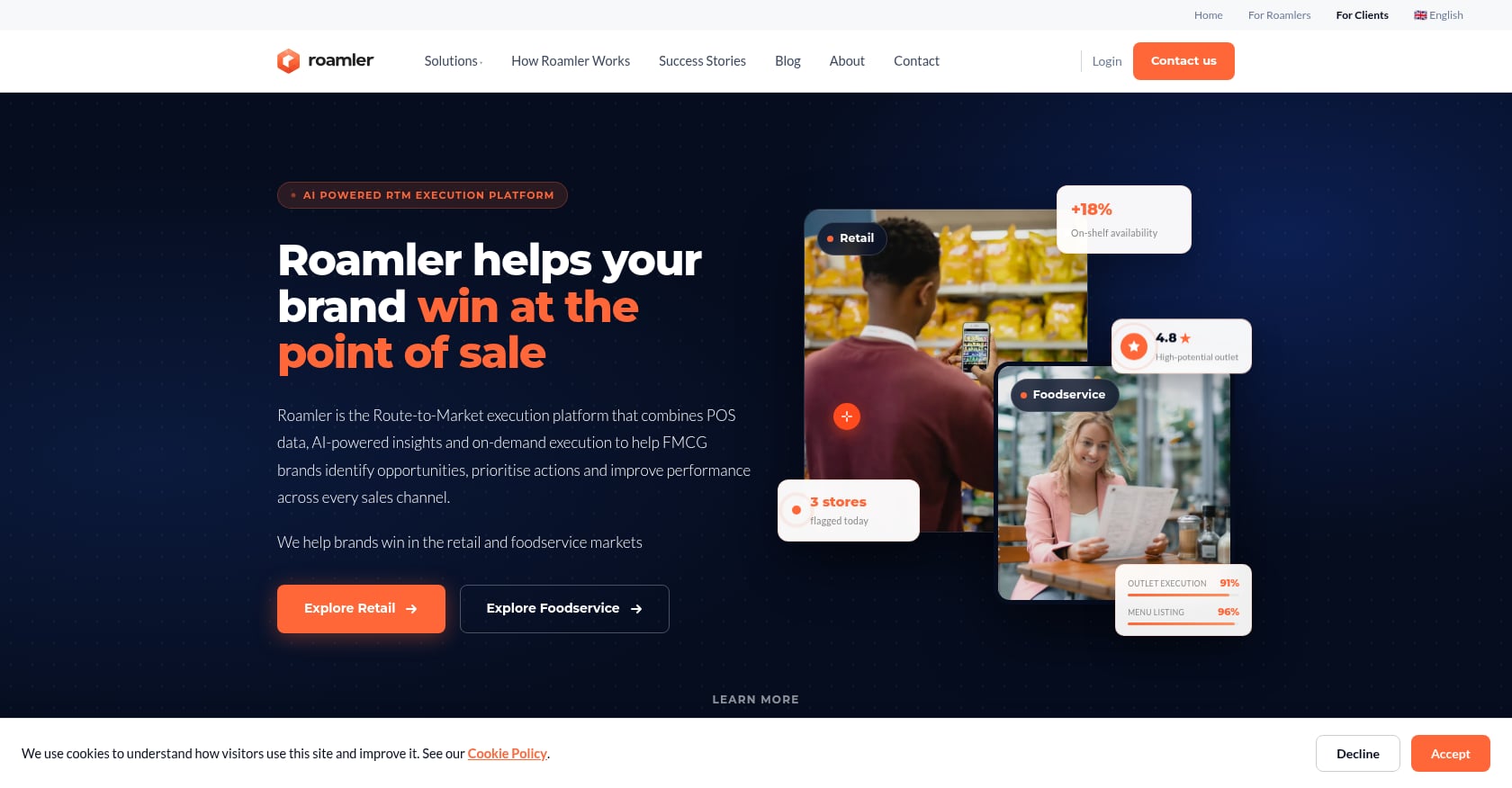
Best for: Pan-European FMCG brands needing scalable on-demand audits alongside their existing field force.
Founded in 2014 and headquartered in Amsterdam with UK offices, Roamler is the European leader in crowd-based field marketing activities. Its platform lets brands commission store visits on demand, with auditors completing photo-verified tasks through a mobile app and results consolidated in a real-time dashboard.
Key features:
- On-demand audit coverage for product availability, out-of-stock rates, numeric distribution by SKU, share of shelf, planogram compliance, promotional display installation, price accuracy, and competitor activity
- Every data point is photo-verified
- Notable clients include Unilever, P&G, and Red Bull
- Strong flexibility for peak periods and seasonal campaigns
Pricing: Not public. Enterprise-oriented bespoke quotes. For a detailed head-to-head comparison of Roamler, Field Agent, and Brand Allies, see our separate guide.
Trade-offs:
- Europe-wide focus means UK-specific depth is shared with broader operations.
- No review generation service.
- Better suited for audit tasks than experiential mystery shopping.
User sentiment: Of the crowd-based audit apps available, Roamler tends to attract the warmest user reviews from the shopper side. Practitioners on Reddit report that Roamler briefs are well-structured and photo verification is straightforward compared to competing platforms. Many large FMCG brands use Roamler alongside a traditional agency: agencies for core accounts, Roamler for broader coverage and peak periods.
4. Shepper
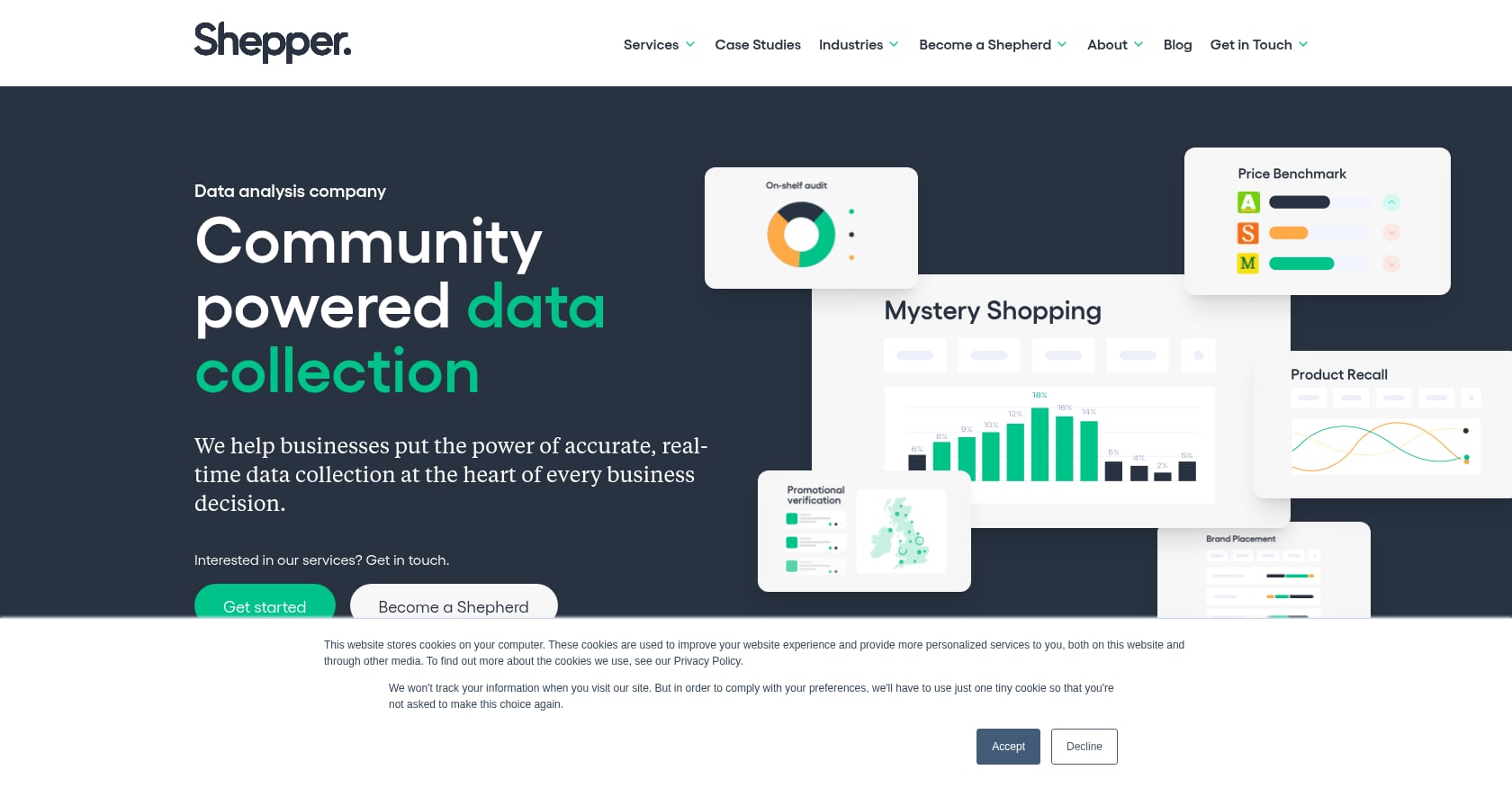
Best for: Brands needing a blend of mystery shopping and compliance auditing with UK and Ireland coverage, especially in retail and telecoms.
Shepper works across FMCG, retail, media, and utilities, trusted by household brands such as M&S, Boots, Royal Mail, Waitrose, and L’Oréal. Their nationwide community captures real-time retail data across in-store, home delivery, and click-and-collect channels.
Key features:
- Mystery shopping, compliance auditing, in-store pricing data collection, and tailored brand solutions
- Fast deployment across UK and Ireland
- Real-time data from a large shopper community
Pricing: Per-visit pricing, which aligns with the industry average of USD 25–75 per in-store visit for multi-site programmes. A 200-store brand running monthly shops should budget USD 80,000–180,000 per year across the industry.
Trade-offs:
- FMCG grocery is not their core specialism. Shepper is stronger in retail service and telecoms mystery shopping.
- No review generation.
- Shopper-side sentiment reveals some concerns. Trustpilot reviewers report decreasing job fees, with EE shop jobs dropping from £20 to £12.50 and Samsung mystery shops falling from £7 to £6. Companies cutting shopper pay may eventually face quality issues as top shoppers migrate to better-paying platforms.
User sentiment: 587+ Trustpilot reviews with generally positive sentiment, though the fee reduction trend is worth monitoring.
5. Field Agent UK
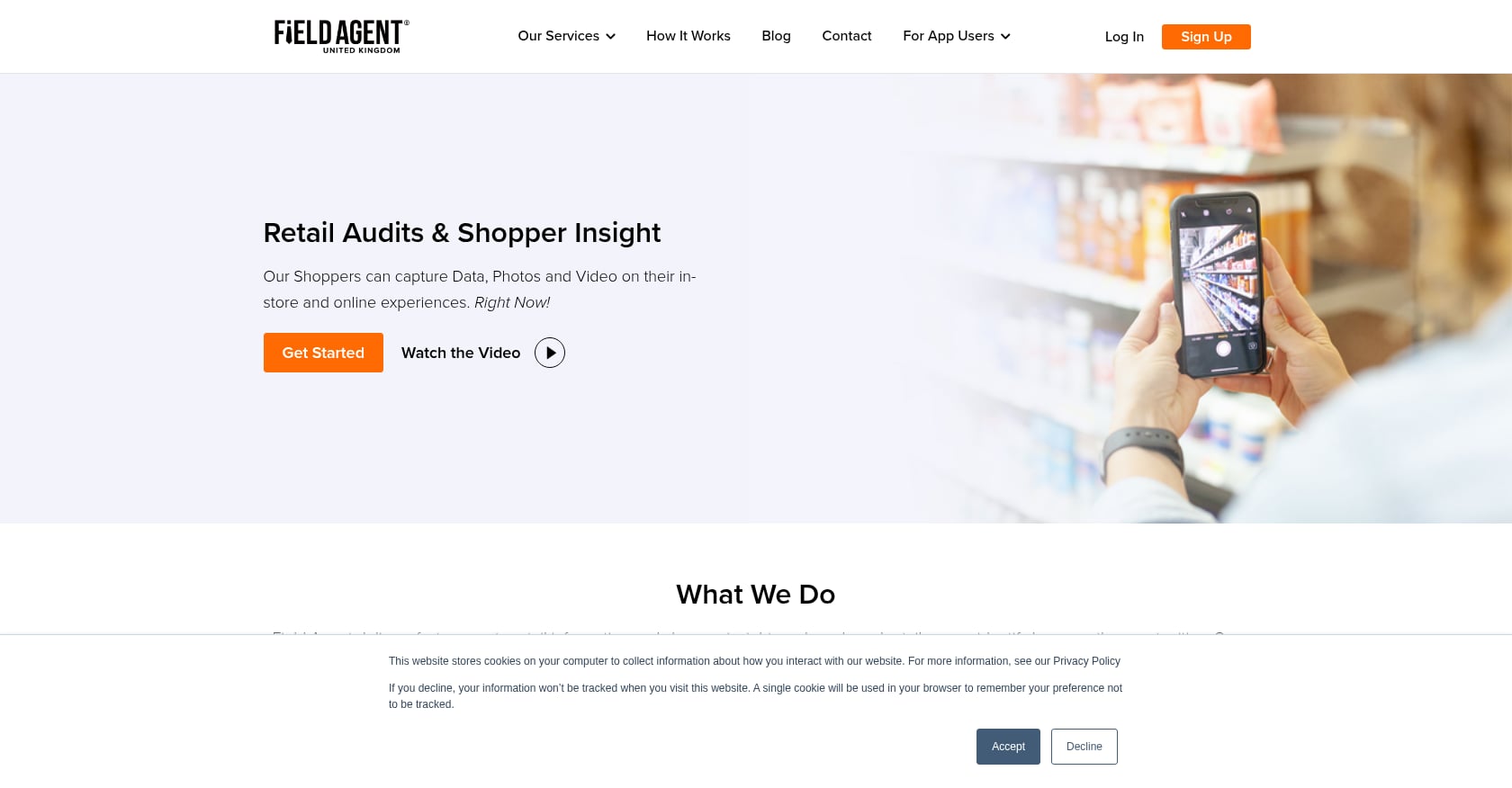
Best for: FMCG brands wanting a single app-based platform for quick shelf audits and buy-try-review in the UK.
Field Agent provides a broad suite of services through its mobile app: price checks, on-shelf availability, merchandising checkups, mystery shopping, shelf evaluations, competitive insights, and a buy-try-and-review programme that generates authentic ratings on product pages. For a deeper side-by-side with Brand Allies, we’ve published a separate comparison.
Key features:
- Buy-try-review service that mobilises real shoppers to purchase, try, and review products on retailer sites
- Wide range of audit task types available through one app
- London-based (incorporated May 2017)
Pricing: Per-task pricing. Not publicly listed but typically falls within industry norms.
Trade-offs:
- Some practitioners report that participants occasionally leave tasks incomplete, which affects data reliability.
- Trustpilot feedback is mixed. One long-time user praised consistent payments and “relatively easy tasks” over 10 years of use, but another noted the platform has shifted to mostly “buy products and get reimbursed, so therefore earning nothing.” This reimbursement-only model could affect the quality and motivation of shoppers completing brand tasks.
- Covers fewer countries compared to European competitors like Roamler or BeMyEye.
User sentiment: Adequate for one-off UK audits and review campaigns, but the shopper incentive model may limit the pool of experienced auditors.
6. BeMyEye
Best for: Large FMCG companies wanting computer vision-powered shelf analytics at scale across European markets.
Founded in 2011, BeMyEye pioneered crowdsourced retail data collection. Users visit stores, take photos, answer questions, and provide feedback directly from the point of sale. The platform primarily targets FMCG brands, retailers, and manufacturers with a community of 3+ million freelance auditors.
Key features:
- Computer vision and AI for shelf analysis
- Real-time KPI delivery
- Notable clients include Coca-Cola, Samsung, P&G, Nestlé, Heineken, Unilever, and Lavazza
- Strong presence across multiple European markets
Pricing: Bespoke quotes. Enterprise-oriented.
Trade-offs:
- BeMyEye has a smaller active network compared to competitors like Clickworker and Premise, which can create gaps for brands needing broad geographic coverage quickly.
- No review generation.
- UK coverage is part of a wider European operation, not a standalone focus.
7. SmartSpotter
Best for: FMCG brands wanting AI image recognition shelf audits in European markets, particularly Netherlands, UK, and France.
SmartSpotter’s ShelfWatch product combines crowdsourcing and artificial intelligence, claiming 95%+ recognition accuracy at SKU level. This means brands can audit not just whether a category is stocked but whether specific SKUs are facing correctly, correctly priced, and holding their planogram position.
Key features:
- AI-powered image recognition for shelf audits
- Clients include Unilever, Lindt, P&G, Red Bull, and Nestlé
- Won bronze for Operational Success of the Year at the FMBE Awards 2023
- SKU-level accuracy for planogram compliance measurement
Pricing: Not public. Bespoke quotes.
Trade-offs:
- Primarily Netherlands-headquartered. UK coverage is available but not the core focus.
- No review generation or mystery shopping services.
- Best used as part of a wider execution strategy, not as a standalone provider.
8. eXPD8 Field Marketing
Best for: Large FMCG brands wanting a traditional employed field force for merchandising, compliance audits, and mystery shopping under one roof.
eXPD8 is a Bristol-based retail execution company with a field team of 2,500 across the UK, working within the majority of retail multiples across all formats and most FMCG and general merchandise categories. Their dedicated division, eXPD8 engage, specialises in mystery shopper services with unannounced visits to verify promotional execution and staff training.
Key features:
- Employed (not gig) field team of 2,500
- Coverage across the majority of UK retail multiples
- Merchandising, compliance audits, and mystery shopping in one contract
- Dedicated mystery shopping division
Pricing: Retainer-based. Traditional agency model with higher per-visit costs than crowdsourced alternatives, but with greater control over shopper quality and consistency.
Trade-offs:
- Higher cost per visit than crowdsourced platforms. Best suited for brands with ongoing retainer budgets.
- Less on-demand flexibility. You’re paying for a standing team, not commissioning one-off tasks.
- No review generation capability.
- No public MSPA membership listed.
Mystery Shopping vs. Retail Audit vs. Review Generation: Which Do You Actually Need?
This is the question most FMCG brand managers should ask before choosing a provider, and it’s the question almost no existing guide addresses.
Retail audits answer: is the product on shelf? Is it correctly priced? Is the POS display installed? Is the planogram being followed? These are factual, compliance-driven checks. For self-service grocery, where there’s minimal staff interaction, this is the foundation. If you’re spending trade budget on promotions and have no idea whether they’re being executed properly, start here. Our guide to retail execution KPIs and compliance covers the framework in detail.
Mystery shopping answers: how does a staff member respond when asked about my product? Is the checkout experience smooth? Does the pharmacist recommend my brand? This matters most in categories with an advice component (beauty, pharmacy, spirits) or channels with meaningful staff interaction (department stores, specialist retailers). In a Tesco Express at 7pm on a Tuesday? Probably not.
Review generation answers: does my product have enough reviews on the retailer PDP to cross the credibility threshold? Research shows products with fewer than 20–30 reviews struggle to convert, and the average grocery review rate is just 0.1%–0.3%. For new product launches and challenger brands, building review volume on Tesco.com or Ocado is as important as getting on the shelf in the first place.
The most effective FMCG brands sequence these three activities. Audit first to ensure the product is on the shelf and correctly priced. That’s the foundation. Shop second in channels where staff interaction influences purchase decisions. Generate reviews in parallel to build the digital shelf. Without the audit, the mystery shopper finds an empty shelf. Without reviews, the online shopper scrolls past your product.
Explore Brand Allies’ in-store compliance service →
What to Look for When Choosing a Provider
MSPA membership. The Mystery Shopping Providers Association is the largest professional trade association dedicated to service quality measurement, with over 450 member companies worldwide. Membership signals adherence to ethical standards and professional practices. Ipsos holds MSPA Europe/Africa Elite Membership. For other providers, ask directly.
Photo verification. Any audit data that isn’t backed by timestamped, geotagged photos is essentially self-reported. Providers like Roamler, SmartSpotter, and Brand Allies build photo evidence into every task. This matters enormously when presenting compliance data to retailers during range reviews.
UK geographic coverage. Some crowd-based platforms have strong density in London and major cities but thin coverage in smaller towns. Ask for a heatmap of active shoppers before committing. Brand Allies’ community of 250,000+ UK shoppers, geo-indexed through Redwigwam, provides genuine national reach.
Pricing model clarity. The industry spans everything from $8 per phone shop to $250 per complex in-store visit. Understand whether you’re paying per visit, per task, per verified outcome, or a SaaS subscription. Pay-per-outcome models (like Brand Allies’ pay-per-verified-review) reduce risk for brands with uncertain volumes. For a broader look at choosing the right agency, see our retail audit agency selection guide.
FMCG track record. A provider that’s brilliant at evaluating hotel check-ins may be completely wrong for grocery shelf compliance. Ask for FMCG-specific case studies and client references.
Frequently Asked Questions
How much does FMCG mystery shopping cost in the UK?
For multi-site programmes, expect USD 25–75 per in-store visit and USD 8–20 per phone shop, before reporting fees. A 200-store brand running monthly shops should budget USD 80,000–180,000 per year. Costs vary significantly by task complexity, with video mystery shops and multi-channel programmes commanding higher rates. Our mystery shopping costs guide breaks down the pricing in more detail.
What’s the difference between a mystery shop and a retail audit?
A mystery shop evaluates the human experience: how staff behave, whether they recommend your product, how they handle complaints. A retail audit measures physical execution: shelf presence, pricing accuracy, POS compliance, planogram adherence. For FMCG brands in self-service grocery, retail audits typically deliver more actionable data than mystery shops.
Can mystery shoppers also generate product reviews?
Only a few providers offer both. Brand Allies and Field Agent UK provide buy-try-review programmes alongside auditing. Most traditional mystery shopping firms and crowdsourced audit platforms do not offer review generation. If building review volume on retailer PDPs is a priority (it should be for any brand launching NPD), this is a critical filter.
How do I verify that audit data is accurate?
Insist on photo verification. Leading providers require timestamped, geotagged photos for every data point. Some, like SmartSpotter, use AI image recognition to automate accuracy checks at SKU level. Without photo evidence, you’re relying on self-reported data, which introduces the same compliance gap you’re trying to close.
Should I use a crowdsourced platform or a traditional field agency?
It depends on your needs. Crowdsourced platforms like Roamler offer speed, flexibility, and lower per-visit costs. Traditional agencies like eXPD8 provide deeper relationships, consistent quality, and the ability to merchandise (move product, build displays) as well as audit. Many large FMCG brands use both: agencies for core accounts, on-demand platforms for broader coverage and peak periods.
Is MSPA membership essential?
Not strictly essential, but it’s a useful trust signal. MSPA membership means the provider has committed to ethical practices, shopper data protection, and professional standards. If a provider isn’t an MSPA member, ask what quality assurance framework they follow instead.
How quickly can I launch a mystery shopping programme?
Traditional agencies may take 4–8 weeks to scope, recruit, and deploy. Crowdsourced platforms can go live in days. Brand Allies, because its shopper community is already ID-verified and geo-indexed through Redwigwam, can activate within hours for straightforward briefs.