
TL;DR
An on shelf availability audit is a structured, physical check that verifies whether listed products are actually present on retail shelves, not just recorded as “in stock” in a system. It matters because phantom inventory and store-level execution failures cost UK grocery alone £2.1 billion in lost sales each year. Brands that audit regularly uncover the gap between what the retailer’s system says and what shoppers actually find, turning that data into stronger retailer conversations and measurable sales lifts.
What Is an On Shelf Availability Audit?
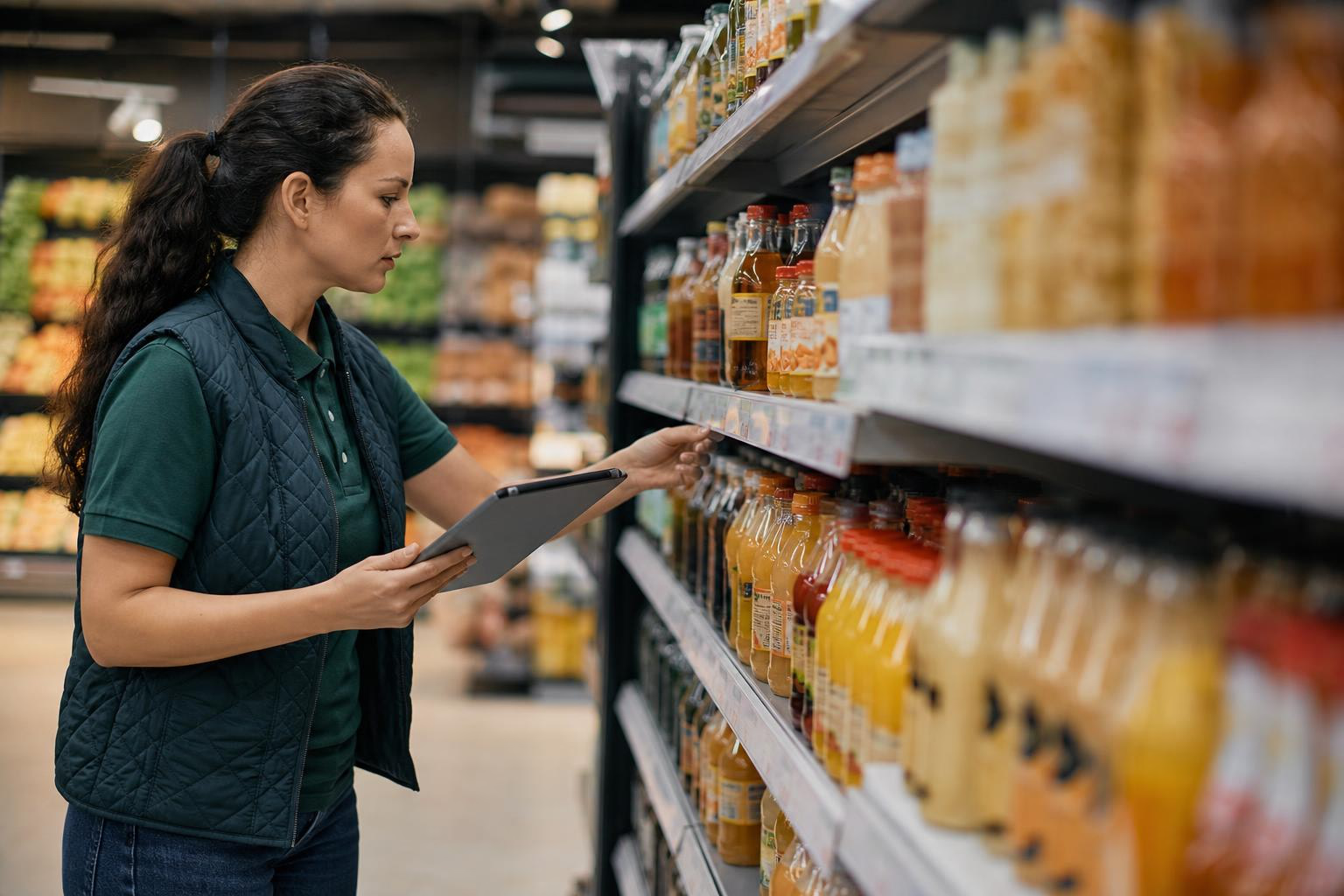
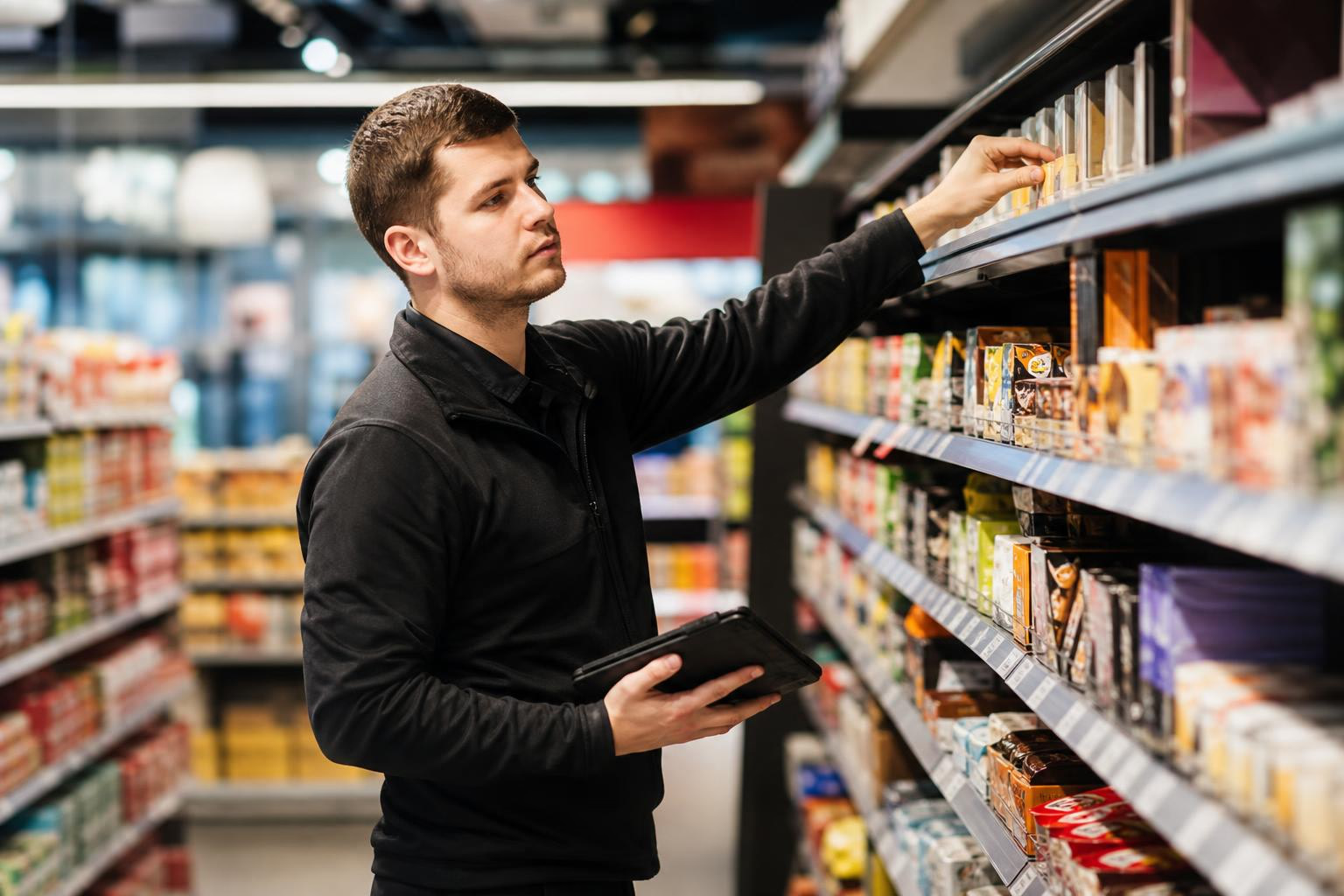
An on shelf availability audit is a systematic process of checking whether every product that should be on a retail shelf is physically there, visible, and ready for a shopper to pick up. It goes beyond trusting a retailer’s inventory system. Instead, a real person (or, increasingly, a camera) verifies conditions at the point of sale.
The distinction from a general stock count or inventory check is important. A stock count tells you what’s somewhere in the building. An on shelf availability audit tells you what’s actually on the shelf where a customer can buy it. That difference is where billions of pounds go missing.
The standard formula for calculating on-shelf availability is straightforward:
OSA (%) = (Number of SKUs available on shelf ÷ Total listed SKUs) × 100
If your brand has 20 SKUs listed in a Tesco Express and only 17 are physically present, your OSA for that store is 85%. The remaining three SKUs might be sitting in a cage out back, marked as damaged, or simply lost in the system. The shopper doesn’t care why. They just see an empty shelf.
Curious about how this works in practice? Brand Allies’ in-store compliance service runs these audits across UK grocery using real shoppers.
Why OSA Audits Exist: The Gap Between System and Shelf
Inventory Data Lies
Every FMCG brand manager has heard some version of “the system says it’s in stock.” The problem is that systems are frequently wrong.
Phantom inventory, products marked as available in a point-of-sale or warehouse management system when they physically aren’t on the shelf, affects up to 60% of retail SKUs experiencing persistent out-of-stock conditions, according to research cited by FieldPie. The records show a positive quantity, but the shelf is empty. Because the system thinks stock is there, it never triggers a reorder. The gap widens invisibly between audits.
Phantom inventory is caused by an accumulation of small tracking failures: stock received but never moved from the backroom, unrecorded theft or damage, scanning errors, misplaced products, and gaps in returns processing. None of these individually triggers an alert. Together, they silently drain revenue.
This is the core reason on shelf availability audits exist. They close the gap between digital records and physical reality.
Most Problems Start In-Store, Not in the Supply Chain
When products go out of stock, it’s tempting to blame upstream logistics. But over 70% of out-of-stock events originate at the store level, not in the supply chain. Stock sits in backrooms unreplenished. Planograms aren’t followed. New deliveries get shelved incorrectly.
This means the highest-value intervention for most brands isn’t fixing distribution. It’s fixing what happens between the backroom door and the shelf edge. An on shelf availability audit is the only reliable way to see what’s going wrong at that final metre.
The UK Grocery Reality
The UK grocery market is one of the most sophisticated in the world. And yet a 2026 national audit by Retail Economics and DHL found an average on-shelf availability rate of just 89.7% across 100+ UK locations. That means roughly one in ten listed products was missing from the shelf at the time of the audit.
The financial impact is significant. The same report estimated £2.1 billion in grocery sales at risk each year from stock gaps in UK stores alone.
From the shopper’s perspective, the picture is equally concerning. Research from Pricer polling over 1,000 UK shoppers found that consumers now typically find almost a fifth (18%) of items in their weekly food shop unavailable on shelf, a figure that has risen year on year. Three quarters (74%) of UK customers expect products to be available when they visit a store, up five percentage points from the prior year.
For a deeper look at how availability audits work in UK grocery, see our stock availability audit guide.
What an On Shelf Availability Audit Measures
A proper OSA audit goes beyond a simple yes/no availability check. Here are the core KPIs:
Product presence. Is the product physically on the shelf? This is the most fundamental metric. If the product isn’t there, nothing else matters.
Facings count. How many product facings are displayed? This matters more than most brand teams realise. Losing even one facing on a top-performing line can reduce weekly volume by three to six percent.
Shelf location. Where on the fixture is the product placed? Items at eye level move up to 30% more units than products relegated to ankle height.
Planogram compliance. Is the product in its agreed position, at the correct shelf height, with the right number of facings? Maintaining planogram compliance can increase retail profits by 8.1%.
Price tag presence and accuracy. Incorrect or missing price labels drain margin and erode shopper trust. Auditors capture the shelf price and flag mismatches against the agreed retail price.
POS and promotional material. Is the point-of-sale material present? Are promotional labels correct? This is particularly important during activation periods.
Photo-verified evidence is what separates a real audit from self-reported data. When a shopper takes a timestamped, geotagged photo of the shelf, there’s no ambiguity about what was found. For brands running audits alongside display checks, our display compliance guide covers the visual merchandising side in detail.
How On Shelf Availability Audits Are Conducted
There are three main models, each with distinct strengths.
Traditional Field Teams
Dedicated field reps visit the same stores on a regular rotation. They know the store managers, understand the backroom layout, and can physically restock or reset shelves during a visit. This model works well for complex merchandising tasks, high-value accounts, and regulated environments requiring strict documentation.
The limitation is cost and coverage. A field team of 20 reps can only visit so many stores per week. Brands with distribution across 3,000+ UK stores simply can’t get eyes on every shelf through a dedicated team alone.
Crowdsourced Shopper Audits
This is where the model has shifted significantly in recent years. Crowdsourced audits use networks of real shoppers, equipped with smartphones, to check shelf conditions across hundreds of stores simultaneously.
The advantages are speed, geographic reach, and independence. The auditors have no pre-existing relationship with the store or the brand, which removes bias. They can cover multiple retailers and store formats in a single campaign. And because they’re actual shoppers, they see exactly what your target customer sees.
Practitioners on retail execution forums frequently note that the crowdsourced model is ideal for launch audits, promotional compliance checks, and seasonal campaigns where you need broad coverage fast. Many large FMCG brands now use both models: field teams for their core accounts and crowdsourced platforms for broader coverage.
For brands exploring in-store activation agency options, the choice between these models is one of the first decisions to make.
AI and Computer Vision
Overhead cameras and shelf-edge sensors feed images to AI models that recognise individual SKUs, spot empty spaces, and flag planogram violations without any clipboard in sight. Computer vision is fast, scalable, and removes human error from the data collection process.
The trade-off is infrastructure. Cameras need to be installed, calibrated, and maintained. The AI models need training data for every SKU in the range. For brands selling through retailers who haven’t invested in this technology (which is most UK grocery stores outside of flagship formats), computer vision remains aspirational rather than practical.
What Happens After the Audit: The Correction Loop
An audit that generates a report but drives no action is just documenting failure. The value of an on shelf availability audit sits in what happens next.
The Four-Step Correction Loop
1. Identify the gap. The audit reveals which stores, which SKUs, and which KPIs are falling short. A product might be present but in the wrong location. Or it might be entirely absent despite the system showing stock.
2. Diagnose the root cause. Is the product in the backroom but not replenished? Is the planogram outdated? Has the store stopped ordering? Each root cause demands a different response.
3. Escalate and correct. Feed the findings to the right people. Sometimes that’s your field team. Sometimes it’s the retailer’s category buyer. Sometimes it’s the store manager directly. Photo evidence makes these conversations far more productive than spreadsheet data alone.
4. Re-audit to confirm the fix. Without a follow-up check, you have no way to know whether the correction held. This is where frequent, smaller audits (sometimes called micro-audits) outperform quarterly big-bang campaigns. A rolling programme of checks across your priority stores catches problems before they become entrenched.
The “Check, Ask, Purchase” Model
Some audit programmes go beyond observation. A shopper visits the store, checks availability, asks a staff member about missing stock (which signals demand to the store team), and then makes an actual purchase. This creates a real sales signal at store level, increasing the likelihood that the product gets replenished. It’s an audit-plus-action approach that turns data collection into a commercial activity.
Audit Data as Ammunition for Retailer Conversations
This is the angle most competitor glossaries miss entirely, but it’s arguably the most valuable part of the process for brand teams.
A brand that walks into a range review with photo-verified OSA data from 500 stores is in a fundamentally stronger position than one that shows up with syndicated scan data alone. OSA audit evidence demonstrates that you actively manage store-level execution, that you invest in the availability of your products, and that you can quantify where the retailer’s own processes are falling short.
During Joint Business Plan discussions with Tesco, Sainsbury’s, or Morrisons buyers, OSA data shifts the conversation from “we think there’s a problem” to “here’s exactly what we found, in these stores, on these dates.” That specificity changes outcomes.
For brands running promotional campaigns, the stakes are even higher. Promoted items go out of stock at roughly twice the rate of non-promoted items. You’ve invested in the promotional mechanic, the POS material, possibly a price reduction. If the product isn’t on shelf during the promotional window, every pound of that investment is wasted. Our promo compliance guide for Tesco stores covers this in more detail.
Key Benchmarks for UK FMCG Brands
| Metric | Figure | Context |
|---|---|---|
| Ideal OSA rate | 95-98% | Industry target for well-executed categories |
| World-class OOS target | 3-4% | What top-performing retailers aim for |
| Global average OOS rate | 8.3% | Barely moved in 20+ years (Corsten & Gruen) |
| UK grocery OSA (national audit) | 89.7% | Retail Economics/DHL 2026 report |
| UK shoppers finding items unavailable | 18% of weekly shop items | Pricer 2024 research |
| Global cost of out-of-stocks | $1.2 trillion annually | IHL Group, 2023 |
| UK grocery sales at risk from stock gaps | £2.1 billion per year | Retail Economics/DHL 2026 |
| Cost of OOS at retailer level | ~4% of sales | Corsten & Gruen |
| Sales lift from inventory audits | 11% store-wide | 2025 grocery-retail study (24,000 SKUs, 11 stores) |
What Shoppers Do When They Can’t Find Your Product
The classic research from Corsten and Gruen, which has been replicated and confirmed over two decades, found that when shoppers encounter an out-of-stock:
- 45% choose a different product (often a competitor)
- 31% go to another store
- 15% wait for restocking
- 9% abandon the purchase entirely
More recent data from NielsenIQ puts the brand-switching figure even higher, with 70% of shoppers buying a different brand when their usual choice is unavailable. For brand managers, this means every out-of-stock event is a trial opportunity for your competitor.
Pricer’s UK research reinforces the loyalty dimension: 72% of shoppers are more likely to shop with grocers who have good product availability. Availability isn’t just a supply chain metric. It’s a loyalty driver.
The Micro-Audit Shift
The traditional model of quarterly or monthly big-campaign audits is giving way to something more frequent and targeted. Practitioners in retail execution increasingly favour smaller, more frequent checks, sometimes called micro-audits, that cover priority stores on a rolling basis.
The logic is simple. A quarterly audit tells you what happened three months ago. A weekly micro-audit across your top 50 stores tells you what’s happening now, while there’s still time to fix it. As of 2026, only 36% of in-store initiatives are executed correctly and on time. Catching the other 64% faster is where micro-audits earn their value.
For brands building a broader retail compliance checklist, OSA micro-audits form the backbone of the programme.
Running an OSA Audit Without a Field Team
Not every FMCG brand has 50 field reps on the road. Challenger brands, mid-size manufacturers, and DTC brands expanding into retail often have zero dedicated field presence. This is where crowdsourced on shelf availability audits become essential rather than optional.
A geo-indexed community of real shoppers can be deployed to check hundreds of stores simultaneously, with photo-verified evidence returned within days. The brand gets the same data quality as a traditional field audit, at broader scale, without the fixed cost of a permanent team.
ECR’s controlled experiments found that simply correcting inventory-record inaccuracy (the kind of correction an audit enables) produced 4-8% sales uplifts. For a brand doing £10 million through UK grocery, that’s £400,000 to £800,000 recovered from better shelf-level execution.
See how Brand Allies runs OSA audits using its UK shopper community across Tesco, Sainsbury’s, Asda, Morrisons, and more.
Frequently Asked Questions
What is a good on-shelf availability rate?
Industry benchmarks suggest 95-98% as the target for well-managed categories. The global average sits stubbornly around 91-92%, and the UK grocery average was measured at 89.7% in 2026. If your brand is consistently below 90%, there’s significant revenue being left on the shelf.
How often should FMCG brands run on shelf availability audits?
It depends on your category and risk profile. High-velocity categories (soft drinks, snacking, dairy) benefit from weekly or fortnightly checks in priority stores. Slower-moving categories might audit monthly. The trend is toward more frequent, smaller audits rather than infrequent large-scale campaigns. Promotional periods always warrant additional audit activity, given that promoted items go out of stock at roughly double the normal rate.
What is phantom inventory and how does an OSA audit detect it?
Phantom inventory is stock that exists in the retailer’s system but isn’t physically on the shelf. It’s caused by backroom stock that never gets shelved, unrecorded shrinkage, scanning errors, and misplaced products. An on shelf availability audit detects it by physically verifying what’s on the shelf and comparing it against what the system says should be there. Photo evidence makes the discrepancy undeniable.
What’s the difference between on-shelf availability and in-stock rate?
In-stock rate reflects what the retailer’s system says is available. On-shelf availability reflects what the shopper actually finds on the shelf. A product can be “in stock” in the system (sitting in a cage in the backroom, for example) while being completely absent from the shelf. OSA is the metric that matters for sales because shoppers buy from shelves, not from inventory databases.
Can FMCG brands run OSA audits without a dedicated field team?
Yes. Crowdsourced shopper audit platforms deploy real, verified shoppers to check stores across the UK. These shoppers photograph shelf conditions, verify product presence, and report findings through a mobile app. This model gives brands without field teams the same visibility as brands with large merchandising operations, often with faster turnaround and broader geographic coverage.
How do OSA audits help during retailer range reviews?
Brands that bring photo-verified availability data into range review discussions demonstrate active investment in store-level execution. If you can show a buyer that your products maintained 96% OSA across their estate while a competitor sat at 82%, that’s a compelling argument for retaining (or expanding) your distribution. Audit data transforms range reviews from subjective negotiations into evidence-based conversations.