
TL;DR
In-store activation covers far more than sampling events and pop-ups. For FMCG brands, it includes compliance auditing, shelf checks, review generation, and product withdrawals. This guide profiles 10 UK agencies across the full spectrum, from managed-service shopper advocacy to large-scale field marketing to crowdsourced auditing. Brand Allies tops the list for brands needing reviews, compliance, and recalls under one contract. Tactical Solutions leads for dedicated national field teams. SmartSpotter offers the lowest-cost crowdsourced compliance checks.
What “In-Store Activation” Actually Means for FMCG Brands
Most content about in-store activation agencies focuses on experiential marketing: pop-up shops, product sampling at festivals, branded vehicles. That’s one slice of a much bigger picture. If you manage a branded product sold through UK grocery multiples, “in-store activation” probably means something more operational and less glamorous.
Here’s the full spectrum:
- Experiential: Product sampling, demos, tastings, pop-ups, branded events
- Field marketing: Merchandising, POS installation, range changes, NPD launch support
- Compliance and auditing: Shelf checks, promotional compliance, pricing verification, planogram adherence
- Crowdsourced verification: Real shoppers conducting audits via mobile apps
- Shopper advocacy: Generating product reviews, digital shelf execution, product trial campaigns
The commercial stakes are significant. According to Retail Economics and DHL’s 2026 report, £2.1bn of UK grocery sales are at risk from stock gaps alone. Poor store execution costs CPG brands an estimated 25% of sales annually. Out-of-stock rates in FMCG average around 8%, rising to 10% for promoted items.
Meanwhile, the UK FMCG market was valued at USD 266.2 billion in 2025 and is projected to reach USD 405.3 billion by 2034. Private label brands have hit a record 44.2% market share in early 2026. Every shelf gap, every missing POS unit, every barren product page with zero reviews is a door held open for a retailer’s own-brand alternative to walk through.
That’s why picking the right in-store activation agency UK matters more now than at any point in the last decade. And it’s why you need to understand what type of agency fits your actual problem, not just who throws the best sampling event.
If you’re specifically trying to close the gap between what’s agreed with retailers and what actually shows up in-store, our in-store compliance audit guide breaks down exactly what to measure and why.
At-a-Glance Comparison Table
| Agency | Best For | Model Type | FMCG Focus | UK Coverage | Notable Clients |
|---|---|---|---|---|---|
| Brand Allies | Reviews + compliance + recalls in one contract | Managed service (shopper community) | Yes | National | Coca-Cola, Little Moons, Bol Foods |
| Tactical Solutions | Large-scale dedicated field teams | Dedicated field team | Yes | National (97% store coverage) | Innocent, Kellogg’s, Arla |
| Elevate Field Marketing | PAYE-employed, consistent field reps | Dedicated field team | Yes | National (via FieldSmart partner) | Blue-chip brands across major categories |
| N2O | Shopper-first experiential in supermarkets | Experiential / sampling | Yes | National | Ben & Jerry’s, Boots |
| Roamler | Pan-European crowdsourced audits | Crowdsourced | Yes | European (inc. UK) | Major FMCG manufacturers |
| SmartSpotter (via REL FM) | Low-cost, high-frequency compliance checks | Crowdsourced | Yes | European (inc. UK) | 250+ clients |
| Sense Marketing | Premium experiential with measurement | Experiential | Partial | London + national | Coca-Cola, Molson Coors, The Economist |
| Executional | Large-scale staffing for sampling | Staffing / experiential | Partial | National (40 hubs) | Corona, Amazon Music, Three |
| iMP Experiential | Creative sampling with vehicles and events | Experiential / sampling | Yes (food & drink) | National | FMCG and alcohol brands |
| Contact Field Marketing | Compliance auditing + mystery shopping | Dedicated field team / audit | Yes | National | FMCG brands (undisclosed) |
Now let’s look at each agency in detail.
1. Brand Allies

Best for: FMCG brands that need online product reviews, in-store compliance checks, and discreet product withdrawals under a single contract, without building their own field team.
Model type: Managed service powered by a 250,000+ UK shopper community (from parent company redwigwam).
Pricing: Pay-per-verified-review model. No retainer. Bespoke pricing across all three service lines.
Explore Brand Allies’ in-store compliance service
Key features:
- Three service lines under one contract: online product reviews (posted on Tesco, Sainsbury’s, Morrisons, Ocado, Boots, Holland & Barrett, and more), in-store compliance activations, and discreet product recalls
- Shoppers are already ID-verified and geo-indexed through redwigwam, enabling activation in hours rather than weeks
- Pay-per-verified-review pricing removes budget risk for e-commerce teams
- In-store activation technology piloted with Kellogg’s (“24/7 Availability”), where Kellogg’s Head of Field Sales publicly confirmed it “delivered a great ROI”
- Clients include Coca-Cola, Strong Roots, Little Moons, Bol Foods, and Jordans
Why this combination matters: No other single UK agency covers digital shelf execution (reviews), physical shelf execution (compliance audits), and product withdrawals. Most brands piece these together from three separate suppliers, each with its own onboarding, reporting, and contract terms.
Tradeoffs:
- Reviews appear only on the retailer where the shopper purchased (no cross-retailer syndication)
- Under two years of trading history as Brand Allies (though redwigwam has a 10+ year track record)
- The compensated-review model sits at the edge of ASA CAP Code and retailer T&Cs, meaning some reviews may be rejected by retailer moderation
- No formal published case studies on the Brand Allies website yet
Who should consider Brand Allies: Challenger FMCG brands scaling distribution that lack a dedicated field team but need real results on retailer PDPs and in physical stores. Also a strong fit for brands managing product quality issues that require discreet market withdrawals without a public recall.
2. Tactical Solutions
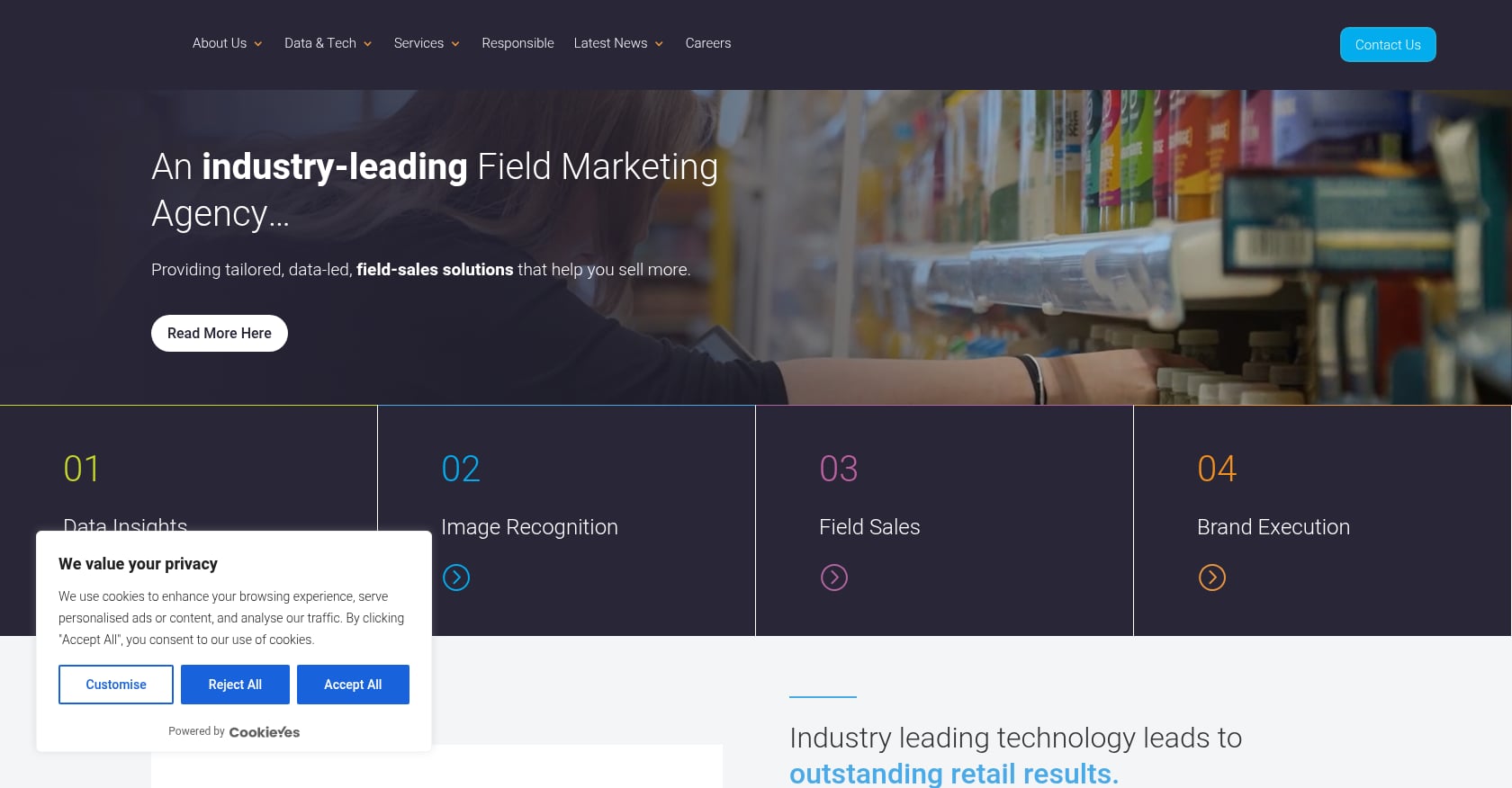
Best for: FMCG brands needing a large-scale, dedicated or syndicated field team across UK grocery with data-driven insights and AI-powered shelf analysis.
Model type: Dedicated field team (employed Brand Champions).
Pricing: Traditional agency pricing (retainer + activity fees). Requires meaningful ongoing commitment. Expect mid-to-high range budgets.
Key features:
- Claims to be the UK’s biggest field marketing workforce, with Brand Champions within 10 miles of 97% of stores in the UK
- UK’s first B Corp accredited field marketing agency
- Recognised as FMBE Agency of the Year in 2023
- Uses AI-driven image recognition technology (Reapp Vision) for real-time shelf analysis, allowing field teams to capture and analyse shelf images and quickly identify compliance issues
- Services span field marketing, store audits, compliance checks, POS installation, product recalls, and contract packing
- Part of the Dee Set Group, founded in 2000 by Lorna Davidson
- Clients include Innocent Smoothies, Kellogg’s, Co-op Group, Arla, Morrisons, and Coca-Cola
Tradeoffs:
- Traditional retainer pricing means higher upfront commitment
- Less suited to one-off micro-audits or purely digital shelf execution
- No review generation service
- The scale and infrastructure mean this is better for brands with established distribution, not early-stage challengers
Practitioner insight: Reporting from the AI Journal highlights that manual visual checks of planograms are prone to error and bias, with reps spending up to 40% of their store visit acting as data-entry clerks. Tactical Solutions’ investment in image recognition technology directly addresses this problem.
3. Elevate Field Marketing
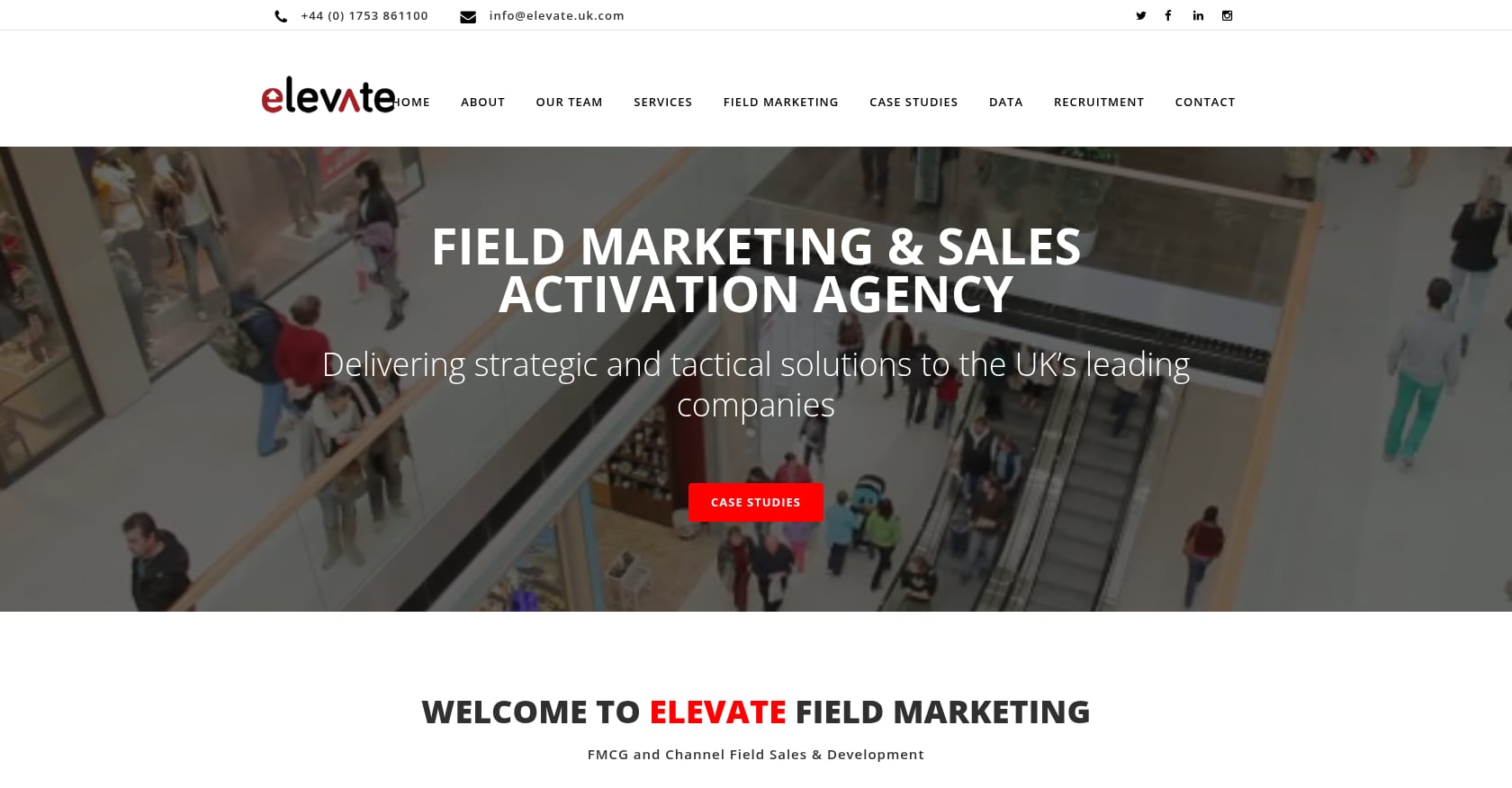
Best for: Brands that want dedicated, PAYE-employed field reps (not gig workers) for ongoing grocery execution, with a focus on consistency and control.
Model type: Dedicated field team (all PAYE-employed).
Pricing: Higher per-head cost than gig or crowdsourced models, reflecting employed status and benefits. Retainer-based.
Key features:
- Operating since 2008 across all major retail sales environments in the UK
- Senior management team has over 50 years of combined field marketing experience
- All field teams are employed on a PAYE basis, ensuring consistency and brand representation quality
- Offers strategic (dedicated teams), tactical (blitz/promotional), linked tactical, and interim field solutions
- Complete reporting solution includes in-store data capture via web app, live KPIs, and photo galleries
- Partner agency FieldSmart extends coverage into grocery multiples
Tradeoffs:
- Smaller scale than Tactical Solutions
- PAYE model means higher per-head cost, though you get greater control
- No crowdsourced or digital shelf capabilities
- Limited public client list on their website
Best fit: Brands that have been burned by inconsistent gig-worker quality and need a reliable team representing them in stores week after week. The interim field solutions are also worth considering if your own team has gaps. For a deeper comparison of dedicated versus crowdsourced approaches, see our guide on field team vs crowdsourced audits.
4. N2O

Best for: FMCG brands wanting in-store sampling and experiential activations inside major UK supermarkets, backed by behavioural science and data-driven measurement.
Model type: Experiential / shopper activation agency.
Pricing: Mid-to-high range. Experiential campaigns in the UK typically start from £15,000 for small campaigns and can exceed £100,000 for large activations.
Key features:
- Specialises in connecting brands with shoppers at the point of purchase, with strong presence in London and Berkshire
- Works extensively with Tesco, Sainsbury’s, and Asda on in-store activations
- Blends behavioural science with creative execution
- 20 years of marketing experience across automotive, FMCG, health and beauty, luxury goods, retail, and technology
- Client testimonials from Ben & Jerry’s and Boots
Tradeoffs:
- Primarily experiential and sampling, not compliance auditing
- Not suited to purely data-driven shelf checks or ongoing operational execution
- Pricing likely reflects the creative and strategic overlay
- No digital shelf or review generation services
5. Roamler
Best for: Pan-European FMCG brands needing crowdsourced audits and merchandising at scale across multiple markets including the UK.
Model type: Crowdsourced field marketing (B2B crowd-based solutions).
Pricing: Per-task pricing. From the shopper side, forum users on The Money Shed report that Roamler tasks tend to pay around £2 per task, with prices increasing near deadline. Brand-side pricing is negotiated per programme.
Key features:
- European leader in crowd-supported field marketing activities
- Founded in 2011, received €20M in funding from Endeit Capital, Smartfin, and Achmea Innovation Fund in 2020
- Services include in-store audits, merchandising execution, and review generation through their communities
- Active across UK, Netherlands, France, Germany, and more
- On-demand activation of merchandisers and sales professionals
Tradeoffs:
- European focus means the UK is one of many markets, not the sole focus
- Community-side feedback suggests per-task pay is low, which could affect data quality and completion rates
- No single-vendor UK offering combining reviews, compliance, and recalls
- Less customisable than a dedicated UK partner
Community insight: Practitioners on forums like The Money Shed describe crowdsourced audit tasks as things like “taking a photo of some Tomato Ketchup display in Asda for £5” or “buying a Vodka and Redbull in a Wetherspoons and taking a photo of the drink for £8.” This reveals the actual mechanics: real shoppers, already in store, completing quick verification tasks. The logic is straightforward. Shoppers are already there, removing travel cost and scheduling lag.
Roamler’s own content acknowledges the structural problem: internal field teams can’t cover every store with sufficient frequency, and data often arrives too late to trigger meaningful action.
6. SmartSpotter (via REL Field Marketing)
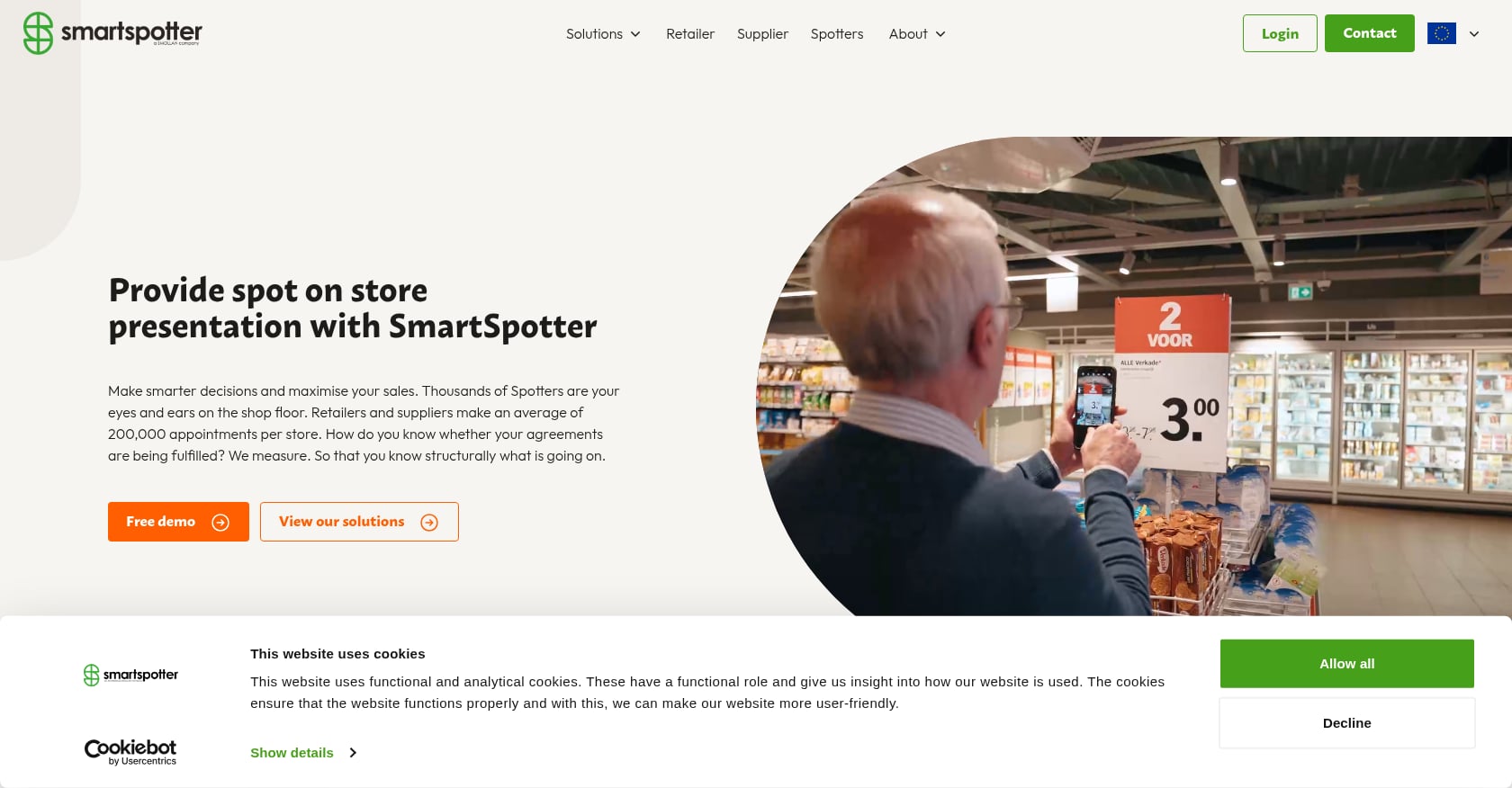
Best for: FMCG brands wanting low-cost, high-frequency in-store compliance checks via a crowdsourced model.
Model type: Crowdsourced compliance monitoring.
Pricing: Claims to be up to 50% cheaper than traditional mystery shopping and merchandising.
Key features:
- Connects retailers and suppliers to a network of field reporters and merchandisers providing eyes, insights, and hands to keep retail execution on track
- Won bronze for Operational Success of the Year at the FMBE Awards 2023, the first crowdsourced-focused business to be awarded at the FMBE awards
- Uses photo evidence, geo-tagging, and approval workflow
- Active across several European countries with tens of thousands of active Spotters carrying out assignments for more than 250 clients
Tradeoffs:
- Netherlands-headquartered, with UK presence through REL Field Marketing partnership
- No review generation or product recall capabilities
- Primarily a monitoring tool, not an action/execution service (it tells you what’s wrong but doesn’t fix it)
- Dependent on Spotter availability in your specific store locations
When to consider SmartSpotter: If you already have a field team or agency handling execution and you just need eyes on more stores more frequently. It complements rather than replaces an execution partner. For context on what to actually measure during these checks, our retail store audit checklist covers the essential KPIs.
7. Sense Marketing
Best for: Large FMCG brands wanting premium experiential activations backed by robust measurement and cultural trend forecasting.
Model type: Experiential agency (global, headquartered in London).
Pricing: High-end. Campaigns at this level typically fall in the £60,000 to £150,000+ range.
Key features:
- 35+ years of experience in live events, experiential marketing, shopper activations, product sampling, and integrated campaigns
- Proprietary measurement tool (EMR) for campaign ROI
- Through The Futures Lab, they forecast cultural and consumer trends to inform activation strategy
- Operates from London and New York
- Clients include The Economist, Coca-Cola, and Molson Coors
Tradeoffs:
- Pricing puts it out of reach for challenger brands or those with tight budgets
- Experiential focus rather than compliance or audit
- Not suited to operational execution needs
- The global and cultural positioning may be more than some FMCG brands need for straightforward grocery activations
8. Executional
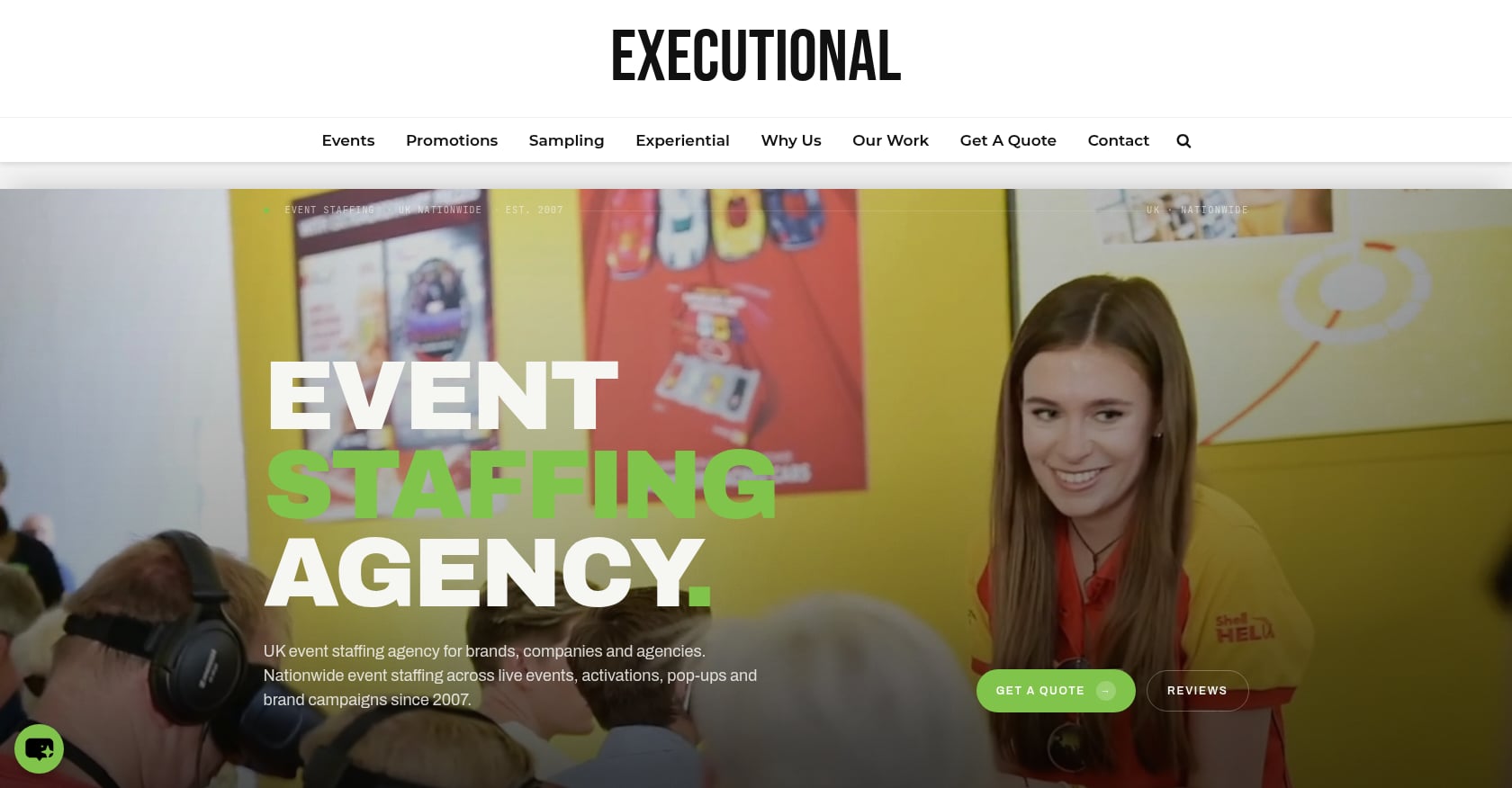
Best for: Brands needing large-scale staffing for sampling campaigns, supermarket activations, and experiential events across the UK.
Model type: Staffing and execution agency.
Pricing: Fully itemised quotes with no hidden costs. Scales based on headcount and geography.
Key features:
- 6,000+ staff across 40 UK hubs, established since 2007
- Supplies brand ambassadors, sampling staff, product demonstrators, data capture staff, event staff, and costume characters
- Delivered brand activations at music festivals for Corona, Cinch, Three, Amazon Music, and GoPuff
- Transparent quoting process
Tradeoffs:
- Primarily a staffing and execution agency, not a compliance or audit specialist
- Not suited to digital shelf or review generation needs
- Quality depends on the individual staff deployed, as with any large staffing operation
- Less strategic than agencies that blend research and activation
9. iMP Experiential
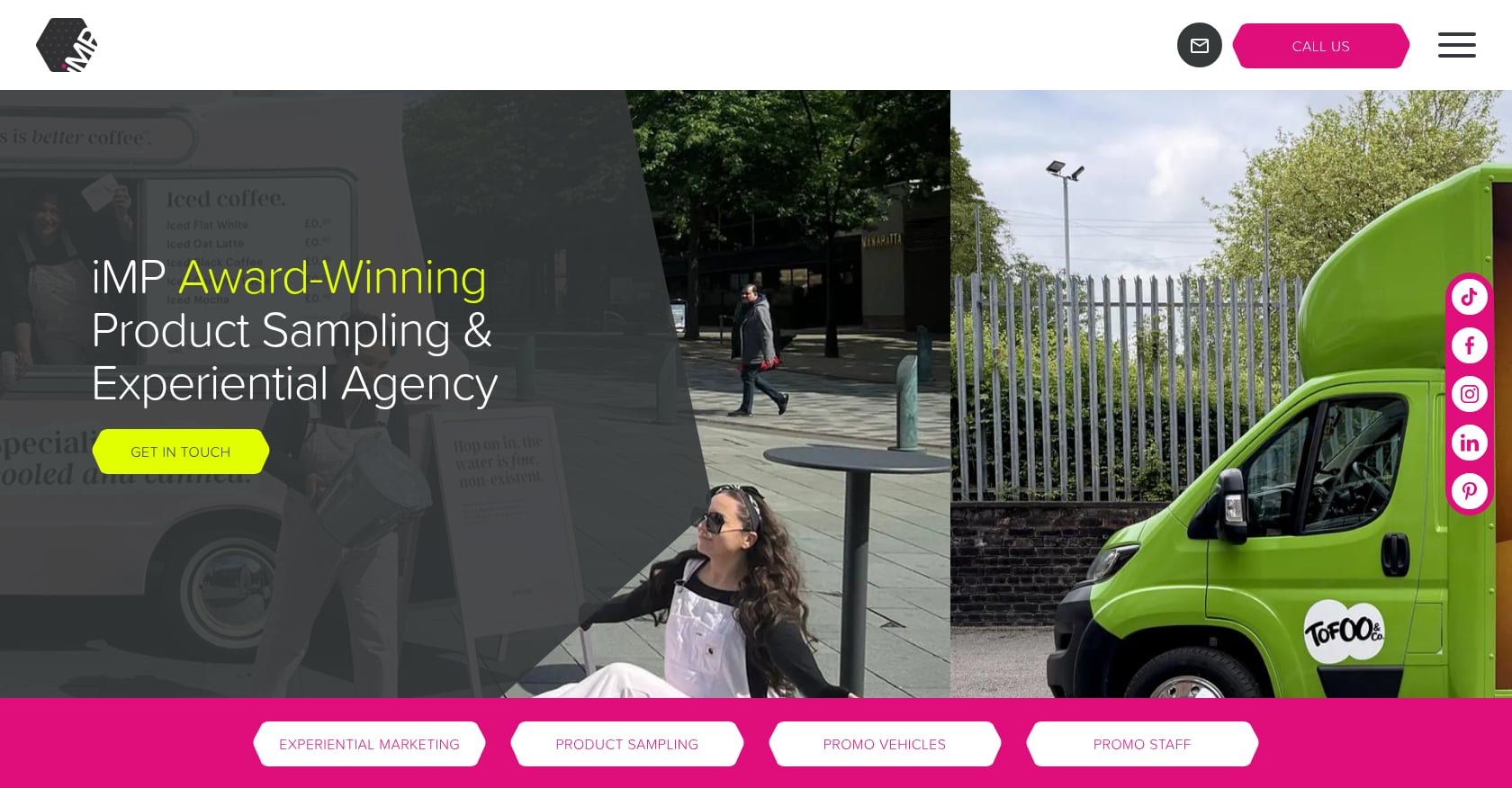
Best for: FMCG food and drink brands wanting sampling activations with creative flair, including branded vehicles, events, and festivals.
Model type: Experiential / sampling agency.
Pricing: Mid-range for experiential. Based in Leeds and London.
Key features:
- Award-winning brand activation and events agency
- Specialises in product sampling campaigns for FMCG, alcohol, and perfume launches
- Creates targeted, effective product sampling and brand activations across the UK
- Offers promo vehicle hire (ice cream vans, branded vans)
- Notable testimonial: partnered for a summer campaign executing 42 in-store events nationwide
Tradeoffs:
- Sampling and experiential specialist only, not suited for compliance auditing or digital shelf work
- Smaller operation than Tactical Solutions or Executional
- Vehicle-based activations may not be relevant for all product categories
- Limited to the experiential end of the activation spectrum
10. Contact Field Marketing (CFM)
Best for: Brands needing combined compliance auditing and mystery shopping under one roof, with photographic evidence and regular reporting.
Model type: Dedicated field team / audit service.
Pricing: Traditional agency model. Reporting packages available daily, weekly, or monthly.
Key features:
- Auditing and stock compliance services provide a clear, real-time picture of what’s happening in-store
- Combines product audits, stock audits, and compliance checks with mystery shopper and secret shopper services
- Comprehensive reports produced using bespoke reporting software with photographic evidence
- Covers product merchandising audits, pricing and promotion checks, competitor and market insights
Tradeoffs:
- Traditional agency model (not crowdsourced), so per-store costs will be higher
- Coverage may not match the scale of Tactical Solutions
- No digital shelf or review generation services
- Smaller public profile than some competitors on this list
For a deeper look at when auditing beats mystery shopping (and vice versa), see our comparison of retail audits vs mystery shopping.
How to Choose the Right In-Store Activation Agency
The number of options can be overwhelming. Strip the decision down to three questions.
1. What’s your primary problem?
Empty shelves and missing POS point you toward compliance-focused agencies (Tactical Solutions, SmartSpotter, Contact Field Marketing, or Brand Allies). Low or zero reviews on retailer PDPs point toward review generation services. Failed promotions that looked fine in the dashboard need crowdsourced verification. No field coverage at all demands a managed service.
2. Do you have a field team already?
If yes, you might just need software or a crowdsourced monitoring layer (SmartSpotter, Roamler) to extend your reach. If no, you need either a managed service like Brand Allies or a dedicated field team like Tactical Solutions or Elevate. The key distinction: software requires you to have field teams already. A managed service is the field team.
3. How many stores?
Under 200 stores, a focused dedicated field team makes sense. Over 500, you’re likely looking at a crowdsourced or blended model to get sufficient frequency without astronomical costs. For a full walkthrough comparing these approaches, read our retail execution software alternatives guide.
The trend in recent years has moved firmly toward crowdsourced models. Multiple providers now use geo-indexed shopper networks rather than dedicated field teams. But crowdsourced works best for monitoring and light-touch tasks. Depth of relationship, consistent brand representation, and complex merchandising still favour traditional field teams.
Most brands landing on this page will benefit from a blended approach: one partner for ongoing compliance monitoring, and either the same partner or a specialist for experiential or digital shelf work.
The Hidden Cost of Doing Nothing
If you’re still weighing whether to hire an in-store activation agency at all, consider what non-compliance actually costs.
FMCG brands spend an estimated 20% to 25% of their gross revenue on trade promotions. Yet a POI/Quri study found that only 10% of surveyed respondents were getting the promotional performance they agreed in the plan. That’s a staggering waste rate.
More than 50% of CPG product categories fail to meet planogram compliance at shelf level. One case study found that in 30% of a brand’s distribution network, the display area was smaller than specified by vendor contracts.
Then there’s what practitioners call the “watermelon effect”: dashboards report 95% compliance, but actual compliance is closer to 60%. Everything looks green on the surface while the interior tells a different story. As one LinkedIn practitioner argued, self-reported execution creates false confidence. Checklists get marked complete, photos can be selective, and dashboards turn green while displays are late. For a full breakdown of this problem, read about retail’s invisible revenue leak.
With private label at 44.2% market share and climbing, branded FMCG companies cannot afford these execution gaps. UK retail media spend hit £3.8bn in 2025 (up 18% year-on-year), meaning brands are spending more to drive shoppers to stores and websites. If what they find when they arrive is an empty shelf or a product page with zero reviews, that investment is wasted.
Pricing Benchmarks for In-Store Activation Agencies in the UK
Transparent pricing is rare in this industry, which makes comparison harder than it should be. Here’s what’s available.
Experiential activations: Most brand activation agencies in London start from £15,000 for small campaigns and can exceed £100,000 for large activations. Three tiers cover roughly 90% of briefs: small-scale moments at £10,000 to £25,000, mid-scale activations at £25,000 to £60,000, and full-production campaigns at £60,000 to £150,000+.
Ongoing field marketing or trade agency support: A specialist shopper or trade agency typically runs £4,000 to £12,000 per month for ongoing JBP support.
Crowdsourced models: SmartSpotter claims costs up to 50% lower than traditional mystery shopping. Individual crowdsourced tasks pay shoppers £2 to £8 each, suggesting brand-side per-task costs are modest but accumulate with volume.
Retail execution software: Licence fees range from approximately £4 to £8 per user per month on starter plans up to £250 or more per user per month for enterprise solutions. But remember, software requires you to have a field team to use it.
Pay-per-result models: Brand Allies offers pay-per-verified-review pricing, which is a fundamentally different model from retainer-based field agencies. You pay for outcomes, not activity. For details on how this pricing compares to other review approaches, see our review generation pricing guide.
See Brand Allies’ promotional compliance service
UK FMCG Market Context: Why This Matters in 2026
The UK FMCG market in 2026 is performing with resilience rather than momentum. Growth is present but constrained. Consumers are still spending, just more selectively.
That selectivity is the problem. When a shopper walks into Tesco and your product is out of stock, they don’t come back tomorrow. They buy the own-label alternative and may not switch back. When they search for your product on Sainsbury’s website and your PDP has three reviews while the own-label competitor has forty, they click the competitor.
The brands that will grow their share in this environment are the ones that close the gap between what’s planned and what’s executed. That’s what an in-store activation agency does at its best: it turns your commercial plan into physical and digital reality, store by store.
Frequently Asked Questions
What does an in-store activation agency actually do?
It depends on the type of agency. Experiential agencies run sampling events, pop-ups, and demos. Field marketing agencies handle merchandising, POS installation, and shelf compliance. Crowdsourced agencies use networks of real shoppers to audit stores at scale. Managed-service agencies like Brand Allies combine digital shelf execution (reviews), physical shelf compliance, and product withdrawals under one contract.
How much does it cost to hire an in-store activation agency in the UK?
Small experiential campaigns start from around £10,000 to £15,000. Mid-scale activations run £25,000 to £60,000. Ongoing field marketing support typically costs £4,000 to £12,000 per month. Crowdsourced models can be significantly cheaper per store visit. Pay-per-result models like Brand Allies’ vary based on volume and scope.
What’s the difference between a field marketing agency and a crowdsourced audit provider?
Field marketing agencies employ dedicated reps who visit stores regularly, build relationships with store managers, and execute merchandising. Crowdsourced providers activate networks of ordinary shoppers to complete quick verification tasks like photographing displays or checking pricing. Field teams offer depth, crowdsourced offers breadth.
Do I need an in-store activation agency if I already have retail execution software?
Software gives you data, but it requires your own field team to collect it and act on it. If you don’t have field staff, software alone won’t solve compliance problems. A managed service or crowdsourced agency provides both the eyes in-store and the data platform.
How do I measure ROI from in-store activations?
Track metrics like on-shelf availability improvement, promotional compliance rates, incremental sales lift during activation periods, review volume and velocity on retailer PDPs, and reduction in out-of-stock incidents. Our promotional compliance measurement guide covers the specific KPIs to watch.
What is the “watermelon effect” in retail execution?
It refers to dashboards that show green (95% compliance) on the surface while actual in-store reality is far worse (closer to 60%). Self-reported data, selective photography, and checklist ticking create false confidence. Independent verification through crowdsourced or third-party audits is the fix.
Can one agency handle both online reviews and in-store compliance?
Most cannot. Experiential agencies don’t cover digital shelf. Field marketing agencies don’t generate reviews. Brand Allies is currently the only UK provider offering online product reviews, in-store compliance activations, and discreet product withdrawals under a single contract, using the same shopper community for all three.
What should I look for when shortlisting an in-store activation agency UK provider?
Focus on five things: whether their model type matches your actual problem, their geographic coverage relative to your distribution, their FMCG experience (grocery retail is different from other sectors), their reporting and evidence standards (photo evidence, geo-tagging), and their pricing structure (retainer vs. per-task vs. per-result). A shopper activation campaign checklist can help structure your evaluation.