

TL;DR
One in three Boots shoppers won't consider a product without reviews. Getting reviews on Boots.com requires working within the Bazaarvoice ecosystem that powers the platform. The eight main routes are shopper advocacy services, Bazaarvoice syndication, the Boots Review Panel, post purchase emails, Influenster sampling, in store QR code prompts, CRM driven requests, and responding to existing reviews. Each varies in cost, speed, and volume. All must comply with the DMCCA 2024 fake reviews ban that took effect in April 2025. Beyond generating reviews, brands that track rating share, run sentiment analysis, and benchmark against competitors consistently outperform those that treat reviews as a one off project.
At a Glance Comparison: All 8 Methods
| Method | Estimated Cost | Speed to First Reviews | Volume Potential | Compliance Risk | Best For |
|---|---|---|---|---|---|
| Shopper Advocacy Service | Pay per review | Days | Scalable | Low (if disclosed) | Brands needing fast, genuine reviews |
| Bazaarvoice Syndication | £5K to £15K+/yr | 4 to 12 weeks setup | High | Low | Large brands with DTC traffic |
| Boots Review Panel | Product cost only | 4 to 8 weeks | Medium | Low | NPD launches |
| Post Purchase Email (PIE) | Bazaarvoice fee | Ongoing | High (long term) | Low | High velocity SKUs |
| Influenster Sampling | Bazaarvoice fee + product | 4 to 6 weeks | Medium to High | Low | Beauty and health brands |
| In Store Sampling + QR Codes | Promo budget | Weeks | Low to Medium | Low | Brands with store presence |
| CRM/Loyalty Email | Minimal | Weeks | Low to Medium | Low | Brands with customer databases |
| Review Response | Free | Immediate | N/A (conversion lift) | None | Everyone |
Why Reviews on Boots.com Matter More Than You Think
Boots is not just another retailer. It earned elite retailer status in the 2025 UK Top 500 report from RetailX Intelligence, sitting alongside Amazon, Apple, and Tesco. The site attracted over 18 million unique visitors in November 2023 alone, and digital sales grew 18.7% year on year through October 2024.
That traffic means nothing for your product if shoppers land on a bare PDP. According to Bazaarvoice's own case study with Boots, one in three Boots guests won't even consider a product that has no reviews. Two thirds of Boots.com visitors actively interact with review content. You're not just missing a nice to have. You're losing sales from the majority of visitors.
The numbers get more specific. PowerReviews research shows that shoppers visiting PDPs with 11 to 30 reviews convert at more than double the rate of those visiting pages with zero reviews. The sweet spot for star ratings is 4.75 to 4.99, not a perfect 5.0 (which triggers scepticism). Understanding why the first 30 reviews matter is critical for any brand selling through Boots.
A one time burst of reviews also won't cut it. Recency matters to shoppers. A steady flow of fresh reviews consistently outperforms a single spike, which is why review velocity should be part of your ongoing digital shelf strategy.
Explore how a managed review service can build sustained review coverage on Boots.com.
How Reviews Work on Boots.com: The Technical Setup
Before picking a method, you need to understand the plumbing. Boots uses Bazaarvoice as its ratings and reviews platform. The Boots Review Panel terms and conditions explicitly name Bazaarvoice, Inc. as the third party service provider. Every review that appears on a Boots.com product page passes through Bazaarvoice's moderation system.
Reviews arrive on Boots PDPs through four channels:
- Organic reviews from Boots.com shoppers who voluntarily leave feedback after purchase.
- Syndicated reviews pulled from brand DTC sites or other retailers within the Bazaarvoice network.
- Panel reviews from the Boots Review Panel (consumer testing programme).
- Advocacy or sampling reviews generated through structured programmes where real shoppers buy, try, and review.
Moderation typically takes two to four business days. Boots reserves the right to reject reviews that don't meet their guidelines. Any review from an incentivised or sampled experience must carry a disclosure tag. This is both a Bazaarvoice rule and, as of April 2025, a legal requirement.
Boots Review Panel vs. Boots Volunteers Panel
One important distinction that often causes confusion: the Boots Review Panel and the Boots Volunteers Panel are different programmes. The Review Panel sends third party brand products to consumers who then review them on Boots.com. The Volunteers Panel is an R&D testing programme for Boots own brands (No7, Soap & Glory, Soltan, etc.) where participants get paid £10 to £125 per study. If you're a third party brand, the Volunteers Panel is irrelevant to your review strategy. For a deeper look at what counts as a verified product review in a retail context, that distinction matters.
Boots Content Guideline Compliance
Every review submitted to Boots.com must pass Bazaarvoice's moderation before it goes live. Boots' content guidelines are more prescriptive than many brands expect, and failing to account for them is a common reason reviews get rejected.
Reviews will be blocked or removed if they contain promotional language, competitor mentions, external URLs, or pricing references. Boots also flags reviews that lack proper incentivisation disclosure or read as obviously templated. Practitioners on Trustpilot who work with Bazaarvoice report that "legitimate reviews are blocked with no transparency" by the fraud detection system, so even genuine reviews can get caught if they trigger automated filters.
To reduce rejection rates:
- Avoid instructing reviewers on what to say. Provide product information, not scripts.
- Ensure every incentivised or sampled review carries a clear disclosure tag before submission.
- Keep review content focused on the product experience. No links, no competitor names, no pricing.
- Check that reviewers use an email address not already flagged in the Bazaarvoice system.
Brands running structured review programmes should build moderation compliance into their briefing process. For a broader look at the rules, the product review compliance guide covers DMCCA requirements, ASA rules, and Bazaarvoice's own policies.
Now, here are the eight methods that actually work for getting reviews on Boots.
1. Shopper Advocacy Service
Best for: Brands that need fast, genuine, retailer verified reviews on Boots.com.
This approach uses a managed community of real UK shoppers who purchase your product from Boots, use it at home, and then post an honest review on the Boots.com PDP. Because the purchase is real, the review carries verified buyer status.
How it works on Boots specifically:
- A UK based shopper community receives a brief for your product.
- Shoppers buy the product from Boots (online or in store).
- After genuine use, they post reviews directly on Boots.com through the Bazaarvoice interface.
- Reviews go through standard Bazaarvoice moderation and appear within two to four business days.
Key features:
- Pay per verified review pricing removes upfront budget risk.
- Reviews land on the actual retailer PDP where purchase decisions happen.
- Works for NPD launches, seasonal pushes, or catching up on review bare SKUs.
- No Bazaarvoice contract required on the brand side.
Tradeoffs:
- Each review only appears on the specific retailer where the purchase was made (no cross retailer syndication).
- Incentivised reviews must carry disclosure to comply with DMCCA rules.
- Retailer moderation can reject some submissions, so not every attempt results in a live review.
Practitioners on Trustpilot who have used advocacy style services note that moderation rejection rates vary by retailer and product category, making it important to work with a provider that understands each retailer's specific guidelines.
For review generation pricing context, pay per review models typically offer more predictable costs than annual SaaS subscriptions, especially for brands with smaller portfolios.
2. Bazaarvoice Review Syndication
Best for: Large brands with existing Bazaarvoice contracts and significant DTC website traffic.
If you already collect reviews on your own brand website through Bazaarvoice, those reviews can be syndicated to Boots.com automatically. This is the most common way that high volume products accumulate hundreds of reviews on Boots without relying solely on Boots shoppers.
How it works on Boots specifically:
An Econsultancy analysis of Boots.com found that many of the 352 reviews for a Braun Oral B Genius toothbrush were syndicated from the Oral B site and P&G's Victoria.co.uk. The majority of 194 Philips Sonicare reviews came from Philips.co.uk. This is Bazaarvoice syndication in action.
Key features:
- Bazaarvoice reports that retail sites accepting syndication see a median of 83% more reviews per product than those without.
- Half of Bazaarvoice retailers source at least 65% of their reviews directly from brands.
- Reviews syndicate automatically once the technical integration is live.
Tradeoffs:
- Annual cost of £5,000 to £15,000+ for a standard Bazaarvoice tier, with enterprise pricing higher still.
- Setup takes 4 to 12 weeks depending on technical complexity.
- Practitioners on Trustpilot report frustration with Bazaarvoice's lack of transparency: "There's no actual visibility into where your reviews appear," one long term user wrote.
- If your DTC site generates few reviews, there's little to syndicate.
If you're exploring whether syndication is the right fit or want to compare options, our guide to syndication platforms breaks down the trade offs.
3. The Boots Review Panel (Consumer Testing Panel)
Best for: NPD launches where you have a strong relationship with your Boots buyer.
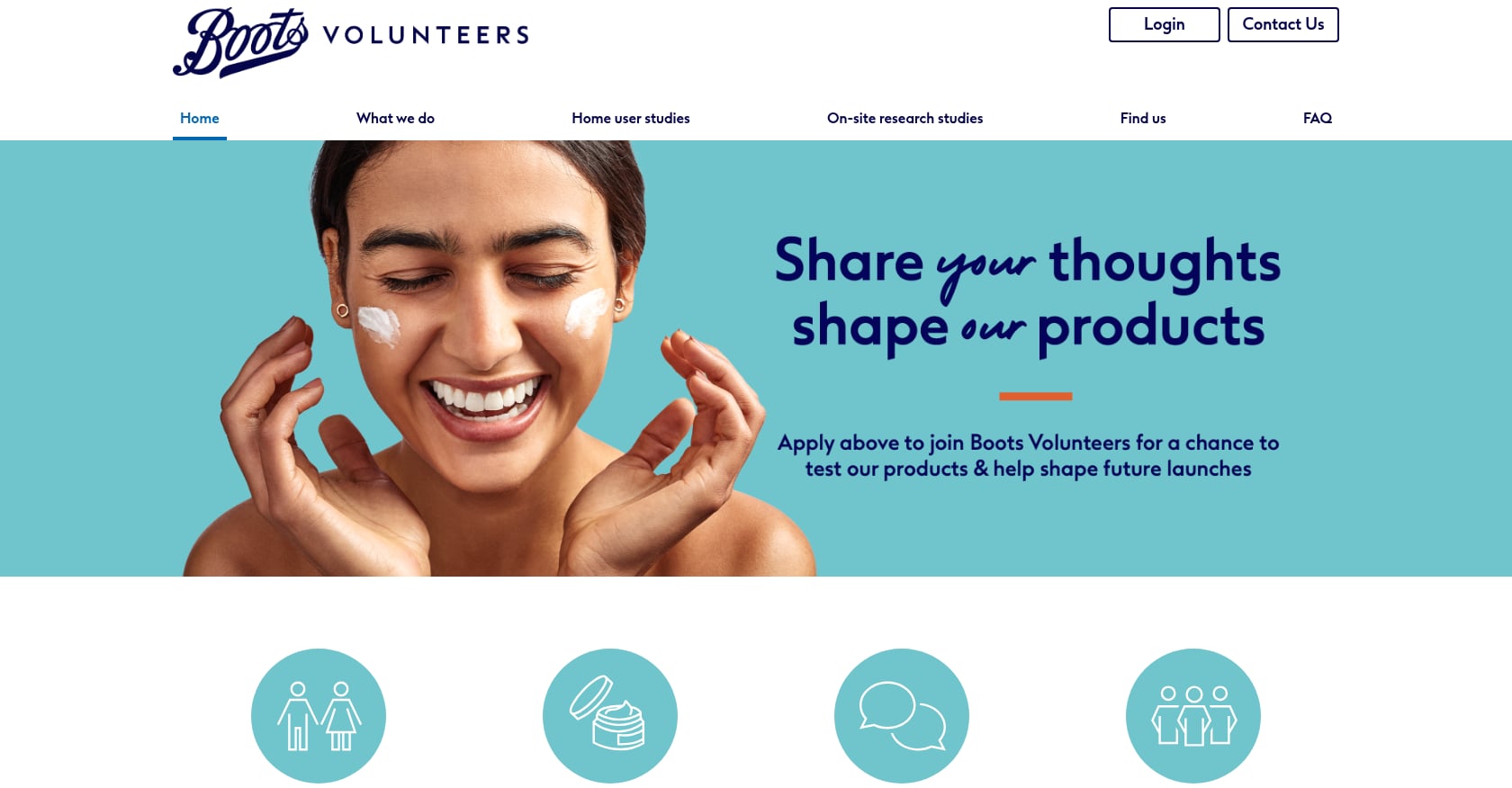
The Boots Review Panel is a consumer testing programme where manufacturers who sell products in Boots send free products to panel members. Those members then use the product and leave a review on Boots.com within 28 days.
How it works on Boots specifically:
- When a consumer joins the panel, they agree to let Boots share their contact details with manufacturers or trusted third parties.
- The brand ships products directly to panel members.
- Panel members must post a review within 28 days of receiving the product.
- Reviews are moderated through Bazaarvoice and typically appear within two to four business days.
Key features:
- Cost is limited to the product itself (no platform fee).
- Panel members have opted in and are genuinely engaged. TikTok content creators actively share how to join the Boots Review Panel, suggesting real consumer enthusiasm.
- Reviews carry a sampled/gifted disclosure, which is compliant under DMCCA rules.
Tradeoffs:
- Access is gated through your Boots buyer or trade relationship. You can't simply sign up.
- Volume is limited by panel size and willingness to participate.
- Not every panel member will follow through, even with the 28 day requirement.
- Only works if your product is already listed or about to be listed in Boots.
4. Post Purchase Email Review Requests (PIE)
Best for: Established products with strong, ongoing sales velocity through Boots.com.
Post interaction email (PIE) is the backbone of organic review collection across European e commerce. Data from Econsultancy shows that 84% of organic reviews on retailer sites in Europe come from post purchase emails. If your products sell consistently through Boots.com, this channel can generate a steady stream of unprompted, organic reviews.
How it works on Boots specifically:
- After a customer purchases your product on Boots.com, Bazaarvoice triggers an automated email inviting them to leave a review.
- The email links directly to the review submission form on the relevant PDP.
- Boots controls the email cadence and timing; brands cannot send these independently.
Key features:
- Reviews are entirely organic and carry no incentivisation disclosure.
- Cost is covered within Boots' existing Bazaarvoice contract (not a direct brand expense).
- Creates a self sustaining review loop as sales grow.
Tradeoffs:
- Brands have limited control. You can't influence when or how Boots sends these emails.
- New products with low sales velocity generate very few PIE reviews.
- The typical grocery and health and beauty review rate is only 0.1% to 0.3%, meaning you need thousands of sales to generate meaningful review volume.
- You're dependent on Boots having PIE enabled for your product category.
5. Bazaarvoice Influenster Sampling

Best for: Beauty and personal care brands wanting high volume, photo rich reviews.
Influenster is Bazaarvoice's own community of product reviewers and content creators. Brands ship free products to Influenster members, who then post reviews across the Bazaarvoice network, including on Boots.com if the product is listed there.
How it works on Boots specifically:
- Bazaarvoice matches your product to relevant Influenster community members based on demographics and category interest.
- Products are shipped free. Members try them at home and post reviews.
- Reviews are tagged as sampled and can syndicate to Boots.com through the Bazaarvoice network.
Key features:
- Access to a large, active community of reviewers.
- Reviews often include photos and detailed written content, which adds credibility.
- Can generate volume quickly for product launches.
Tradeoffs:
- Requires a Bazaarvoice relationship and associated fees, plus product costs.
- Reviews appear as sampled, which some shoppers weight differently than organic reviews.
- You don't control which retailers receive syndicated reviews.
- The programme favours beauty and personal care categories. It's less effective for household or grocery products.
For brands comparing this approach to other options, product sampling platforms vary significantly in how they handle retailer targeting and disclosure.
6. In Store Sampling with QR Code Review Prompts
Best for: Brands with existing in store presence and promotional budgets at Boots.
Boots operates over 2,000 stores across the UK. If you run in store sampling, demos, or promotional activations, you can add a QR code that links directly to the Boots.com review submission form. This bridges the gap between physical product trial and digital review capture.
How it works on Boots specifically:
- During an in store sampling event or promotional display, shoppers try your product.
- A QR code on the display, sample packaging, or promotional card directs them to the Boots.com review page.
- Shoppers submit their review after genuine use.
Key features:
- Pairs physical trial (which builds confidence) with digital review generation.
- Can be layered onto existing promotional activity at minimal incremental cost.
- Reviews are organic since the shopper is voluntarily participating.
Tradeoffs:
- Conversion from scan to completed review is typically low. Most people scan, then forget.
- Requires coordination with Boots store teams and compliance with in store promotional guidelines.
- Not scalable for brands without an active in store activation calendar.
- Follow up is difficult since you rarely capture the shopper's email.
7. CRM and Loyalty Driven Organic Review Requests
Best for: Brands with established direct to consumer email lists or loyalty programmes.
If you have your own customer database, you can email customers who you know buy your products at Boots and ask them to leave a review. This works particularly well for brands with subscription models, loyalty programmes, or active social media communities.
How it works on Boots specifically:
- Identify customers in your CRM who have purchased from Boots (via surveys, purchase data, or self reported data).
- Send a personalised email asking them to review the product on Boots.com.
- Link directly to the PDP review form.
Key features:
- Minimal cost (just your email platform).
- Reviews are organic since these are real customers sharing genuine experiences.
- No third party platform dependency.
Tradeoffs:
- Most FMCG brands don't know which customers buy from which retailer.
- Volume depends entirely on your database size and engagement rates.
- You're asking customers to navigate to Boots.com and complete a multi step form, which creates friction and drop off.
- Cannot be used to target specific SKUs with precision unless your CRM data is very granular.
8. Respond to Existing Reviews (Conversion Optimisation)
Best for: Every brand, immediately, at zero cost.
This isn't a review generation method. It's a conversion multiplier that most brands ignore entirely. Bazaarvoice data shows that responding to a negative review with an apology and offer of a refund or exchange produces a 92% increase in purchase intent. Responding with guidance on how to use the product differently leads to a 186% increase in purchase intent.
How it works on Boots specifically:
- Bazaarvoice provides brand response tools that let you reply publicly to reviews on Boots.com.
- Responses appear beneath the original review, visible to all shoppers.
Key features:
- Completely free.
- Immediate impact on conversion for anyone reading the review thread.
- Demonstrates brand care and responsiveness, which builds trust.
- Turns negative reviews into conversion opportunities rather than letting them suppress sales.
Tradeoffs:
- Requires someone to monitor reviews regularly.
- Bazaarvoice brand response tools may require a separate login or access arrangement.
- Doesn't add new reviews, only enhances the value of existing ones.
The bottom line: if you have reviews on Boots.com that you haven't responded to, that's the single fastest thing you can do today.
How to Monitor Boots Reviews Effectively
Generating reviews means nothing if you aren't tracking what happens after they go live. Most brands check their Boots PDPs sporadically, if at all. That's a mistake. Review monitoring should be a recurring operational task, not something you remember to do before a buyer meeting.
What to monitor and how often:
- New review volume per SKU: Check weekly. A sudden drop in new reviews signals that your generation methods have stalled or that Boots' PIE cadence has changed.
- Star rating movement: Track the rolling average. A shift from 4.6 to 4.3 on a key SKU needs investigation, not just observation.
- Negative review themes: Watch for patterns. Three reviews mentioning a packaging defect is a quality signal. One complaint about taste is noise.
- Response gaps: Flag any negative or question based review that hasn't received a brand response within five business days.
- Moderation rejections: If you're running advocacy or sampling campaigns, track how many submitted reviews actually go live vs. how many get blocked.
Tools and approaches:
Bazaarvoice provides a brand portal with basic review monitoring. For brands without a Bazaarvoice contract, manual PDP checks or third party digital shelf tools are the alternatives. Some brands assign this to their e commerce team; others run it through their agency.
The key is consistency. Weekly review monitoring catches problems early and gives you data to bring into buyer conversations. A brand that can show its Boots buyer a chart of review growth over the past quarter is in a stronger negotiating position than one that can't.
Rating Share: The Competitive Metric Most Brands Ignore
Star ratings on individual products matter, but they don't tell you how you stack up against competitors in the same Boots category. That's where rating share comes in.
Rating share measures your brand's proportion of total review volume and average star rating within a category or subcategory on a specific retailer. If there are 1,000 total reviews across all vitamin C serums on Boots.com and your product accounts for 300 of them with a 4.7 average, your rating share is strong. If a competitor has 500 reviews at 4.8, they're dominating the social proof in that category.
Why rating share matters on Boots specifically:
- Boots.com search results surface star ratings and review counts prominently. Shoppers compare products side by side, and the product with more reviews and a higher rating wins clicks disproportionately.
- Retailer search ranking on Boots.com factors in review signals. Products with higher review volume and better ratings tend to rank higher in on site search results.
- During range reviews, Boots buyers look at sell through data, but also at customer engagement signals. A product with weak rating share relative to competitors is vulnerable.
How to calculate it:
- Identify your category or subcategory on Boots.com (e.g., "facial moisturisers" or "children's vitamins").
- Record the total number of reviews and average star rating for each competing product.
- Calculate your share of total reviews and your rating relative to the category average.
This doesn't require fancy software. A spreadsheet updated monthly gives you enough data to spot trends and make decisions. The brands that track rating share consistently are the ones that can tell their Boots buyer, "We've grown our review share from 15% to 28% this quarter," and that's a compelling data point during negotiations.
Review Sentiment Analysis: Turning Feedback into Product Intelligence
Most brands treat reviews as a marketing metric (more stars equals more sales). That's only half the picture. Reviews are also the largest unstructured feedback dataset most FMCG brands have access to, and on Boots.com, that data is public.
What review sentiment analysis actually involves:
Sentiment analysis means systematically categorising what reviewers say about your product and identifying patterns. At its simplest, this means reading every review and tagging it by theme: packaging, efficacy, scent, value for money, texture, ease of use, and so on. At scale, brands use text analysis tools or AI based platforms to automate the tagging.
Why it matters on Boots:
- Product development: If 40% of your 3 star reviews mention that the pump dispenser breaks, that's a product design issue, not a marketing problem. Fixing it will improve your average rating faster than any review generation campaign.
- Marketing messaging: If reviewers consistently praise a specific benefit you don't emphasise in your PDP copy, that's a gap. Boots PDPs with review content that reinforces the product description convert better than those where reviews contradict the claims.
- Competitor intelligence: You can run the same sentiment analysis on competitor products in your Boots category. If their negative reviews cluster around "too greasy" and yours don't, that's a positioning advantage worth highlighting.
Practical approach for FMCG brands:
You don't need enterprise software to start. Export or manually compile your Boots reviews into a spreadsheet. Tag each review with 2 to 3 themes and a positive/negative/neutral label. Look for clusters. Even 50 reviews will reveal patterns that the aggregate star rating hides.
Brands that feed sentiment data back into their Boots buyer presentations demonstrate a level of category engagement that buyers notice. It also helps prioritise which products need review generation investment and which need product fixes.
How to Benchmark Boots Review Performance
Without benchmarks, you're flying blind. "We have 45 reviews" means nothing without context. Is that good for your category on Boots? Are competitors growing faster? Is your average rating above or below the category norm?
What to benchmark:
| Metric | What It Tells You | Benchmark Frequency |
|---|---|---|
| Review count per SKU | Absolute coverage level | Monthly |
| Average star rating | Product quality perception | Monthly |
| Rating share vs. competitors | Relative category position | Quarterly |
| Review recency (% from last 90 days) | Freshness of social proof | Monthly |
| Review velocity (new reviews per week) | Momentum of your programme | Weekly |
| Sentiment distribution by theme | Underlying product issues | Quarterly |
| Moderation rejection rate | Campaign quality | Per campaign |
Where to find the data:
Boots.com PDPs display review counts, star ratings, and individual review dates publicly. You can build a benchmark tracker with nothing more than manual checks and a spreadsheet. For brands with 20+ SKUs on Boots, digital shelf monitoring tools or services that scrape this data automatically are worth the investment.
Setting realistic targets:
PowerReviews data suggests the conversion lift threshold sits around 30 reviews per SKU. If you're below that, your primary benchmark goal should be reaching 30. Above that, shift focus to recency (keeping at least 20% of reviews from the last 90 days) and maintaining your star rating above the category average.
Compare your Boots performance to your performance on other retailers too. If you have 200 reviews on Tesco but 12 on Boots for the same product, that gap represents lost conversion on a site with 18 million monthly visitors.
Compliance Checklist: What Every Brand Must Know in 2025
Getting reviews on Boots is not a grey area anymore. UK review law changed fundamentally in April 2025, and the penalties are severe.
The DMCCA 2024 fake reviews ban came into force on 6 April 2025. Several practices became automatically unlawful, including obtaining or posting fake reviews, paying for reviews that aren't clearly marked as incentivised, hiding negative reviews, and presenting star ratings that give an inaccurate picture.
Enforcement has real teeth. The CMA can now impose fines of up to 10% of global annual turnover or £300,000 (whichever is higher). Ongoing breaches can attract daily penalties of up to 5% of daily turnover or £15,000 per day. Directors and managers who knew about or permitted breaches face personal liability.
The CMA is actively enforcing. As of early 2025, the CMA launched five new consumer law investigations specifically targeting fake and misleading reviews, bringing the total to 14 businesses under review.
What this means for your review programme:
- Every incentivised or sampled review must carry clear disclosure.
- You cannot selectively suppress negative reviews or gate review collection to only satisfied customers.
- Bazaarvoice's own policy states: "We don't allow companies to directly ask for positive reviews."
- Boots' moderation system flags reviews that lack proper disclosure.
For a complete breakdown, the product review compliance guide covers the specific rules, disclosure formats, and practical steps for UK FMCG brands.
Building Your Boots Review Strategy
No single method will solve the problem. The brands that dominate Boots.com PDPs combine multiple approaches. A practical portfolio might look like this:
For a new product launch: Start with a shopper advocacy service for fast initial reviews, activate the Boots Review Panel through your buyer relationship, and layer in Bazaarvoice syndication if you have DTC reviews to pull from.
For an established product with thin reviews: Use CRM emails to activate your existing customer base, ensure post purchase emails are flowing through Boots' Bazaarvoice setup, and start responding to every existing review. Add packaging inserts to capture customers during product use.
For ongoing maintenance: Keep review velocity steady with a mix of advocacy and organic methods. Monitor recency. A product with 200 reviews from 2022 is less compelling than one with 50 reviews from the last three months. Track rating share quarterly to ensure you're not losing ground to competitors.
The maths are straightforward. PowerReviews data shows that visitors who interact with reviews convert at a rate 108% higher than those who don't. Molton Brown reported a 54% lift in revenue per visitor when customers engaged with reviews on their Bazaarvoice powered pages. The ROI of a review programme is measurable and, for most brands, substantial.
If you're ready to build review coverage on Boots.com, book a demo with Brand Allies to see how a managed shopper advocacy approach works in practice.
FAQ
Can any brand access the Boots Review Panel?
Not directly. The Boots Review Panel is accessed through your Boots buyer or trade relationship. Manufacturers who sell products in Boots can arrange to send free products to panel members for testing and review. If you don't have an existing Boots listing or buyer contact, you'll need to explore other methods first.
Does Boots accept syndicated reviews from brand websites?
Yes, but only through the Bazaarvoice network. If your brand collects reviews on your own site using Bazaarvoice, those reviews can syndicate to Boots.com automatically. Many high review count products on Boots.com (like Oral B and Philips) draw the majority of their reviews through syndication.
How long does it take for a review to appear on Boots.com?
According to the Boots Review Panel terms and conditions, ratings and written comments are generally posted within two to four business days. Reviews that fail moderation (missing disclosure, inappropriate content, suspected fraud) may be rejected entirely.
Are incentivised reviews legal on Boots.com?
Yes, provided they carry clear disclosure. Since 6 April 2025, the DMCCA makes it unlawful to post incentivised reviews that are not clearly marked as such. Bazaarvoice's system supports disclosure tagging, and Boots' moderation process checks for compliance.
What's the difference between the Boots Review Panel and the Boots Volunteers Panel?
The Review Panel is for third party brand products. Manufacturers send free products to panel members who review them on Boots.com. The Volunteers Panel is a separate R&D programme for Boots own brands (No7, Soap & Glory, etc.) where participants are paid £10 to £125 per study. The Volunteers Panel does not generate public reviews.
How many reviews do I need on a Boots PDP to impact conversion?
PowerReviews research indicates that the conversion lift begins with just one review (52.2% lift), but the biggest jump happens between 11 and 30 reviews, where conversion rates more than double compared to zero review pages. Aiming for at least 30 reviews per SKU is a practical target.
What happens if the CMA finds my review programme non compliant?
Fines can reach up to 10% of global annual turnover or £300,000, whichever is higher. Daily penalties for ongoing breaches can reach 5% of daily turnover or £15,000 per day. Directors who knew about or allowed the breach can be held personally liable.
Can I ask customers to leave only positive reviews on Boots?
No. Bazaarvoice explicitly prohibits companies from asking for positive reviews. The DMCCA also bans selectively suppressing negative reviews or presenting star ratings that give a misleading impression. All review requests must be neutral: ask for honest feedback, full stop.
What is rating share and why should I track it?
Rating share measures your brand's proportion of total review volume and average star rating within a Boots category. It tells you whether you're winning or losing the social proof battle against direct competitors. Tracking it quarterly gives you data to bring into buyer meetings and helps prioritise which SKUs need review investment.
How do I run sentiment analysis on my Boots reviews?
Start by exporting or compiling your reviews into a spreadsheet. Tag each review with 2 to 3 themes (packaging, efficacy, scent, value) and a positive/negative/neutral label. Look for clusters. Even 50 reviews will reveal patterns that aggregate star ratings hide. At scale, text analysis tools or AI platforms can automate the process.