
TL;DR
A POS visibility check service is a third party verification process that confirms whether a brand's point of sale materials are correctly deployed and visible in retail stores. In the UK, non compliance rates run as high as 50%, meaning half of what brands negotiate with retailers never materialises at shelf level. These services use photo verified evidence, geo tagging, and structured checklists to give brands proof of what actually happened in store, protecting trade spend and strengthening retailer negotiations. The best providers now deliver real time photo reporting, turning what used to be a weeks long merchandising audit into something brands can act on within hours.
What Is a POS Visibility Check Service?
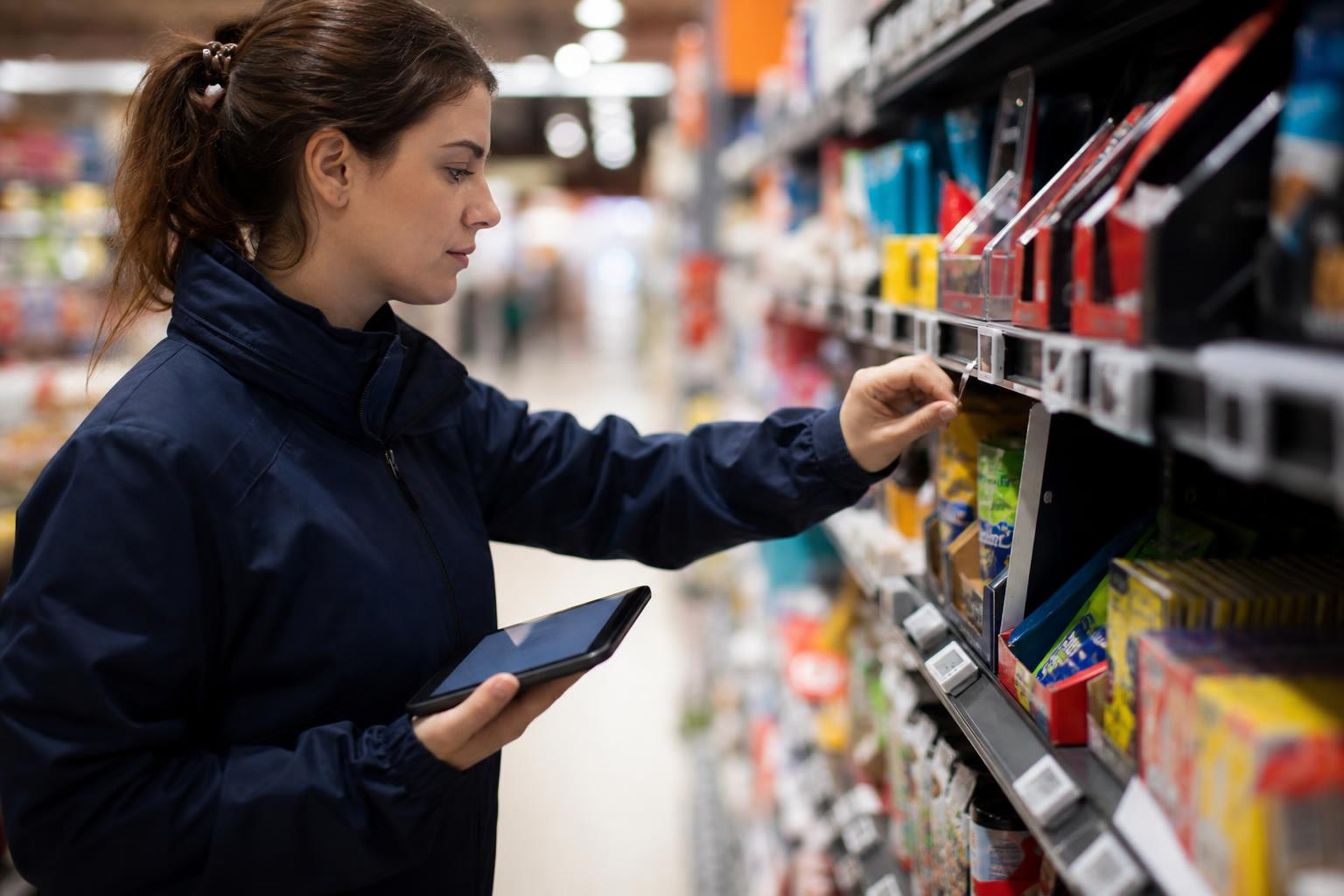
A POS visibility check service is an outsourced verification process where a third party (typically a field marketing agency or a crowdsourced shopper network) visits retail stores to confirm that a brand's point of sale materials have been deployed correctly. The checks cover whether displays, shelf barkers, wobblers, dump bins, header cards, and promotional signage are present, positioned as agreed, and visible to shoppers.
One important clarification: "POS" in this context refers to physical in store marketing materials, not payment terminals or till software. Many search results conflate the two, which creates confusion for trade marketing teams looking for display compliance solutions. This article is about the materials designed to influence purchase decisions on the shop floor, not the technology used to process transactions.
If your brand invests in POSM (point of sale materials) at UK grocers like Tesco, Sainsbury's, Morrisons, or Asda, a POS visibility check tells you whether that investment actually landed.
Explore in store compliance services to see how photo verified checks work in practice.
Why POS Visibility Checks Exist: The Compliance Gap
The gap between what brands plan and what shoppers actually see in store is staggering. POPAI UK research indicates that in store execution non compliance runs as high as 50% in the UK. Half of the shelf positions, promotional displays, and POS placements that brands negotiate with retailers never materialise properly at the point of purchase.
This isn't an outlier finding. NielsenIQ data from 2023 shows that up to 40% of displays are set up incorrectly or not at all. A separate POI/Quri study found that only 10% of surveyed manufacturers were getting the promotional performance they agreed in the plan, with many still paying for execution they never received.
The financial consequences are severe. UK FMCG brands pour up to 25% of gross revenue into trade promotions, making it one of the largest line items on the P&L. When a third of that spend disappears because promotions fail at store level, the waste adds up fast. POPAI UK & Ireland estimates that £1.3 billion is spent annually on point of purchase advertising across UK retail. If half of it doesn't land, that's hundreds of millions in wasted investment every year.
Even small execution failures carry measurable cost. According to Wiser Solutions, the average SKU loses 6% of weekly sales to something as simple as a missing facing or an abandoned promo tag. For a brand running a four week campaign across hundreds of stores, that compounds quickly.
The data from McKinsey and the Grocery Manufacturers Association reinforces the point from the other direction: stronger performing CPG companies had display compliance of 71% versus just 52% for others, and planogram adherence of 89% versus 64%. Execution quality is not a nice to have. It directly separates the brands that grow from the ones that stall. For a deeper look at planogram adherence specifically, the planogram compliance measurement guide covers formulas and benchmarks.
For a broader look at what compliance means for UK brands, the retail compliance checklist breaks down each element.
Why Self Reporting Doesn't Work
Many brands rely on their own field reps or retailer reports to confirm POS execution. The problem is that self reported data creates false confidence. As one practitioner on LinkedIn argued, checklists get marked complete, photos can be selective, and dashboards turn green while displays are late, bays are half filled, and planograms drift.
A visit report tells you a rep was in a store. It does not tell you what actually happened there.
This is exactly the gap that independent POS visibility check services fill. They provide unbiased, photo verified evidence of store level reality, collected by people who have no incentive to report anything other than what they see.
What a POS Visibility Check Covers
A standard POS visibility check service follows a structured checklist. The specifics vary by brand and campaign, but most checks cover the same core elements:
POS material presence. Is the agreed shelf barker, wobbler, dump bin, or freestanding display unit actually in place? POSM is often the most wasted element of trade spend because it requires store staff to physically install the materials, and that doesn't always happen.
Display condition and completeness. Is the display built correctly? Is it stocked with the right products? Is it clean, intact, and functioning as designed?
Correct positioning. Is the POS in the agreed location, whether that's an aisle end, checkout zone, eye level shelf, or store entrance? Location matters enormously. A gondola end that gets moved to the back of an aisle has a fraction of its intended impact.
Pricing accuracy. Does the shelf edge label match the promotional price? This ties directly to UK Price Marking Order requirements, which were updated in October 2025 to tighten rules around clear and accurate price labelling.
Competitor activity. What are rival brands doing on the same shelf or in the same category bay? This intelligence helps brands understand their relative share of shelf and competitive positioning.
Photographic evidence and scoring. Every check produces photo evidence, store level scores, and actionable findings so brands can fix problems while campaigns are still live. This is the critical output: not just a yes/no answer, but documented proof that can be shared with retailer partners.
Many brands frame these checks within a Perfect Store framework, where each store receives a score based on how closely it matches the ideal execution standard.
How a Merchandising Audit Fits Into POS Visibility
A POS visibility check is one piece of a broader merchandising audit. Understanding the relationship matters because brands that treat them as interchangeable end up with gaps in their execution intelligence.
A merchandising audit evaluates the full spectrum of how a product is presented in store. That includes planogram adherence, shelf space allocation, stock levels, pricing accuracy, promotional display execution, and the condition of the category fixture itself. It answers the question: "Is our brand being merchandised the way we agreed, across every touchpoint?"
A POS visibility check is narrower. It focuses specifically on whether promotional materials and displays are present, correctly placed, and visible. Think of it as a subset of the merchandising audit, zeroing in on the assets that brands design and pay for but depend on store staff to execute.
Where things get interesting is when brands run both together. Practitioners on Reddit's retail operations communities report that combining a focused POS check with broader merchandising metrics (like facing counts and stock depth) produces a much more complete picture of why a promotion succeeded or failed. A display can be perfectly built but surrounded by out of stocks, which kills the commercial impact. Conversely, full shelves mean nothing if the promotional header card is missing and shoppers walk past without noticing the offer.
The practical recommendation is to use POS visibility checks as a fast, high frequency pulse, and layer in a fuller merchandising audit on a quarterly or seasonal cycle. The in store display audit guide covers how to structure this layered approach.
What a Merchandising Audit Typically Evaluates
| Element | POS Visibility Check | Full Merchandising Audit |
|---|---|---|
| Display presence and condition | Yes | Yes |
| POSM placement accuracy | Yes | Yes |
| Planogram compliance | Sometimes | Yes |
| Facing count and share of shelf | Rarely | Yes |
| Stock depth and on shelf availability | Rarely | Yes |
| Pricing and promo tag accuracy | Yes | Yes |
| Fixture condition | No | Yes |
| Competitor shelf activity | Sometimes | Yes |
For brands running multi store campaigns, the multi store compliance audit guide explains how to scale audits without losing data quality.
How POS Visibility Check Services Work
There are three main delivery models for POS visibility checks. Each has distinct trade offs around cost, speed, and scalability.
1. Internal Field Team Audits
Staff members or a brand's own field team conduct the audits. The advantage is high control and deep brand knowledge. The disadvantages are significant: high cost per visit, limited geographic coverage, and poor scalability. A field team of 20 people simply cannot audit 2,000 stores in a promotional window.
2. Agency Based Audits
External service providers handle the entire audit process. They bring professionalism and experience, but agency audits tend to be cost intensive for large scale deployments and can be slow in data delivery. By the time results come back, the promotional window may be half over.
3. Crowdsourced Shopper Audits
This is where the industry is heading for FMCG. A distributed network of real shoppers, already present in stores as regular customers, complete structured checks via a mobile app. They submit geo tagged photos, answer standardised questionnaires, and provide time stamped evidence that confirms what they found.
The crowdsourced model solves the two biggest problems with traditional approaches: scale and speed. A network of thousands of shoppers can audit hundreds of stores in days, not weeks. The data arrives with GPS coordinates, timestamps, and photographic proof, making it far harder to dispute than self reported information.
For a detailed comparison, the guide on shopper led store audits covers the cost, coverage, and reliability differences.
Practitioners in trade marketing forums frequently note that the crowdsourced model also captures a more authentic shopper perspective. A merchandiser visiting a store knows where to look and may unconsciously optimise what they report. A real shopper navigating a store naturally reveals whether the POS is actually visible from the paths customers take.
The Rise of Micro Audits
Many successful FMCG brands are shifting from large, periodic audit campaigns to smaller, more frequent "micro audits" with tightly focused scope. Instead of auditing everything once a quarter, they run quick checks on specific displays or promotions as they go live. This allows faster response times and catches problems before they compound across a full campaign window.
Learn about retail execution alternatives that support this approach.
Real Time Photo Reporting: Why Speed Changes Everything
The traditional audit cycle works like this: a brand launches a campaign, waits days or weeks for field data, reviews a static PDF report, and then tries to fix problems in stores where the promotional window may already be closing. That lag between execution failure and corrective action is where brands lose money.
Real time photo reporting eliminates most of that delay.
Modern POS visibility check services, particularly those built on crowdsourced networks, deliver photo verified evidence to brand dashboards within hours of a store visit. The shopper walks the aisle, photographs the display (or its absence), answers the structured questionnaire, and submits everything through a mobile app. GPS coordinates and timestamps are captured automatically. The brand team sees the results the same day.
This matters for several reasons.
Corrective action while the campaign is still live. When a brand discovers on day two that 30% of stores haven't set up the display, there's still time to contact the retailer, escalate to store managers, or dispatch field reps to the worst offenders. Under the old model, that insight arrived after the campaign ended.
Evidence that holds up in retailer conversations. Time stamped, geo tagged photos carry more weight than summary reports delivered weeks later. Retailers find it harder to push back on compliance discussions when the brand can show photos taken on specific dates in specific stores. The store compliance reporting guide covers best practices for structuring these conversations.
Pattern detection across the estate. Real time data makes it possible to spot regional patterns early. If stores in the Midlands consistently underperform on setup while Scotland hits 90% compliance, the brand can adjust field support accordingly rather than treating the whole estate as a single average.
One project manager shared in a YouTube walkthrough of a crowdsourced audit platform that the shift to real time reporting changed their entire promotional planning process. Instead of treating audits as a post mortem exercise, their team started treating the first 48 hours of audit data as a live feedback loop, reallocating field reps to problem stores before the first weekend of the campaign.
What Real Time Reporting Looks Like in Practice
A typical real time photo reporting workflow runs like this:
- Brief creation. The brand defines the check: which stores, which displays, which questions, which photos are required.
- Shopper activation. The platform pushes the task to eligible shoppers near target stores. With a pre verified, geo indexed network, this can happen within hours.
- In store capture. The shopper visits the store, follows the checklist, photographs the relevant fixtures and displays, and submits responses via the app.
- Automated validation. The platform checks GPS coordinates against the target store location, verifies photo metadata, and flags incomplete submissions.
- Dashboard delivery. Results appear on the brand's dashboard, typically within 24 hours and sometimes faster, with store level scores, photos, and exception alerts.
The speed advantage over traditional agency audits is significant. Where an agency might take five to ten working days to compile results across a national campaign, a crowdsourced model with real time reporting can cover hundreds of stores in 48 to 72 hours.
For brands evaluating providers, the retail audit ROI benchmark guide includes frameworks for calculating the value of faster data against the cost of delayed action.
When to Use a POS Visibility Check Service
Knowing when to deploy a POS visibility check service matters as much as choosing the right provider. These checks deliver the most value at specific moments in the commercial calendar:
New product launches (NPD). When distribution is fresh and retailer buy in is being tested, confirming that launch displays are correctly deployed is critical. A poor first impression at shelf can sink a new SKU before trial has a chance to build. The NPD launch execution timeline maps out the key checkpoints.
Promotional campaigns. This is the most common trigger. Whether it's a price promotion, a seasonal display, or a themed campaign, brands need to verify that the retailer executed what was agreed. Wiser Solutions data shows that non compliance peaks during week one (missed setup) and week three (display degradation or early teardown). A POS check at launch, mid point, and close out catches problems at the moments they're most likely to occur.
The promotional campaign checklist provides a step by step framework for managing execution around these windows.
Seasonal peaks. Christmas, Easter, summer, and back to school periods generate the highest POSM investment. They're also the times when store staff are most stretched, making execution failures more likely.
Before retailer range reviews or JBP discussions. Walking into a range review with store level compliance data gives brands a completely different negotiating position. More on this below.
When sales data shows underperformance despite distribution. If your product is listed in 500 stores but sales suggest it's performing as if it's in 300, a POS visibility check can reveal whether the problem is execution rather than demand.
HFSS compliance verification. Since October 2025, volume promotions like BOGOF and multibuy deals have been banned for HFSS (high fat, sugar, and salt) products in England for retailers with 50 or more employees. Location based restrictions also limit where HFSS products can be placed, banning them from end caps, checkouts, and store entrances. A POS visibility check can verify that both the brand and retailer are meeting these requirements.
How POS Check Data Strengthens Retailer Relationships
One of the most underappreciated benefits of a POS visibility check service is the negotiation power it creates.
Photo verified compliance scorecards, broken down by retailer and region, give brands factual evidence for range reviews and joint business plan discussions. When you can demonstrate that a retailer achieved only 60% compliance on an agreed promotion, you shift the conversation from anecdote to evidence.
This matters in practical terms. If a brand invested £50,000 in POSM for a campaign and the retailer only deployed materials in 55% of agreed stores, the brand has grounds to renegotiate terms, request make goods, or restructure the next agreement. Without photo evidence, that conversation becomes a dispute the retailer almost always wins.
Consistent compliance data also builds a longitudinal picture. Over time, brands can identify which retailers, regions, or even individual stores consistently underperform on execution. This intelligence feeds directly into distribution planning and retailer visibility strategy.
Store level scorecards also work in the brand's favour during range reviews. When a retailer can see that a brand actively monitors and invests in in store execution, it signals category commitment. Retailers favour brands that maintain strong on shelf availability and actively manage store execution.
POS Visibility Checks vs. Mystery Shopping
It's worth clarifying the distinction. A mystery shopping visit evaluates the customer experience: staff knowledge, service quality, store cleanliness. A POS visibility check is narrower and more operational. It verifies whether specific marketing materials are present, correctly positioned, and visible. The two can overlap, but they serve different purposes. For a detailed breakdown, see the guide on mystery shopper services.
How Brand Allies Supports POS Visibility Checks
Brand Allies offers a POS visibility check service built on a network of 250,000+ UK shoppers who are already ID verified and geo indexed. These shoppers complete structured POS checks across major UK retailers, submitting photo verified evidence with GPS timestamps. Because the network is already onboarded, activation takes hours rather than weeks, making it possible to run checks at the speed promotional campaigns demand.
The real time photo reporting capability means brands see results on their dashboard the same day checks are completed, not after a weeks long reporting cycle.
Book a demo to see how POS visibility checks work for your brand.
Related Terms
POSM (Point of Sale Materials): The physical promotional assets placed in store, including shelf barkers, wobblers, dump bins, display units, and header cards.
Planogram compliance: Whether products are shelved in the position, sequence, and facing count specified by the retailer's planogram.
On shelf availability (OSA): Whether a product is physically present and buyable on the shelf at the moment a shopper wants it.
Share of shelf: The proportion of shelf space a brand occupies relative to competitors in the same category.
Perfect Store: A framework (used by Unilever, P&G, and others) that scores stores against an ideal execution standard covering availability, visibility, pricing, and promotion.
Promotional compliance: Whether a promotion was executed as agreed, covering pricing, display, timing, and supporting POSM.
Display compliance: Specifically whether promotional displays (freestanding units, dump bins, gondola end features) were built and maintained correctly.
HFSS compliance: Adherence to England's restrictions on the promotion and placement of products high in fat, sugar, or salt.
Merchandising audit: A comprehensive evaluation of how products are presented in store, covering planograms, shelf allocation, stock levels, pricing, and promotional execution. Broader in scope than a POS visibility check.
Real time photo reporting: The delivery of geo tagged, time stamped photographic evidence from store visits to brand dashboards within hours, enabling same day corrective action on execution failures.
Frequently Asked Questions
What does "POS" mean in POS visibility check?
POS stands for Point of Sale and refers to physical marketing materials placed in retail stores, such as shelf barkers, wobblers, dump bins, and promotional displays. It does not refer to payment terminals or till systems. The confusion is common, but in an FMCG trade marketing context, POS always means the materials designed to catch a shopper's attention and influence purchase decisions.
How much does a POS visibility check service cost?
Costs vary significantly depending on the model. Internal field teams carry the highest per visit cost due to salary, travel, and management overhead. Agency audits typically charge per store visit plus reporting fees. Crowdsourced models tend to be the most cost effective at scale because they eliminate the need for dedicated travel and use shoppers already present in stores. Pricing for any POS visibility check service is usually bespoke, based on the number of stores, check complexity, and reporting requirements.
How often should brands run POS visibility checks?
At minimum, brands should check at campaign launch, mid point, and close out. Non compliance data from Wiser Solutions shows problems clustering in week one (missed setup) and week three (degradation or early teardown). Many brands are now moving toward more frequent micro audits, running quick, focused checks on specific displays rather than infrequent large scale sweeps.
Can POS checks help with HFSS compliance?
Yes. Since October 2025, HFSS products face location based restrictions in England, preventing placement at checkouts, store entrances, and end of aisle displays. A POS visibility check service can verify that both the brand's materials and the retailer's product placement comply with these regulations, reducing the risk of enforcement action.
What is the difference between a POS visibility check and a retail audit?
A POS visibility check is a subset of a broader retail audit. A full retail store audit might cover pricing, on shelf availability, planogram compliance, competitor activity, and staff interactions. A POS visibility check focuses specifically on whether promotional materials and displays are present, correctly positioned, and visible to shoppers.
What is the difference between a POS visibility check and a merchandising audit?
A merchandising audit covers the full range of how products are presented in store: planogram adherence, shelf allocation, stock depth, pricing, and fixture condition. A POS visibility check is narrower, focused on confirming that promotional materials and displays are deployed as agreed. Most brands benefit from running focused POS checks frequently and layering in a comprehensive merchandising audit on a quarterly cycle.
Why can't brands just rely on retailer reports to confirm POS execution?
Retailer reports often confirm that materials were delivered to the store, but delivery is not the same as deployment. Materials can sit in a stockroom, be installed incorrectly, or be removed early. Independent verification through a POS visibility check service provides photo evidence of what actually happened on the shop floor, which is the only reliable way to confirm execution.
What evidence does a POS visibility check produce?
A typical check produces geo tagged and time stamped photographs, structured questionnaire responses, store level compliance scores, and an aggregated dashboard view. With real time photo reporting, this evidence arrives within hours rather than weeks. It can be used internally for performance tracking and externally in retailer negotiation meetings to support conversations about execution quality.
How quickly can real time photo reporting deliver results?
With a crowdsourced network that is already onboarded and geo indexed, brands typically see results on their dashboard within 24 hours of store visits. Some providers deliver even faster, depending on network density in the target area. This is a significant improvement over traditional agency audits, which can take five to ten working days.