

TL;DR
The best shopper activation agency for your UK FMCG brand depends on the job you need done: retailer review generation, in-store compliance checks, cashback-led product trial, enterprise review syndication, or large-scale experiential campaigns. This guide compares nine UK-relevant providers by use case, pricing signals, public user sentiment, and honest tradeoffs. For brands that need verified retailer PDP reviews plus in-store activation under one managed service, Brand Allies is the strongest starting point. For pure retail audits, cashback trial, or enterprise UGC infrastructure, other providers on this list may be better fits.
Book a Brand Allies demo to see how verified retailer reviews work for UK FMCG brands.
Why this list exists
Most “top shopper activation agencies UK” lists mix creative agencies, sampling firms, cashback apps, field marketing companies, and review SaaS platforms into one big pile, as if they all solve the same problem. They don’t.
A brand manager trying to boost Tesco PDP reviews has a completely different need than someone planning a sampling roadshow across 50 Boots locations. Treating these as the same brief leads to wasted budget, wrong partners, and slow results.
PowerReviews’ analysis of over 4.5 billion visits across 1.5 million product pages found that shoppers who interact with ratings and reviews convert at 120% higher rates. At the same time, NielsenIQ reported that out-of-stock products across UK, French, and Spanish shelves resulted in sales losses approaching €2 billion. The digital shelf and the physical shelf are now connected problems.
This guide separates the top shopper activation agencies in the UK by what they actually do best, with pricing signals, user feedback, and tradeoffs that directory listings leave out. For a deeper look at what shopper activation means in practice, that guide covers definitions and examples.
At-a-glance comparison table
| Provider | Best for | Activation type | Pricing signal | Public sentiment | Main tradeoff |
|---|---|---|---|---|---|
| Brand Allies | UK retailer PDP reviews + in-store activation | Managed shopper advocacy + field activations | Bespoke, pay per verified review | Trustpilot 4.3/5 (shopper-side) | No cross-retailer syndication; newer brand-side proof |
| Field Agent UK | Fast crowdsourced audits and shopper insight | Crowd audits + Buy/Try/Review | From £40 per shopper insight visit | G2: 4.5/5 (14 reviews) | Not a full-service shopper creative agency |
| Roamler | Route-to-market execution and store evidence | AI-powered crowd audits + execution | Quote-based | Trustpilot: 4.2/5 (1,768 reviews) | Better for audits than retailer review generation |
| SmartSpotter | Quick POS, display and promo checks | Crowdsourced retail compliance | Shopper tasks £2 to £10, up to £35+ | App Store: 4.3/5; Trustpilot: 2.4/5 | Mixed public shopper sentiment |
| Shopmium | Cashback-led supermarket trial | Receipt-based cashback app | Free consumer app; brand pricing not public | Trustpilot: 3.3/5 (784 reviews) | Weak for retailer PDP review strategy |
| Bazaarvoice | Enterprise UGC and review syndication | Review SaaS + sampling + syndication | No public pricing or free trial | G2: 4.2/5 (809 reviews) | Enterprise-oriented; potentially overkill for UK-specific review seeding |
| PowerReviews | Review SaaS, Q&A and analytics | Review management + UGC + sampling | Custom; ~2 months implementation | G2: 4.4/5 (196 reviews) | SaaS platform, not a UK shopper workforce |
| Home Tester Club | At-home product testing and consumer feedback | Product testing / sampling community | Free for testers; brand pricing not public | Trustpilot: 2.8/5 (347 reviews) | Less precise for retailer PDP reviews |
| N2O | Large experiential and sampling campaigns | Retail experiential + brand ambassadors | Market benchmarks: £15k to £100k+ | Fieldmarketing.com: 20 years, major FMCG clients | Not a review-generation or always-on audit partner |
Choose by activation job, not agency fame
Before scanning the list, figure out which job matters most right now. This framework prevents the common mistake of comparing a review platform against a sampling agency as though they’re interchangeable.
| Your priority | What you need | Best-fit type |
|---|---|---|
| Retailer PDP review growth | Verified reviews on Tesco, Sainsbury’s, Boots, Ocado, etc. | Shopper advocacy / review generation partner |
| In-store execution proof | Photo evidence of availability, POS compliance, pricing, display | Field audit / retail execution partner |
| Trial and sampling | Get product into shoppers’ hands and measure response | Cashback, sampling, or experiential agency |
| Enterprise UGC syndication | Collect reviews once, distribute across retailer network | Review management SaaS |
| High-impact live activation | Pop-ups, roadshows, retail theatre, brand ambassadors | Experiential / brand activation agency |
How we chose these agencies
Every provider on this list was evaluated against nine criteria:
- UK relevance. Does it operate in or specifically target the UK FMCG market?
- Retailer coverage. Can it reach Tesco, Sainsbury’s, Asda, Morrisons, Boots, Ocado, and other major UK retailers?
- Shopper activation capability. Does it activate real shoppers to take measurable actions?
- Public proof or user sentiment. Is there G2, Trustpilot, Reddit, or App Store feedback?
- Pricing transparency. Can a buyer understand the cost model before the first sales call?
- Use case clarity. Is it clear what problem this provider solves?
- Compliance posture. Does the provider’s model fit UK consumer protection and advertising rules?
- Outcome measurement. Can you track what happened?
- Tradeoffs. What does it not do well?
We excluded pure brand-awareness agencies and included shopper platforms when brands use them to drive purchase, trial, reviews, or retail evidence.
The 9 best shopper activation agencies and platforms in the UK
1. Brand Allies

Best for: UK FMCG brands that need verified retailer PDP reviews and in-store activation under one managed service.
Brand Allies is a managed-service shopper advocacy platform built for UK FMCG brands. Launched in 2024 as the retail sub-brand of Redwigwam, it draws on a 250,000-strong UK shopper community to buy, try, and review products directly on retailer websites.
The key distinction: this is not a SaaS platform where you manage your own review collection. It is a managed service where real UK shoppers purchase products from retailers like Tesco, Sainsbury’s, Ocado, Asda, Morrisons, Boots, Holland & Barrett, Waitrose, Iceland, Amazon, and TikTok Shop, then leave verified reviews on those retailer PDPs.
Pricing:
- Bespoke, pay per verified review.
- Demo only, no free trial.
Key features:
- Managed shopper advocacy campaigns across major UK retailers.
- UK-resident, ID-verified shopper workforce (inherited from Redwigwam’s 10-year infrastructure).
- Verified purchase workflow: shoppers buy, try, then review.
- In-store audits covering POS compliance, pricing checks, and distribution verification.
- Discreet product withdrawals for appropriate market withdrawal scenarios.
- Brand portal and shopper app for campaign management.
Tradeoffs:
- No cross-retailer syndication. A review appears only on the retailer where the shopper bought the product.
- Limited public case studies, with under two years of trading history.
- Some retailer moderation systems may reject reviews, so 100% approval isn’t guaranteed.
- Incentivised review campaigns must be carefully structured under ASA/CAP and retailer terms.
Why it ranks first for top shopper activation agencies in the UK:
Brand Allies is the only provider on this list that combines retailer review generation, in-store compliance checks, and discreet product withdrawals in one contract, all powered by a UK-only shopper community. The pay-per-verified-review model also removes a common budget objection, since brands pay for outcomes, not platform access.
For brands whose main issue is getting more product reviews on UK grocery and health PDPs, this is the most directly aligned option. Homepage client logos include Coca-Cola, Strong Roots, Little Moons, Bol Foods, and Jordans.
2. Field Agent UK
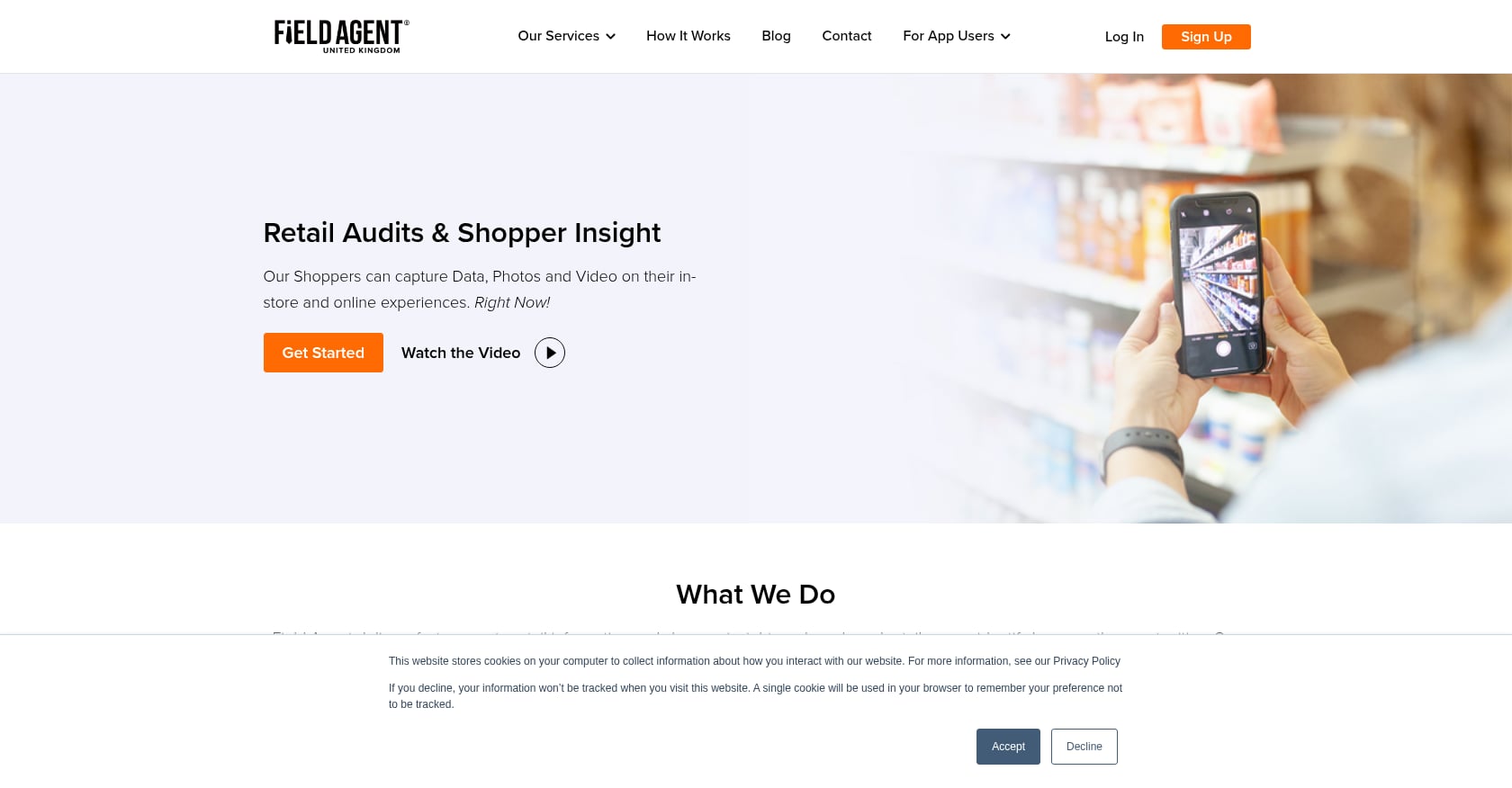
Best for: Fast, tactical crowdsourced shopper insight, store audits, and Buy/Try/Review tasks.
Field Agent UK operates a crowdsourced model where a network of over 200,000 UK shoppers completes store visits, photo audits, mystery shops, and product trial tasks via a mobile app.
Pricing:
- Shopper insight visits start at £40 per visit (per Field Agent UK’s LinkedIn profile).
- Larger projects are likely quote-based.
Key features:
- Crowdsourced retail audits with photo and video evidence.
- Buy, Try & Review campaigns.
- Mystery shopping.
- Shopper experience research.
- Product feedback collection.
Tradeoffs:
- Strong for tactical one-off evidence, but not a managed UK FMCG review strategy across specific retailer PDPs.
- G2 reviewers note limited gig availability and payout minimums.
- Not a creative shopper marketing agency.
User sentiment:
G2 rates Field Agent at 4.5/5 from 14 reviews. Users consistently praise ease of use and the ability to earn while shopping. Common complaints centre on low job availability in some areas and minimum payout thresholds.
For a direct comparison between audit-focused platforms, see this Roamler vs Field Agent vs Brand Allies breakdown.
3. Roamler
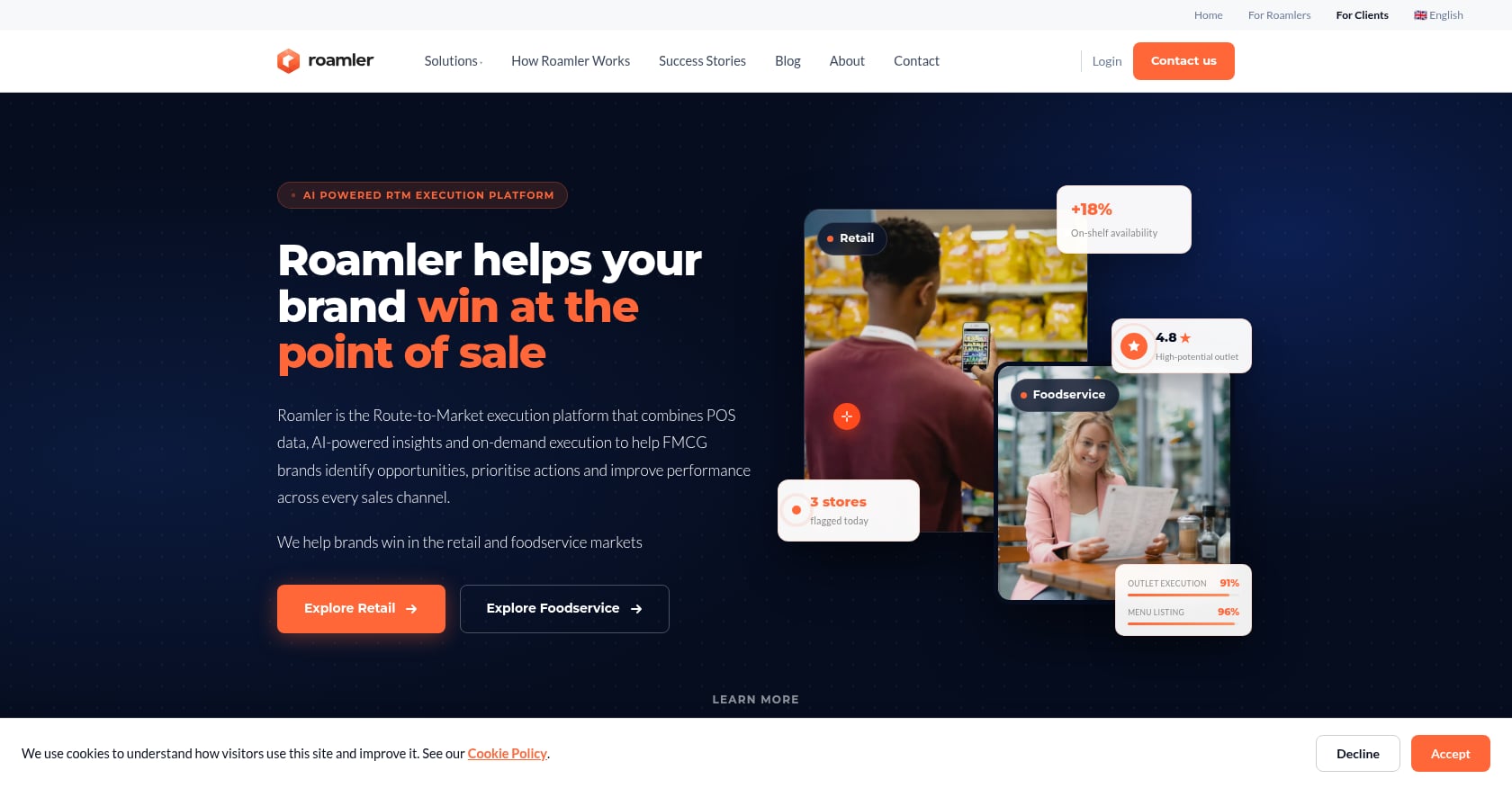
Best for: Ongoing retail execution visibility with an audit-to-action loop.
Roamler positions itself as an AI-powered route-to-market execution platform. It combines ground-truth store data, AI image recognition, and an on-demand field crowd to identify execution gaps, send people to stores, fix issues, and measure results.
Pricing:
- Brand-side pricing is not public.
- Shopper task pay varies by market, complexity, and type.
Key features:
- Crowdsourced retail execution and store audits.
- AI image recognition for shelf analysis.
- On-demand field crowd for corrective visits.
- Mystery visits and product review tasks (in some markets).
- Roamler reported 960,000 retail store audits in its 2025 year-in-numbers LinkedIn summary.
Tradeoffs:
- Stronger for store audits and route-to-market execution than for retailer-specific review generation.
- Global platform; may be less tailored to UK FMCG review campaigns than a UK-only partner.
- Shopper-side supply can be affected by task pay and difficulty.
User sentiment:
Trustpilot shows Roamler at 4.2/5 from 1,768 reviews. Practitioners on Reddit’s r/beermoneyuk discuss rate-and-review tasks and store visits, with a recurring warning that travel time and strict rejections can make some tasks unattractive, while dense routes and better-paying jobs still make the app worthwhile.
Explore in-store compliance services if your priority is UK retailer shelf checks combined with review generation.
4. SmartSpotter
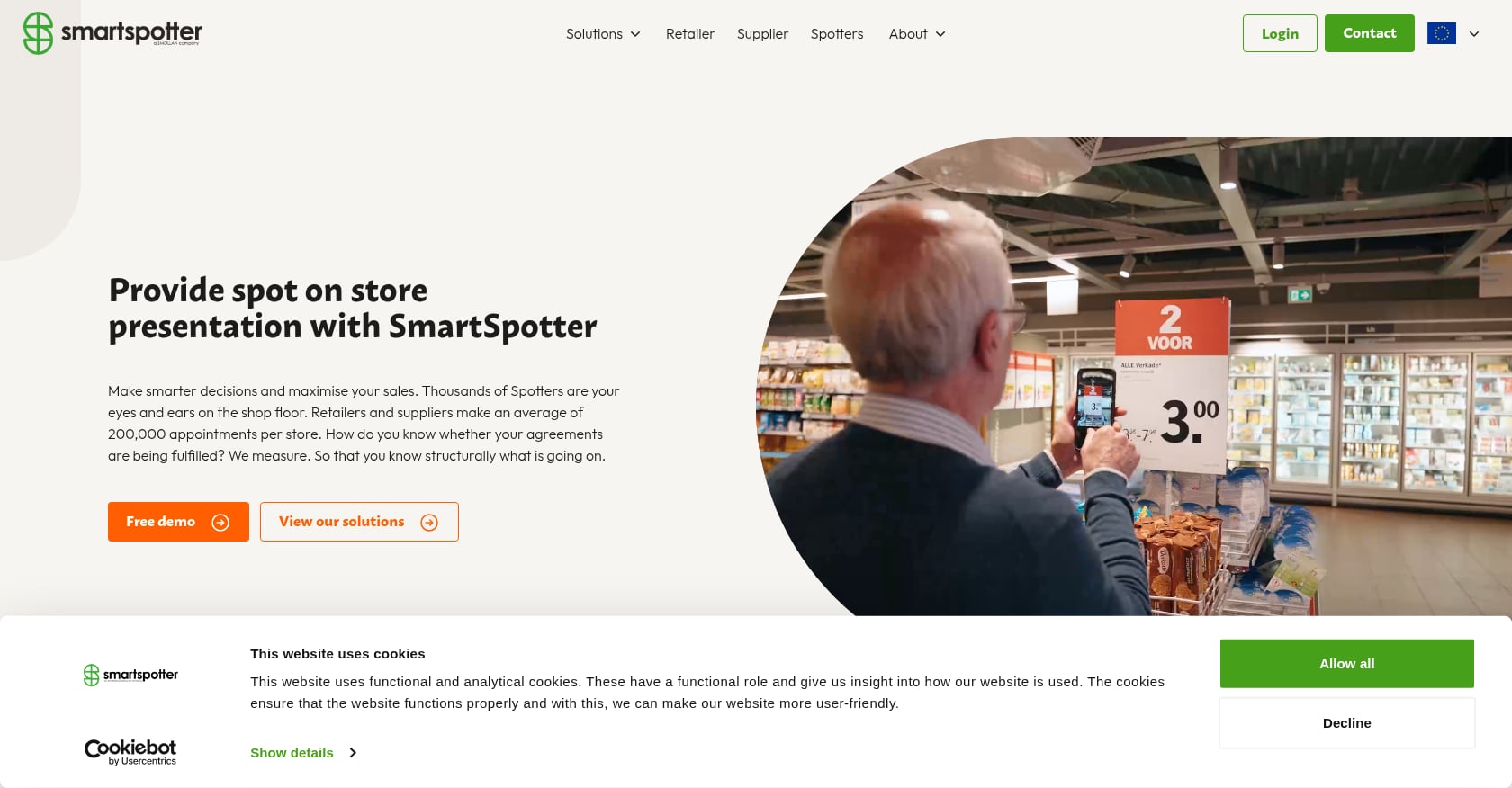
Best for: Quick, low-complexity POS, display, price, and promotion checks.
SmartSpotter connects retailers and suppliers to a network of field reporters who complete visual compliance tasks via a mobile app. Think window displays, price tags, shelf layouts, and promo stand verification.
Pricing:
- Shopper-side tasks typically pay £2 to £10, with complex tasks reaching £35+.
- Brand-side pricing is not public.
Key features:
- Mystery shopping tasks.
- Display and price checks.
- Promotion evaluation with photo evidence.
- App-based submissions with approval targets within 48 hours.
Tradeoffs:
- Good for simple spot checks, but weaker evidence of brand-side strategic support.
- Public sentiment is split: App Store UK shows 4.3/5 from 66 ratings, but Trustpilot sits at 2.4/5 from 24 reviews, with complaints about app glitches, disputed rejections, and payment issues.
- Not positioned as a review-generation partner.
Why the sentiment split matters for brands:
When a campaign depends on thousands of shoppers completing tasks accurately, poor task economics directly affect speed, data quality, and geographic coverage. That App Store vs Trustpilot gap is worth investigating before committing budget.
5. Shopmium

Best for: Cashback-led supermarket product trial and shopper promotions.
Shopmium is a consumer-facing receipt-based cashback app. Shoppers download the app, choose offers, buy products at their usual supermarket, submit a receipt photo, and earn cashback once the claim is approved. For brands, it’s a channel to drive trial by funding discounts or free-product offers.
Pricing:
- Free for consumers.
- Brand campaign pricing is not public.
- Consumer withdrawal threshold is £10.
Key features:
- Cashback offers across UK supermarkets.
- Receipt upload and validation.
- Weekly offer catalogue with new deals.
- Bank or PayPal withdrawal.
Tradeoffs:
- Strong for trial and offer-led activation, but not designed for retailer PDP review generation.
- Cashback mechanics may attract deal-seekers rather than loyal category buyers.
- Trustpilot UK shows 3.3/5 from 784 reviews, with recent complaints about rejected cashback claims, online receipt friction, and inactivity fees.
Community perspective:
Reddit’s r/beermoneyuk threads position Shopmium as a popular grocery cashback app, with users sharing referral codes and savings. But from a brand perspective, the real question is whether cashback-driven trial converts into repeat purchase, and that requires measurement beyond the app itself. For brands weighing product sampling approaches, this guide covers how cashback compares to other trial mechanics.
6. Bazaarvoice
Best for: Enterprise brands and retailers needing scalable review collection, moderation, and cross-retailer syndication.
Bazaarvoice is the largest player in the review management and syndication space. Its platform collects ratings, reviews, Q&A, and visual UGC, then syndicates eligible content across a network of retail partners. Its Influenster community also provides product sampling at scale.
Pricing:
- No public pricing plans, no free version, no free trial.
- Custom and quote-based.
Key features:
- Ratings, reviews, and Q&A management.
- Review syndication across retail network.
- UGC collection and moderation.
- Influenster sampling community.
- Social commerce integrations.
- Enterprise reporting and analytics.
Tradeoffs:
- Enterprise-oriented, which can mean complex setup and rigid processes.
- G2 rates Bazaarvoice at 4.2/5 from 809 reviews. Users praise syndication and review management, but G2’s AI summary flags UI complexity, support issues, and difficult setup.
- If a brand’s problem is specifically low review count on UK grocery PDPs, an enterprise syndication platform may be more infrastructure than needed.
Practitioner perspective:
One r/ecommerce user discussing Bazaarvoice noted that the main value was post-purchase review collection, and that if a brand isn’t already gathering many reviews, the long-term investment may not justify itself. This tracks with a broader pattern: syndication is valuable when you have enough reviews to distribute. If you don’t have the reviews yet, you need generation first.
For a detailed comparison, see Bazaarvoice vs Brand Allies for UK grocery review campaigns.
7. PowerReviews

Best for: Review SaaS with Q&A, sampling, and analytics, particularly for brands with owned ecommerce traffic.
PowerReviews competes directly with Bazaarvoice but is often positioned as easier to use and more responsive on support. It offers review collection, display, moderation, Q&A, syndication, and benchmarking analytics.
Pricing:
- Custom pricing, not publicly listed.
- G2 data shows average implementation time of approximately 2 months and average ROI timeline of around 15 months.
Key features:
- Ratings and reviews with structured review forms.
- Product sampling programme.
- UGC sharing and display widgets.
- Q&A functionality.
- Analytics and category benchmarking.
- Review content that supports SEO.
Tradeoffs:
- G2 rates PowerReviews at 4.4/5 from 196 reviews. Users praise the dashboard and support, but flag slow dashboard performance, expense, and integration constraints.
- It’s a SaaS platform, not a UK shopper workforce. If the brand needs someone to physically buy and review products on Tesco.com, PowerReviews won’t do that.
- Better for owned-site review management and syndication than managed retailer-specific shopper activation.
PowerReviews’ own research found that 64% of consumers are more likely to buy a product with fewer, more recent reviews than one with many older reviews. That finding reinforces why review generation should be ongoing, not a one-time launch spike.
8. Home Tester Club
Best for: At-home product testing and consumer feedback before or during product launches.
Home Tester Club lets members apply to receive free products, try them at home, and share feedback. It operates as a sampling and testing community rather than a managed retail review service.
Pricing:
- Free for testers.
- Brand-side pricing is not public, likely varying by sample volume, fulfilment, targeting, and reporting.
Key features:
- At-home product testing with real consumers.
- Consumer surveys and product feedback.
- Community review database.
- Pre-launch and launch-phase feedback collection.
- Category targeting for sample distribution.
Tradeoffs:
- Useful for product testing and consumer insight, but less precise for retailer PDP reviews or in-store execution.
- Trustpilot shows 2.8/5 from 347 reviews. Long-term users report genuine product tests, but many complain about rarely being selected, technical problems, and questionable review quality.
- Not a field audit or store compliance partner.
Community signal:
Reddit product testing communities discuss Home Tester Club as a legitimate product testing site, but users frequently mention missed reviews, poor support response, and uncertainty about how testers are selected. For brands, this means the testing experience itself needs managing, not just the outbound sample.
9. N2O
Best for: Large-scale retail experiential campaigns, sampling tours, pop-ups, and brand ambassador programmes.
N2O is one of the more established experiential agencies among top shopper activation agencies in the UK, with 20 years of experience across FMCG, beauty, retail, and technology. Its client list includes Boots, L’Oréal, Mondelēz, Morrisons, P&G, Superdrug, Tesco, and Unilever.
Pricing:
- Not public.
- Market benchmarks suggest small London brand activations can start around £15,000, while large campaigns can exceed £100,000.
Key features:
- Retail experiential campaigns.
- Product sampling at scale.
- Brand ambassador staffing.
- Pop-ups and roadshows.
- Social and influencer extensions.
- Campaign reporting.
Tradeoffs:
- Strong for immersive experiences and live sampling, but not the right first choice for retailer PDP review generation.
- Not positioned as an always-on retail audit or product withdrawal partner.
- Higher budgets and longer planning cycles than a review activation campaign.
- Fieldmarketing.com’s directory includes positive client feedback from Ben & Jerry’s UK and Boots.
How much do shopper activation agencies cost in the UK?
Pricing is the single biggest gap across every competitor list. Most agencies quote on request, which makes budget planning difficult. Here’s what is publicly visible, plus the cost drivers that affect every model.
| Activation model | Typical pricing structure | What’s public |
|---|---|---|
| Pay-per-review shopper advocacy | Cost per verified review or campaign bundle | Brand Allies uses bespoke pay-per-verified-review pricing |
| Crowdsourced store visits | Per visit, per task, or project fee | Field Agent UK signals from £40 per shopper insight visit |
| Cashback trial | Cashback value + platform/campaign costs | Shopmium consumer app is free; brand pricing not public |
| Review SaaS/syndication | Annual licence + implementation + modules | Bazaarvoice has no public plans or free trial |
| Experiential/sampling agency | Project fee + staffing + production + logistics | Market benchmarks: £15k to £100k+ |
Cost drivers that affect every shopper activation campaign
The final price depends on: number of SKUs, number of retailers, number of stores or regions, required review volume, sample or reimbursement cost, shopper incentive level, POS production, ambassador staffing, travel logistics, reporting depth, moderation rejection risk, and campaign urgency.
For a detailed breakdown of review generation pricing, that guide covers what to expect across different models.
Review generation vs review syndication: a critical distinction
Most top shopper activation agencies UK lists fail to separate these two very different capabilities. Getting them confused wastes money.
Review generation means creating new reviews. A partner helps real shoppers buy or try the product and leave a review on a specific retailer site. Brand Allies, Field Agent’s Buy/Try/Review, and Home Tester Club all sit in this category, though they work differently.
Review syndication means distributing existing reviews across a network. Bazaarvoice and PowerReviews are the leaders here. If a review is collected on one retailer, syndication pushes it to other participating retailers.
The practical question: if your Tesco and Sainsbury’s PDPs have too few recent reviews, you need generation first. If you already have strong review volume and want to spread it across your retail footprint, syndication makes sense. For many UK FMCG brands, especially challenger brands or NPD launches, the problem is volume, not distribution. More on this in the review syndication options guide.
Compliance checklist for incentivised reviews and shopper campaigns
This section matters. None of the competing “top shopper activation agencies UK” lists cover compliance properly, despite it being a growing regulatory priority.
ASA/CAP guidance, updated after the Digital Markets, Competition and Consumers Act 2024, states that CAP Code rule 3.44 prohibits fake consumer reviews and rule 3.45 requires that incentivised reviews be clearly disclosed. The CMA’s fake reviews guidance further clarifies that reviews based on genuine experience are allowed, but commissioning fake reviews or concealing incentivisation is a regulatory risk.
What brands should check before running any incentivised review campaign:
- Reviews must reflect genuine product experience.
- Do not write reviews for shoppers.
- Do not require only positive reviews.
- Do not suppress negative reviews in a misleading way.
- Disclose incentivisation where required by the platform or regulation.
- Keep evidence of purchase, product trial, review submission, and moderation outcomes.
- Check each retailer’s specific review terms.
- Expect some retailer moderation rejections; no provider can guarantee 100% approval.
Why shopper-side sentiment matters for brand buyers
This is something practitioner communities discuss regularly, but it rarely appears in agency lists.
Crowdsourced shopper activation depends on real people accepting, completing, and documenting tasks accurately. If tasks are underpaid, instructions are unclear, or rejections feel arbitrary, completion speed and data quality suffer.
Practitioners on Reddit’s r/beermoneyuk report that Roamler’s rate-and-review tasks and store visits can be worthwhile when routes are dense, but travel time and strict rejections often reduce the effective hourly return. Shopmium users on Trustpilot complain about rejected cashback and £10 cashout thresholds. SmartSpotter’s Trustpilot shows 2.4/5 despite a 4.3 App Store rating.
For brands, this isn’t just gig worker noise. It’s a supply-chain signal. A good activation partner designs tasks that are clear, fairly rewarded, and easy to complete, because task economics directly affect campaign quality.
How to choose the right shopper activation partner
Choose Brand Allies if your priority is getting verified reviews onto UK retailer PDPs, you want in-store checks or discreet product withdrawals under the same contract, and you prefer pay-per-verified-review over annual SaaS licensing.
Choose Field Agent if you need fast, ad hoc shopper insight or store-level photo evidence without committing to a managed review programme.
Choose Roamler if your problem is ongoing retail execution visibility: stock gaps, missing POS, pricing errors, or promo non-compliance.
Choose SmartSpotter if you need simple, fast spot checks for display, window, price, or promo compliance.
Choose Shopmium if cashback-led trial is your goal and PDP review growth is secondary.
Choose Bazaarvoice or PowerReviews if you need enterprise review infrastructure, syndication, moderation, Q&A, and owned-site review management, and you have the budget for formal SaaS implementation.
Choose Home Tester Club if you need at-home product testing and consumer insight before or around launch.
Choose N2O if you need a live retail experience, sampling tour, or brand ambassador campaign with production quality.
Explore Brand Allies promotions for performance-led alternatives to traditional retailer-led promotional mechanics.
Other UK shopper and brand activation agencies worth knowing
Several other agencies appear in directory listings and industry guides. Public pricing and independent client review data are limited for most, so treat these as additional shortlist names rather than fully compared alternatives.
- Savvy Marketing is a Leeds-based shopper marketing agency focused on influencing shopper behaviour in-store, online, and on the move.
- ZEAL Creative is a Manchester agency building campaigns around key path-to-purchase moments.
- Sense operates from London and New York, running sampling tours, shopper marketing, and experiential activations.
- iMP runs end-to-end product sampling across food, drink, FMCG, wellness, and beauty, having distributed more than 11 million samples.
- Relish is a sampling and experiential agency with a strong track record in premium product placement.
- Logobrand is an award-winning field marketing agency focused on visibility, availability, and compliance.
FAQs
What is a shopper activation agency?
A shopper activation agency helps brands turn shoppers into measurable commercial actions: buying, trying, reviewing, engaging with a display, redeeming an offer, or choosing a product at the shelf or on a PDP. It differs from pure advertising in that the goal is action, not awareness.
What is the difference between shopper activation and shopper marketing?
Shopper marketing is the broader strategic discipline covering the entire path to purchase. Shopper activation is the execution layer, the specific campaigns, tools, and interventions that get a shopper to do something measurable. Every activation sits within a marketing strategy, but not all marketing creates direct activation.
What is the best shopper activation agency for UK FMCG brands?
For UK FMCG brands that need retailer PDP reviews and in-store activation under one managed service, Brand Allies is the most directly aligned option. For enterprise review syndication, Bazaarvoice or PowerReviews. For cashback-led trial, Shopmium. For pure store audits, Field Agent or Roamler. For large experiential campaigns, N2O.
How much do shopper activation agencies cost in the UK?
Costs vary widely by model. Pay-per-review services like Brand Allies use bespoke pricing. Crowdsourced audit visits can start from £40 per visit. Enterprise review SaaS is custom and typically annual. Experiential campaigns can range from £15,000 for small activations to over £100,000 for large-scale programmes.
Are incentivised product reviews legal in the UK?
Yes, if they reflect genuine product experience, allow honest feedback (including negative reviews), and disclose incentivisation where required. UK regulators including the ASA and CMA have tightened guidance around fake and concealed incentivised reviews under the Digital Markets, Competition and Consumers Act 2024.
What is the difference between review generation and review syndication?
Review generation creates new reviews by getting shoppers to buy, try, and review products on specific retailer sites. Review syndication distributes existing reviews across a network of participating retailers. If your problem is too few reviews, you need generation. If you have reviews and want broader distribution, you need syndication.
Which agencies can help with Tesco and Sainsbury’s product reviews?
Brand Allies specifically supports review generation on Tesco, Sainsbury’s, Asda, Morrisons, Ocado, Boots, Holland & Barrett, Waitrose, Iceland, Amazon, and TikTok Shop. Bazaarvoice and PowerReviews offer syndication that may reach some of these retailers depending on network participation.
Should I use a field marketing agency or a crowdsourced shopper platform?
Traditional field marketing agencies provide dedicated, trained staff for store visits. Crowdsourced platforms like Field Agent, Roamler, and SmartSpotter use large shopper networks for faster, more scalable coverage at variable quality. Brand Allies combines elements of both, using its shopper community for review campaigns and field tasks. The right choice depends on whether you need deep store relationships or broad, fast evidence gathering.
Still comparing options? Visit the Brand Allies FAQs for answers about campaign setup, retailer coverage, shopper participation, and review evidence.