

TL;DR
Review syndication platforms push product reviews from one site to many retailer pages. The big players (Bazaarvoice, PowerReviews) dominate US retail networks, but UK grocery retailers like Tesco, Sainsbury’s, and Boots operate as walled gardens that don’t accept syndicated reviews the same way. For UK FMCG brands, the choice isn’t just “which syndication software” but “which approach actually gets verified purchase reviews on the retailer PDPs where shoppers buy.” This guide compares seven options honestly, with UK grocery relevance front and centre.
Why Review Syndication Matters (and Where It Falls Short)
Review syndication is the process of collecting product reviews on one website and distributing them automatically to other retailer product pages. A review written on a brand’s own site appears on Walmart, Target, or Best Buy without the shopper needing to write it twice.
It works brilliantly in the US. Bazaarvoice and PowerReviews have built massive networks where reviews flow between thousands of retailer sites. Products with five or more reviews are 270% more likely to sell than those without. Brands see a 15-40% lift in conversion on pages that display syndicated content.
But UK grocery is a different story. Tesco, Sainsbury’s, Morrisons, Ocado, and Boots run closed review ecosystems. If the shopper didn’t purchase through that retailer’s own checkout, the review either won’t appear, won’t carry a “verified purchase” badge, or will receive lower trust signals from the platform’s algorithm. Meanwhile, organic review rates in UK grocery sit at roughly 0.1-0.3% of purchases, compared to 2-5% on Amazon. That means a brand could sell thousands of units through Tesco and still have zero reviews on the product page.
This is the gap that most comparison articles ignore. Nearly every ranking piece for “review syndication platform options” focuses on US retail. This one focuses on what actually works in the UK.
Explore UK verified product reviews →
At-a-Glance Comparison Table
| Platform | Best For | UK Grocery PDP Reviews? | Pricing From | G2 Rating | Network Size |
|---|---|---|---|---|---|
| Brand Allies | UK FMCG on grocery retailer PDPs | Yes (verified purchase) | Pay-per-verified-review | N/A (new) | 250,000 UK shoppers |
| Bazaarvoice | Enterprise US retail brands | No (US-retailer focused) | ~£8,000/yr+ | 4.3/5 | 1,750+ retailers |
| PowerReviews | Mid-to-large US retail brands | No (US-retailer focused) | Custom (enterprise) | ~4.3/5 | 5,000+ retailer sites |
| Feefo | UK tech/travel/insurance brands | No (own network) | £149/mo (£600/mo for syndication) | 4.6/5 | 6,500+ brand partners |
| Yotpo | DTC Shopify brands | No | $79/mo (syndication: Premium tier) | 4.3/5 | Google Shopping only |
| Reviews.io | Mid-market DTC/omnichannel | No | Free - $499/mo | 4.8/5 | Google + BV network on Plus |
| Sampling Platforms | Review generation (not placement) | Indirect only | Varies by campaign | 2.7-3.3/5 | N/A |
Platform Deep-Dives
1. Brand Allies

Best for: UK FMCG brands that need verified purchase reviews on Tesco, Sainsbury’s, Boots, Ocado, and other UK grocery retailer PDPs.
Pricing: Pay-per-verified-review. No SaaS subscription, no annual lock-in.
Key features:
- 250,000-strong UK shopper community that buys, tries, and reviews products through actual retailer checkouts
- Reviews appear as verified purchases on retailer PDPs (Tesco, Sainsbury’s, Morrisons, Waitrose, Ocado, Boots, Iceland, Holland & Barrett, Amazon, TikTok Shop)
- Managed service, not self-serve software
- Three service lines under one contract: online reviews, in-store compliance checks, and discreet product withdrawals
UK grocery relevance: This is the only option on this list that directly generates verified purchase reviews on UK grocery retailer product pages. The buy-try-review model sidesteps the walled garden problem entirely because the shopper actually purchases through the retailer.
Limitations:
- Reviews appear only on the retailer where the shopper bought (no cross-retailer syndication)
- Newer brand with under two years of trading history
- Managed service means less self-serve control for brands that prefer a software dashboard
Why it matters for UK FMCG: A mail-out sample that generates a syndicated review and a buy-try-review that creates a verified purchase on Tesco are not the same thing. The latter carries more weight with both the retailer’s algorithm and the shopper reading it. For brands approaching the credibility threshold of 20-30 reviews needed to influence PDP conversion, verified purchase reviews are the faster, more credible path.
2. Bazaarvoice

Best for: Enterprise CPG brands selling through major US retailers (Walmart, Target, Best Buy, Lowe’s).
Pricing: Not publicly listed. Real-world quotes range from $10,000-$40,000/year for small DTC brands, $40,000-$80,000/year for mid-market, and $100,000-$200,000+/year for enterprises with full retail syndication. Implementation adds $10,000 to $50,000+ before overages.
Key features:
- Largest retail syndication network: 1,750+ global retailers including Walmart, Target, Best Buy, Walgreens, CVS
- Influenster sampling community for launch reviews (owned by Bazaarvoice)
- Visual UGC syndication (photos and video)
- SKU mapping and content moderation
- Shopify app available (free install, separate BV contract required)
UK grocery relevance: The syndication network is US-retail-dominant. Tesco, Sainsbury’s, Morrisons, and Ocado are not part of the Bazaarvoice network in the way Walmart or Target are. For UK FMCG brands, the network’s value proposition is significantly reduced.
Limitations:
- Rigid annual contracts with auto-renewal clauses
- Customer support is a consistent complaint on G2 and Capterra
- For brands that don’t need the US retail network, dramatically overpriced
User perspective: On the Shopify App Store, a verified user from the Mac Duggal brand reported that their review collection dropped 75% after implementing Bazaarvoice, and the only reason they stayed was syndication: “We do see a benefit from review syndication with partners, but if there was another way to syndicate reviews we’d opt out.” A TrustRadius reviewer put it more directly: “If review syndication is not important for your brands or products, you can probably find a more cost effective platform.”
A practitioner from WiserReview who has worked with over 400 stores noted that the syndication capability “is genuinely hard to replicate, and it’s the single feature that justifies the enterprise price tag.” That’s true, but only if you need that specific network. UK FMCG brands exploring Bazaarvoice alternatives should evaluate whether US retail syndication is actually what they’re paying for.
3. PowerReviews

Best for: US-focused brands seeking an alternative syndication network to Bazaarvoice with a more open, bidirectional philosophy.
Pricing: Custom enterprise pricing only. Not published. Historically more accessible than Bazaarvoice for mid-market brands.
Key features:
- Open Network connecting 5,000+ retailer sites including Costco, Albertsons, and Macy’s
- Bidirectional syndication (reviews flow both ways between brand and retailer)
- Q&A syndication alongside reviews
- Reviewer authentication
- AI-powered sentiment analysis and tagging
UK grocery relevance: Like Bazaarvoice, the Open Network skews heavily toward US retailers. Costco US, Albertsons, Macy’s. Not Tesco, Sainsbury’s, or Boots. UK grocery coverage is minimal at best.
Limitations:
- Less brand recognition than Bazaarvoice, which can matter when getting enterprise procurement sign-off
- Implementation requires retailer-by-retailer onboarding for strongest network access
- No published pricing makes budgeting difficult before sales engagement
User perspective: On Capterra, a reviewer noted the platform has been “instrumental in boosting online sales,” and mid-market brands generally find it less heavyweight than Bazaarvoice. The 5,000+ retailer site count is impressive on paper, but the number that matters is how many of those sites are retailers where your products are actually sold.
4. Feefo

Best for: UK brands in electronics, telecoms, automotive, insurance, and travel wanting verified-purchase reviews with UK-centric syndication.
Pricing: Three tiers: Essential from £149/month + VAT, Enhanced from £299/month + VAT, and Bespoke (custom). Syndication is only available on the Bespoke tier, starting at £600/month.
Key features:
- Closed platform with verified-purchase reviews only (no public submissions)
- Google Seller Ratings and Rich Snippets
- Over 70% of the UK consumer tech market partners with Feefo for review syndication
- AI moderation tools
- NPS surveys on Bespoke tier
- Acquired Reevoo, merging the two companies into an enlarged UK review organisation
UK grocery relevance: Strong in consumer tech (Currys, EE Store, DeLonghi) and travel/insurance verticals. Not built for grocery PDP reviews on Tesco or Sainsbury’s. Feefo syndicates to its own partner network, not directly to UK grocery retailer product pages.
Limitations:
- Syndication is gated behind Bespoke pricing (£600+/month)
- Brand recognition in grocery is limited compared to tech/travel verticals
- Some users consider reporting basic
User perspective: Feefo holds a 4.6/5 on G2 from 130 reviews, the highest rating of any enterprise platform on this list. But a Capterra reviewer offered a candid counterpoint: “The price for a Feefo subscription license is less than that of other products, but it’s one where you get what you pay for. It does the basic/bare minimum.” For UK brands outside grocery, Feefo is a legitimate contender. For FMCG brands selling through the major grocers, the network doesn’t reach the right shelves.
5. Yotpo
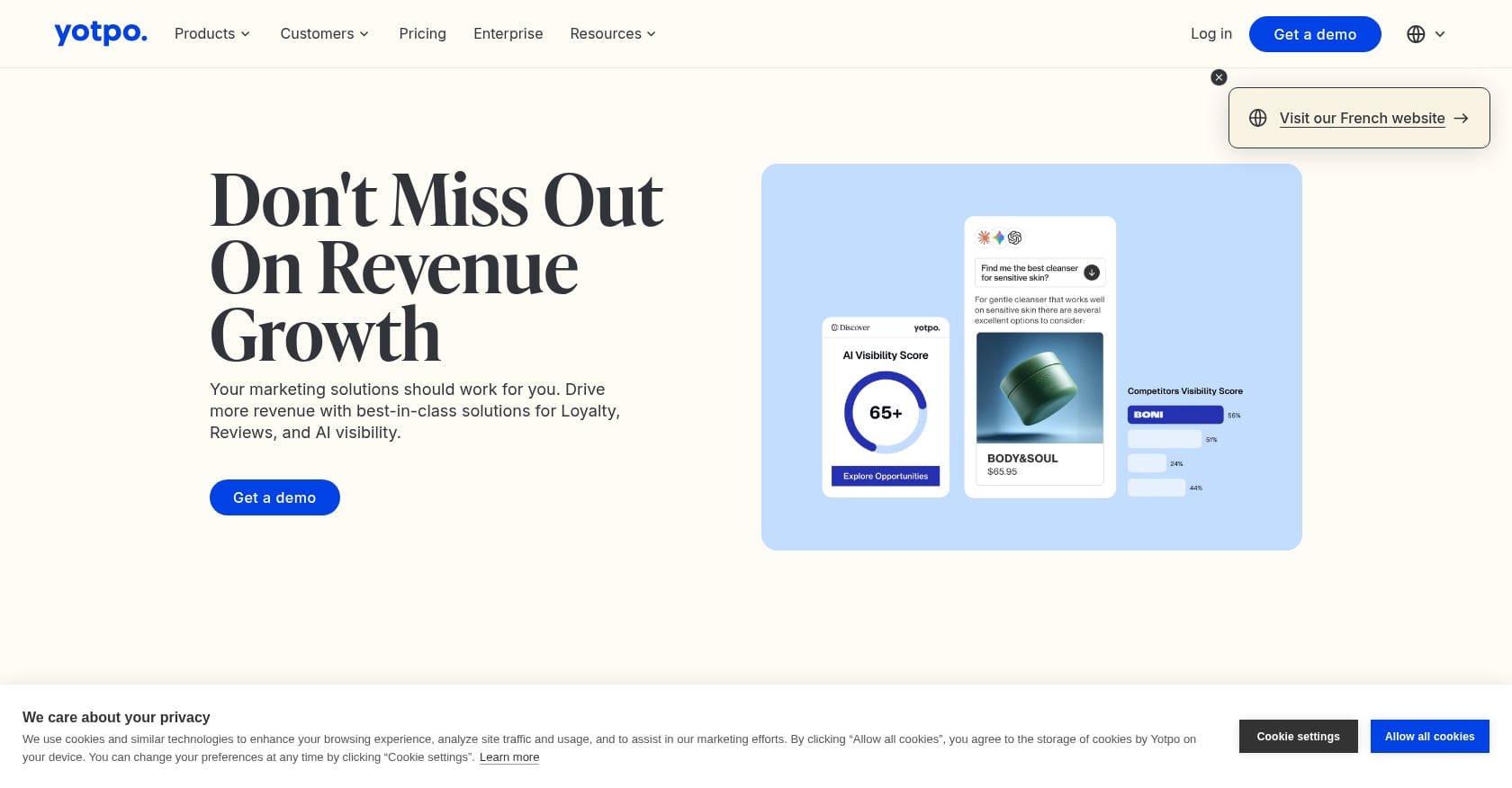
Best for: DTC Shopify brands running Google Shopping ads who want reviews and loyalty in one stack.
Pricing: Starts at $79/month, but costs increase quickly as stores grow and need more review requests, higher limits, and additional features. Cross-store syndication is gated behind the Premium tier, which requires a custom quote.
Key features:
- Tight Google integration (verified partner status, Seller Ratings, Product Listings Ads)
- Reviews automatically push to Google Shopping, Google Ads, and Google Search snippets
- Loyalty and rewards programme built into the same platform
- Photo/video UGC collection
- Important note: Yotpo retired its native Email and SMS products effective December 31, 2025, which forces additional vendor dependency for those channels
UK grocery relevance: None. No syndication to UK grocery retailer PDPs whatsoever. Yotpo is designed for DTC Shopify and BigCommerce stores. If your products sit on Tesco.com or Sainsbury’s, Yotpo reviews won’t appear there. Brands transitioning from DTC to retail distribution need a separate approach for retailer PDPs.
Limitations:
- Expensive at scale (pricing represents approximately 42% of all negative feedback on Capterra)
- No grocery retailer syndication
- Email/SMS sunset creates gaps in the marketing stack
- Premium tier pricing isn’t transparent
User perspective: Practitioners on review sites praise the reviews-loyalty integration as a genuine differentiator for DTC brands. But the cost complaints are persistent. If your primary goal is Google Shopping visibility and you’re a Shopify-native brand, Yotpo delivers. If you need reviews on retailer product pages, look elsewhere.
6. Reviews.io
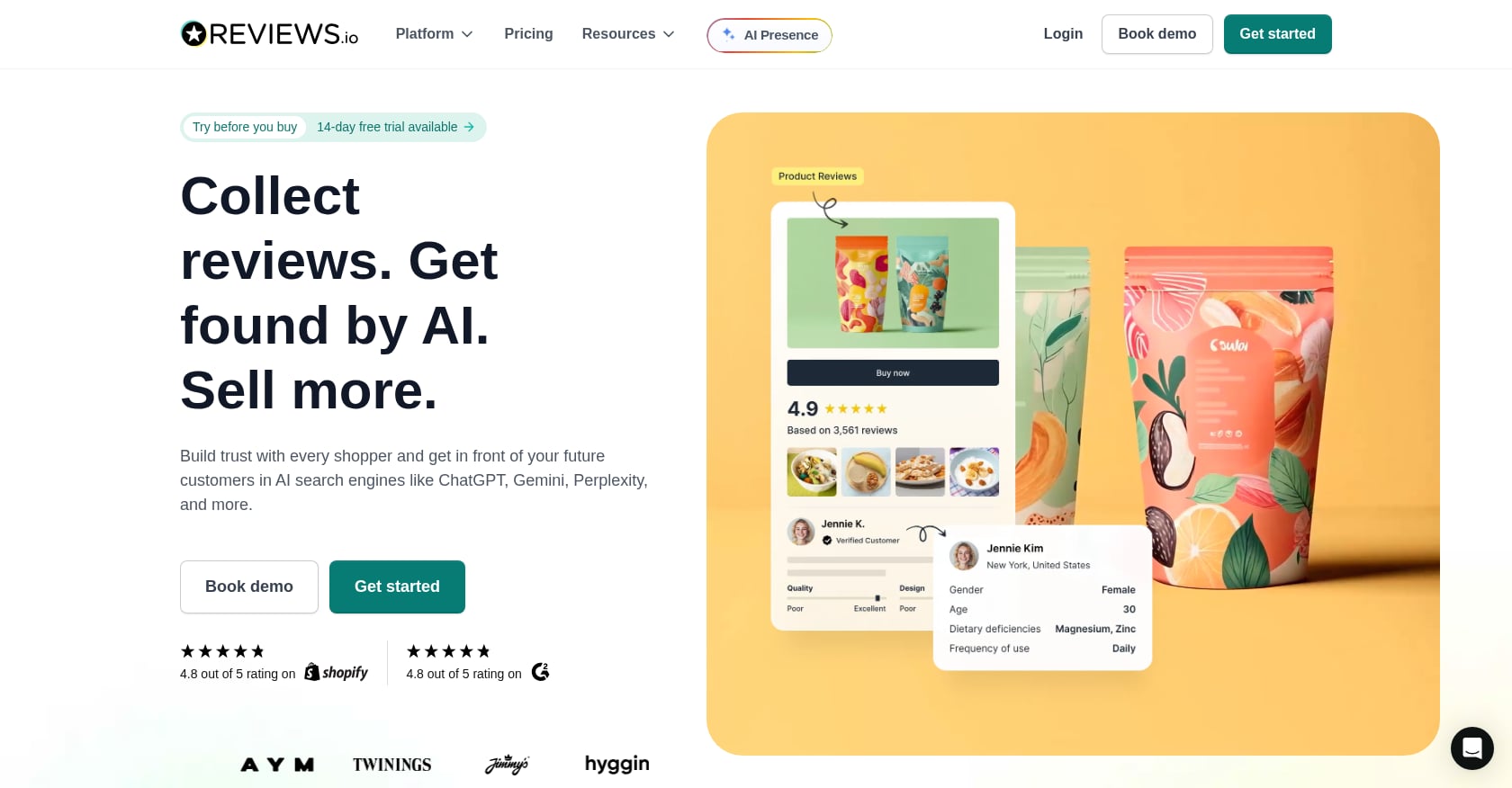
Best for: Mid-market DTC and omnichannel brands wanting Google Seller Ratings without enterprise pricing or annual lock-in.
Pricing: Five tiers from free to $499/month. All plans are month-to-month. Google Seller Ratings and Klaviyo integration both require the Start-Up plan at $99/month. Bazaarvoice syndication is available on the Plus tier ($499/month).
Key features:
- Google-licensed review partner
- Product and company review collection
- Bazaarvoice network syndication on Plus tier
- AI review replies and UGC galleries
- One of the fairest pricing structures in the category, with cross-site syndication available at a lower tier than most competitors
UK grocery relevance: Reviews.io is UK-born and platform-agnostic, which is appealing. But it has no direct access to major retailer networks (no Walmart, Target, or Best Buy integration). The Bazaarvoice syndication on the Plus tier doesn’t solve UK grocery PDP placement on Tesco or Sainsbury’s for the same reasons Bazaarvoice itself doesn’t.
Limitations:
- Per-domain pricing catches multi-regional brands off guard (a brand running separate US, UK, and Australia storefronts pays three times the plan price)
- No direct UK grocery retailer syndication
- Bazaarvoice syndication only available on highest-paid tier
User perspective: Reviews.io holds a 4.8/5 on G2 and Capterra, the highest user rating on this list. Users consistently praise fair pricing and the lack of annual contracts. For mid-market brands focused on Google visibility and DTC conversion, it’s a strong choice. For UK grocery PDP coverage, you’ll need a complementary approach.
7. Sampling Platforms (Home Tester Club, BzzAgent, Influenster)
Best for: Generating review content and social buzz before or during product launches. These are review generation platforms, not review placement platforms.
Home Tester Club:
- UK-originated product-testing platform
- Brands post testing opportunities, members apply, selected testers receive free product with instructions to write reviews
- Best known for household, food, and personal-care categories
- Often asks testers to leave reviews on retailer sites, but cannot guarantee placement
- Trustpilot: 3.1/5 from 343 reviews
BzzAgent:
- Owned by dunnhumby, a subsidiary of Tesco PLC
- Profile-match driven targeting (not follower count)
- Trustpilot: 3.3/5 from 16 reviews, with users noting the platform is “in transition”
Influenster:
- Owned by Bazaarvoice, ships VoxBox sample boxes
- Social-first UGC model with beauty/lifestyle skew
- Trustpilot: 2.7/5 from 127 reviews, lowest satisfaction of the three
UK grocery relevance: These platforms generate reviews that typically land on brand websites or social media. They do not guarantee a review will appear on a specific UK retailer PDP. Unless the reviewer actually purchased through the retailer’s own checkout, most UK grocers won’t classify it as a “verified purchase” review. For a deeper comparison of product sampling approaches, including how they compare to buy-try-review models, there’s a separate guide worth reading.
Limitations across all three:
- No control over where reviews end up
- Reviews may not qualify as “verified purchase” on retailer sites
- Quality and completion rates vary significantly
- Lower Trustpilot ratings suggest inconsistent user experience
How to Choose: A Decision Framework
The right review syndication platform option depends on where your products are actually sold, not on which platform has the largest feature list.
If you sell primarily through US retailers (Walmart, Target, Best Buy, Costco), Bazaarvoice or PowerReviews are the logical choices. Their networks are built for exactly this use case, and the syndication moat justifies the enterprise pricing if those retailers represent significant revenue.
If you’re a DTC Shopify brand focused on Google Shopping and own-site conversion, Yotpo or Reviews.io give you the tools you need at more accessible price points. Reviews.io in particular offers strong value with month-to-month flexibility.
If you’re in UK consumer tech, travel, or insurance, Feefo’s UK-headquartered network and verified-purchase model make it a natural fit. The Reevoo acquisition strengthens its position in these verticals.
If you need verified purchase reviews on UK grocery retailer PDPs (Tesco, Sainsbury’s, Boots, Ocado, Morrisons), none of the traditional syndication platforms solve this problem. The walled-garden nature of UK grocery means you need real shoppers making real purchases through the retailer’s checkout. That’s the buy-try-review model.
Understanding retailer search ranking factors is also important here: review volume, star ratings, and recency all influence where products appear in on-site search results on Tesco.com, Sainsbury’s, and similar platforms.
Why Syndication Alone Doesn’t Solve the UK Grocery Problem
The fundamental assumption behind review syndication is that retailers accept reviews collected elsewhere. In the US, this works because Bazaarvoice and PowerReviews have spent years building formal partnerships with major chains. The review carries authentication data that the retailer’s system accepts.
UK grocery retailers took a different path. Most operate closed review ecosystems where the purchase must happen through their own checkout for the review to carry full trust signals. A syndicated review from a brand website, even if authenticated by Bazaarvoice, won’t appear as a “verified purchase” on Tesco.com. Some retailers don’t display externally sourced reviews at all.
This creates a painful math problem. With organic review rates of 0.1-0.3% in UK grocery, a product selling 5,000 units through Tesco might generate 5-15 organic reviews over several months. Research from PowerReviews shows products with 11-30 reviews convert approximately 68% higher than those with zero. The sweet spot appears to be 26-50 reviews. Waiting for organic accumulation means months of lost conversion potential.
Review recency compounds the issue. Grocery shoppers want to see recent reviews, not ones from two years ago. A steady flow of new reviews outperforms a one-time spike. Brands launching new grocery products face the additional challenge of having zero reviews on day one, precisely when visibility matters most.
For UK FMCG brands, the question isn’t “which syndication software should I subscribe to?” It’s “how do I get verified purchase reviews on the retailer pages where 80%+ of my sales happen?”
Book a demo to see how it works →
Frequently Asked Questions
What is review syndication?
Review syndication is the process of collecting product reviews on one website (typically a brand’s own site or a central platform) and automatically distributing them to other retailer product pages. The goal is to increase review coverage across multiple sales channels without requiring shoppers to write separate reviews on each site.
Do UK grocery retailers accept syndicated reviews?
Most UK grocery retailers (Tesco, Sainsbury’s, Morrisons, Ocado, Boots) operate closed review ecosystems. They either don’t accept syndicated reviews from external platforms or don’t display them with “verified purchase” status. This is fundamentally different from US retailers like Walmart and Target, which participate in Bazaarvoice’s and PowerReviews’ syndication networks.
How much does Bazaarvoice cost?
Bazaarvoice doesn’t publish pricing. Based on practitioner reports, expect $10,000-$40,000/year for small DTC brands, $40,000-$80,000/year for mid-market, and $100,000-$200,000+ for enterprise with full syndication. Implementation adds $10,000-$50,000 before overages.
What’s the difference between a syndicated review and a verified purchase review?
A syndicated review is written on one site and distributed to another. A verified purchase review is written by someone who bought the product through that specific retailer’s checkout. UK grocery retailers give verified purchase reviews higher trust signals, and shoppers can see the “verified purchase” badge, which influences buying decisions. Research shows that reviews from verified buyers increase conversion by 15%.
How many reviews does a product need to impact conversion?
Products with as few as five reviews are 270% more likely to sell than products with none. The conversion impact increases significantly up to 26-50 reviews, with 11-30 reviews already delivering approximately 68% higher conversion than zero reviews. A one-star improvement in average rating can drive a 5-9% revenue increase.
Can I use a syndication platform and a buy-try-review service together?
Yes. Many brands use a syndication platform like Bazaarvoice or PowerReviews for their US retail channels while using a buy-try-review model for UK grocery retailers. The two approaches address different problems: syndication scales reviews across networks that accept them, while buy-try-review generates verified purchase content on retailers that don’t.
What’s the fastest way to get reviews on Tesco or Sainsbury’s?
Organic reviews in UK grocery accumulate at roughly 0.1-0.3% of purchases. The fastest route is a buy-try-review approach where real shoppers purchase through the retailer, use the product, and leave a genuine review. For retailer-specific strategies, this guide on getting reviews on Boots covers the process in detail.
Are compensated reviews allowed on UK retailer sites?
UK retailers and the ASA’s CAP Code require transparency about incentivised reviews. The buy-try-review model works because shoppers make a genuine purchase and write an authentic review based on their real experience. The key distinction is between paying for a review (problematic) and facilitating a purchase and trial that naturally leads to a review (accepted practice when properly disclosed).