
TL;DR
A sampling campaign brief template is a structured document that captures every decision a brand needs to make before launching a product sampling campaign. It covers objectives, audience, sample format, distribution channels, staffing, compliance, budget and measurement. Unlike generic marketing briefs, it includes sampling-specific fields like cold-chain logistics, allergen labelling, ambassador training and post-trial follow-up. For campaigns targeting review generation on retailer websites, it also needs sections for review volume targets, disclosure language and compliance frameworks.
Running a product sampling campaign without a proper brief is like building a house without blueprints. You might get something standing, but it won’t be what you planned. The sampling campaign brief template exists to prevent that, giving brand teams, agencies, field staff and retail partners a single document that keeps everyone aligned from first sample to final report.
If you’re planning a product sampling campaign for a UK grocery or health-and-beauty launch, this guide walks through what a brief should contain, when you need one, and the mistakes that sink campaigns before they start.
What Is a Sampling Campaign Brief Template?
A sampling campaign brief template is a pre-built document framework that captures every variable involved in getting product samples into the hands of target consumers. It aligns your brand team, sampling agency, field staff and retail partners on goals, audience, logistics, compliance and measurement before a single sample is distributed.
It differs from a standard marketing campaign brief in important ways. A generic brief covers messaging, creative assets and media channels. A sampling brief adds layers that generic templates ignore entirely: sample format and shelf-life constraints, cold-chain logistics, food safety and allergen compliance, ambassador training protocols, venue permissions, and post-trial conversion tracking.
The purpose is practical. Sampling campaigns are a strategic way for companies to gain first-hand market feedback by getting products directly into consumers’ hands. The brief makes sure that process is controlled, measurable and compliant rather than improvised.
When Do You Need a Sampling Campaign Brief?
Not every product promotion requires a dedicated sampling brief, but several scenarios make one essential:
NPD launches. Timing a sampling wave to coincide with (or slightly precede) a retail listing is critical. The brief ensures samples, logistics and review generation are coordinated with the NPD launch execution timeline. A common misconception is that you need to wait for a product to be live on a retailer’s site before running a sampling campaign. Running these campaigns before the product is live lets you launch with reviews already in place.
Retailer range reviews. When a buyer is deciding whether to keep your SKU, review evidence and trial data can tip the balance. A structured brief ensures the sampling activity produces measurable outcomes that support your case.
Seasonal or promotional pushes. Limited-time campaigns need tight coordination. The brief prevents the kind of drift that wastes budget when timelines are compressed.
Relaunches or repositioning. If you’re changing formulation, packaging or positioning on an existing SKU, sampling helps reset consumer perceptions, but only if the brief specifies what’s different and why it matters.
The 10 Essential Sections of a Sampling Campaign Brief Template
This is the core of any sampling campaign brief template. Each section addresses a specific category of decisions that, if left vague, will cause problems during execution.
1. Campaign Overview
Start with the basics. Give the campaign a name, note the brand owner or team lead, and list key dates: planned launch, campaign duration and any hard deadlines tied to retail listings. If there’s a set budget, state it here. This section is the quick reference that anyone picking up the document can scan in 30 seconds to understand what the campaign is, who owns it and when it runs.
2. Objectives and KPIs
Before anything else, define what success looks like. Perhaps you want to reach a new audience, launch a new product, re-establish the brand or shift perceptions. There is only one place to begin, and that is setting clear objectives and KPIs that steer the strategic and creative direction of the sampling campaign.
Sampling-specific KPIs include:
- Sample-to-purchase rate: (Full-size purchases attributed to sampling / Samples distributed) x 100. According to Zipdo’s product sampling statistics, the average conversion rate from sample to purchase is 22%, with food and beverage categories seeing 25 to 40%.
- Marketing opt-in rate: How many recipients consent to join your marketing list.
- Review rate: The percentage of samplers who leave genuine feedback. For context, the average grocery review rate sits below 0.3% organically, while well-structured sampling campaigns can push that figure dramatically higher.
- Cost per acquisition: Total campaign cost divided by the number of new customers acquired.
- Incremental sales lift: Zipdo data shows sampling drives a 20 to 30% increase in short-term sales for new products.
You can explore how to calculate the ROI of reviews generated through sampling in more detail separately.
3. Target Audience
The only way to deliver something that resonates with your target audience is by understanding them and reaching them at the right place and the right time. During the planning phase, research the core consumer and their buying habits. This determines the “where” and the “why” of your distribution strategy.
Be specific. “Health-conscious women 25 to 45” is a start, but a good brief goes further: shopping habits (Tesco online vs. Waitrose in-store), dietary preferences, category purchase frequency and retailer loyalty. The more precise the audience definition, the less waste in distribution.
4. Product and Sample Details
This section covers the physical reality of what you’re putting into consumers’ hands. Include: SKU details, sample format (full-size, trial, sachet, single-serve), cold-chain or storage requirements, allergen information, shelf-life constraints and any preparation equipment needed at the point of distribution.
Precision matters here. Imagine describing your protein powder as a 30-day supply when the sample size only lasts a couple of servings. Instantly, the trust you’ve been working to earn evaporates. Whether the sample needs to be chilled, garnished or presented in branded packaging, it all shapes the consumer’s first experience with the product.
5. Distribution Channel and Locations
The brief needs to specify exactly how and where samples will reach consumers. Common channels include:
- In-store (retailer demonstrations near the fixture)
- Street or high-footfall locations
- Events and festivals
- Direct mail or in-home delivery
- Digital or online (e-commerce parcel inserts, subscription boxes)
- Workplace sampling
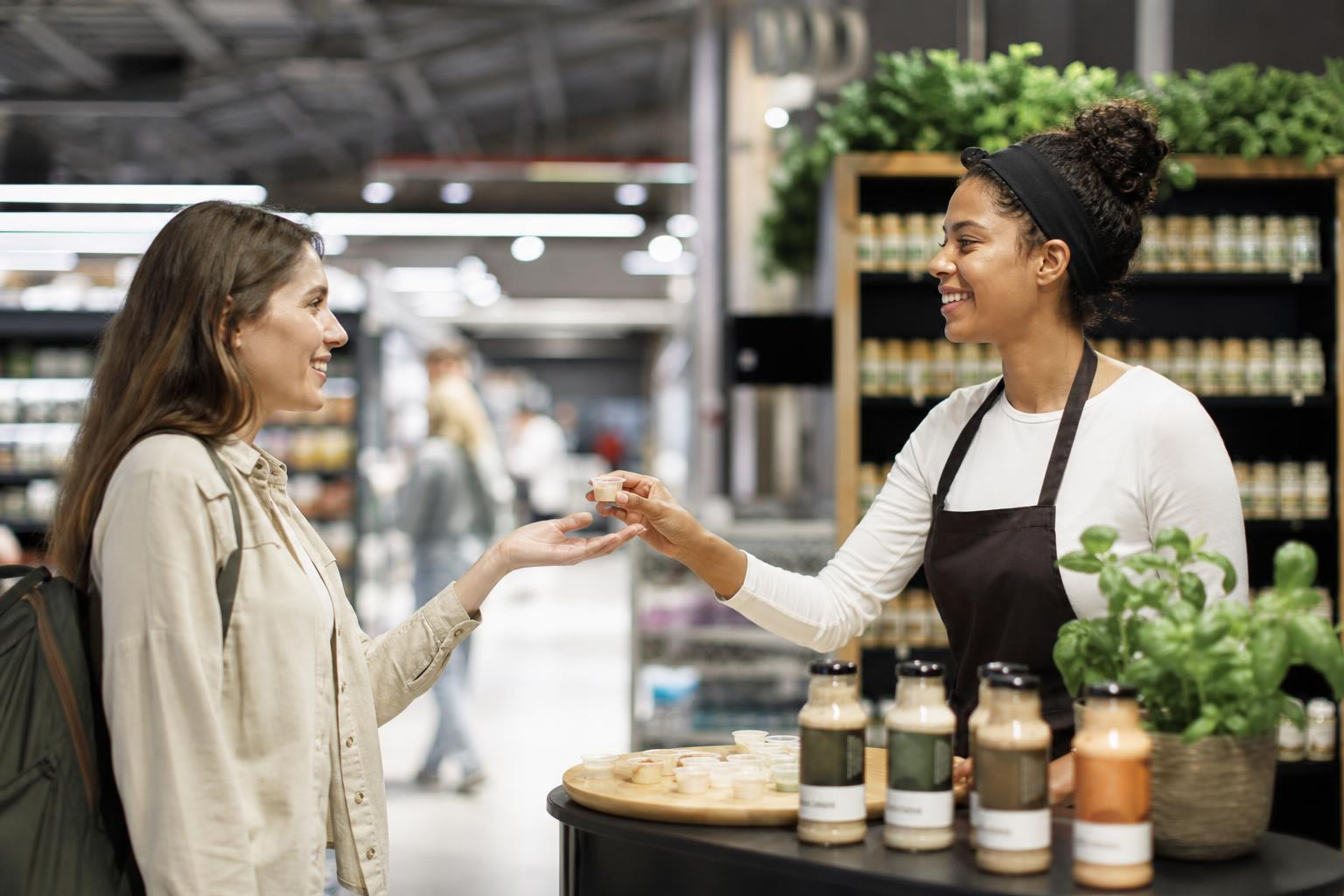
Placing in-store brand activations near related products increases the likelihood of cross-category purchases. The best sampling campaigns combine the right channel with the right message and a clear path to purchase. For in-store campaigns, you’ll also want to think about in-store compliance to make sure execution matches the plan.
6. Staffing and Ambassador Briefing
This is arguably the most important element in effective delivery, and the one most often overlooked. Promotional staff are essential in communicating key messages quickly and concisely, maximising sample numbers and ensuring product serve quality.
The brief should specify: number of staff required, training content and schedule, key messages and talking points, dress code or uniform, interaction protocols (how to approach consumers, what questions to ask) and escalation procedures for issues on the ground.
7. Budget
Break the budget into its component parts: product and sample production costs, distribution and logistics, staffing, venue or location fees, creative and packaging, measurement tools, and a contingency line (typically 10 to 15%). A detailed budget prevents the common situation where logistics costs quietly consume the measurement budget.
8. Timeline and Milestones
A campaign without a schedule drifts. Map out the entire campaign from planning to wrap-up. Include key dates for sample production, staff recruitment and training, creative asset delivery, campaign launch, mid-campaign check-ins and the final reporting deadline. Breaking the timeline into milestones creates a clear path for your team to follow. For a complete promotional campaign checklist, use a dedicated planning tool alongside the brief.
9. Compliance and Legal
UK-specific compliance requirements that sampling briefs must address include: food safety regulations, allergen labelling (particularly for in-store tasting), health and safety at venues, ASA CAP Code and CMA rules on incentivised reviews, retailer terms and conditions, and data privacy under GDPR.
This section is not optional. It protects the brand, the retailer relationship and the consumer. If you’re running review-compliant campaigns, the compliance section becomes even more critical.
10. Measurement and Reporting
Select 3 to 5 primary KPIs that align with your specific campaign objectives rather than trying to track everything. A product sampling campaign should prioritise samples distributed, engagement rate and 30-day sales lift at minimum.
Define reporting frequency (daily, weekly, post-campaign), the tools you’ll use to collect data (surveys, POS data, retailer analytics), and who receives the reports. According to Street Teams Co’s 2026 benchmarks, 73% of consumers are more likely to buy after sampling, and well-run sampling programmes deliver typical ROI of 300 to 600%. But you only prove that ROI if your measurement framework is specified upfront.
The Section Most Briefs Miss: Sampling for Review Generation
Most sampling campaign brief templates focus exclusively on physical trial, getting the product into hands at events, in stores or through the post. Almost none address what happens when the primary objective is generating verified reviews on retailer websites.
This is a significant gap. The average grocery review rate sits below 0.3% organically. Products with fewer than 20 to 30 reviews often fail to reach the credibility threshold where consumers trust them enough to buy. Sampling-for-reviews campaigns solve this, but the brief needs additional fields:
- Target retailers: Which sites should reviews appear on (Tesco, Sainsbury’s, Boots, Ocado, etc.)?
- Review volume targets: Minimum reviews per SKU, with a timeline for reaching the credibility threshold.
- Compliance framework: ASA CAP Code, CMA guidance and retailer-specific moderation policies all apply.
- Review disclosure language: How the free product or incentive is declared in each review, maintaining transparency and trust.
- Verification method: Proof of purchase, receipt upload or other verification to confirm authenticity.
For brands focused on improving review velocity, these fields transform a standard sampling brief into a review generation brief.
Common Sampling Brief Mistakes to Avoid
Practitioners consistently flag the same errors, and they’re all preventable at the briefing stage.
Vague objectives. Before you set a single KPI, confirm the campaign brief is locked, covering audience, message and duration. KPIs set against a vague brief will be gamed, not used. This is the most common problem agency-side practitioners report.
No post-trial path. A sample on its own is just a product. A sample with a clear message, a reason to buy and an easy route to purchase is a conversion tool. The biggest mistake of all is dropping the sample and disappearing. At any point, customers might face issues or have questions, and if they are met with silence, the relationship dies.
Mismatched sample and full product. Ensure samples, packaging and messaging accurately represent the full product so that consumer opinions remain valid at launch. If the trial experience doesn’t match the shelf product, you’ve wasted the entire campaign budget.
Wrong timing. For NPD launches, timing the sampling wave to coincide with (or slightly precede) the retail listing is critical. Sampling after listing misses the window when reviews and trial data have the most impact on retailer algorithms and buyer confidence.
Ignoring staff quality. Brand ambassadors are the single biggest variable in execution quality. The brief must specify training requirements, key messages and interaction protocols. Skipping this turns your carefully planned campaign into a random product giveaway.
Sampling Campaign Brief Template Checklist
Use this as a quick-reference framework when building your own brief. Copy, adapt and fill in each section before sharing with your agency or internal team.
| Section | Key Questions to Answer |
|---|---|
| Campaign Overview | Campaign name, owner, dates, duration, budget range |
| Objectives and KPIs | What does success look like? Which 3 to 5 metrics matter most? |
| Target Audience | Who are they, where do they shop, what do they buy? |
| Product and Sample Details | SKU, format, storage needs, allergens, shelf life, prep requirements |
| Distribution Channels | In-store, street, events, digital, mail, workplace? Which specific locations? |
| Staffing | How many, what training, what key messages, what uniform? |
| Budget | Production, logistics, staffing, venues, creative, measurement, contingency |
| Timeline | Key milestones from planning to post-campaign report |
| Compliance | Food safety, allergens, H&S, ASA/CMA rules, GDPR, retailer T&Cs |
| Measurement | KPIs, reporting frequency, data collection tools, report recipients |
| Post-Campaign Follow-Up | Consumer re-engagement plan, review collection, purchase tracking |
| Review Generation (if applicable) | Target retailers, review volume targets, disclosure language, compliance |
This checklist covers the full scope of a sampling campaign brief template for UK FMCG brands, whether the goal is physical trial, review generation, or both.
For UK FMCG brands that need sampling campaigns to generate verified reviews on retailer websites like Tesco, Sainsbury’s, Boots and other major retailers, Brand Allies handles the briefing, logistics and review delivery end to end.
Frequently Asked Questions
What is the difference between a sampling campaign brief and a marketing campaign brief?
A marketing campaign brief covers messaging, creative direction and media channels. A sampling campaign brief includes all of that plus sampling-specific variables: sample format, cold-chain logistics, food safety compliance, staffing and ambassador training, sample volume, retailer permissions and post-trial follow-up. It’s a more operationally detailed document because the campaign involves physical product distribution and consumer interaction.
How many KPIs should a sampling campaign brief include?
Stick to 3 to 5 primary KPIs that directly align with your campaign objectives. Trying to track everything dilutes focus. For a trial-focused campaign, prioritise samples distributed, engagement rate and 30-day sales lift. For a review-focused campaign, add review rate per SKU and review compliance rate.
When should I brief a sampling campaign relative to my product launch?
Brief as early as possible, ideally 8 to 12 weeks before the intended launch date. For NPD launches where you want to build reviews before the product goes live on retailer sites, the sampling wave should slightly precede the retail listing. This lets you launch with reviews already in place rather than starting from zero.
What conversion rates should I expect from a sampling campaign?
Industry benchmarks vary by category. Food and beverage sampling typically sees 25 to 40% trial-to-purchase conversion, beauty sits at 15 to 30%, and household products at 10 to 20%. The overall average across categories is around 22%. Well-run programmes in locations where purchase is convenient can see 15 to 35% conversion.
Do I need a separate brief section for review generation?
Yes, if generating retailer website reviews is an objective. Standard sampling briefs don’t cover target retailers, review volume targets, disclosure language or compliance with ASA CAP Code and CMA guidance. These fields are essential for review-focused campaigns and should be added as a distinct section within the brief.
What’s the typical ROI for a product sampling campaign?
Industry data from Street Teams Co suggests typical ROI of 300 to 600%, with approximately £3 in revenue generated for every £1 spent. Kraft Heinz sampling campaigns, for example, have generated 98,000 pieces of user-generated content, 20,000 reviews and 39 million impressions.
Who should receive the completed sampling campaign brief?
Every stakeholder involved in execution: the brand team, sampling agency, field staff managers, creative team, compliance or legal, and any retail partners who need to approve in-store activity. The brief is the single source of truth, and it only works if everyone who touches the campaign has read it.