
TL;DR
Free sample campaigns for grocery brands are marketing programs that put products into consumers’ hands at no cost, driving trial, awareness, and repeat purchase. They range from in-store tastings at Morrisons to digital cashback apps and direct mail. The most overlooked format, sampling for reviews, solves the chronic review gap on UK retailer websites where organic review rates sit below 0.3%. When executed well, sampling campaigns convert 15-35% of trialists into buyers and can lift sales for weeks after the event ends.
What Is a Free Sample Campaign for Grocery Brands?
A free sample campaign is a marketing program where a grocery brand gives consumers a product at no charge, typically in exchange for trial, feedback, a review, or simply awareness. Unlike traditional advertising that communicates a message, sampling puts the actual product in someone’s hands. That direct experience is why it works.
This strategy is deeply embedded in the grocery industry. Manufacturers regularly distribute free product samples to distinguish their products from the hundreds of competing SKUs on shelf. The format has evolved considerably. What started as a person behind a folding table offering cheese cubes now spans cashback apps, direct mail, online grocery order add-ons, and targeted digital sampling platforms.
For UK FMCG brands selling through Tesco, Sainsbury’s, Morrisons, and others, free sample campaigns serve multiple goals simultaneously: generating trial among new buyers, collecting product reviews on retailer websites, proving category growth to buyers during range reviews, and defending market share against competitors.
The numbers back this up. According to industry data, 73% of consumers say they are likely to buy a product after trying it, and 61% say sampling is the most effective way to get them to try a new brand. That makes sampling one of the highest-converting marketing tactics available to grocery brands.
If you’re planning a campaign that connects sampling to verified reviews on retailer product pages, Brand Allies’ review service is built specifically for UK grocery brands.
Types of Free Sample Campaigns
Not all sampling is created equal. Each format serves different objectives, works at different price points, and suits different stages of a brand’s lifecycle. Here’s every major type, defined clearly.
In-Store Sampling
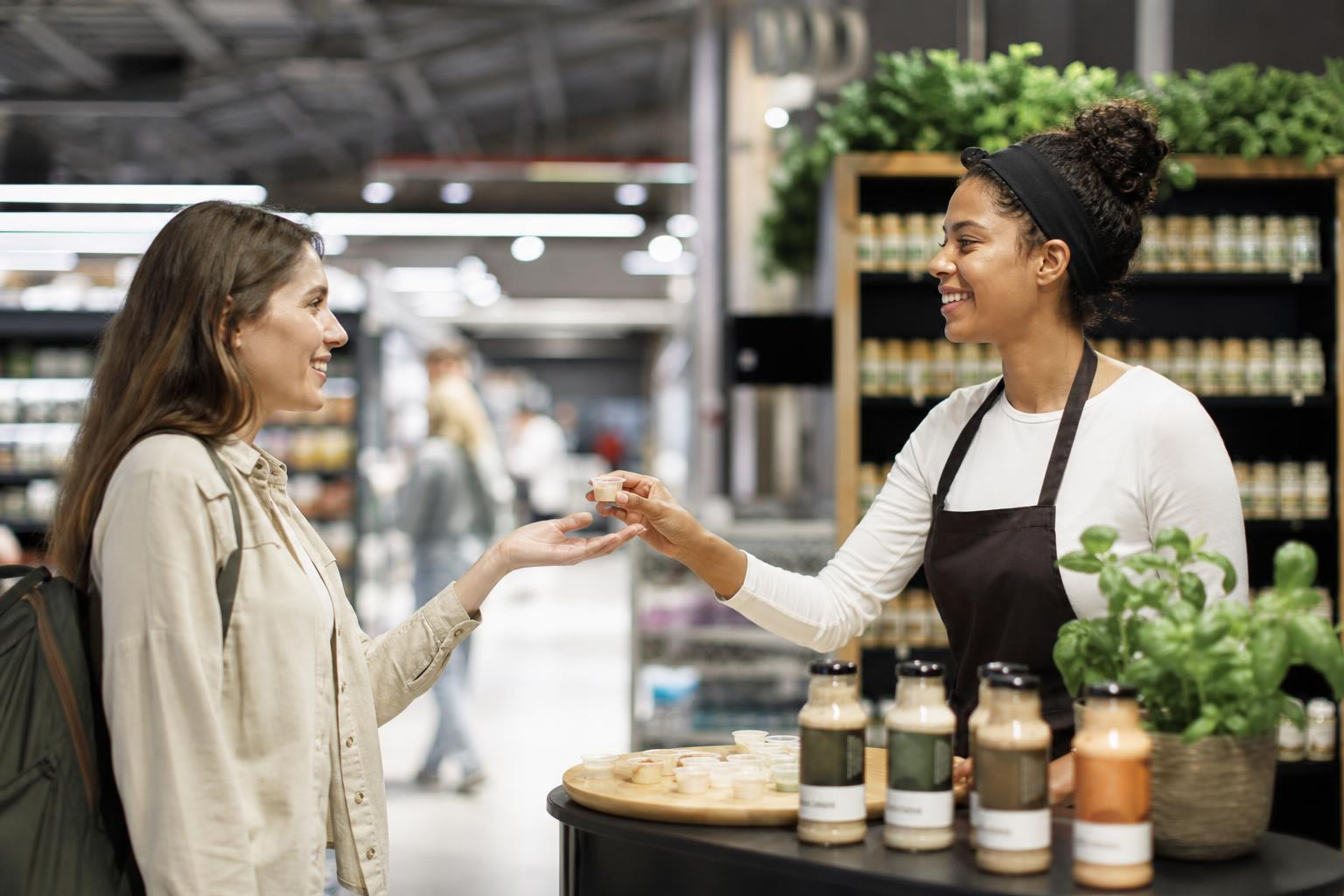
In-store sampling is the classic format. A brand sets up a sampling station inside a supermarket, typically near the relevant aisle or at a high-traffic location, and offers shoppers a free taste or trial of the product. The product is usually available for purchase within metres.
This format works because it collapses the gap between trial and purchase to almost nothing. Research from the Harris Poll found that 86% of consumers admit to purchasing a food product after sampling it in-store. Additional data shows that 35% of customers who try a sample buy the product during that same shopping trip.
In the UK, Morrisons Media Group (MMG) has built this into a formal offering. Brands can now book in-aisle sampling activity across Morrisons stores, with the MMG team helping select the right locations and delivering post-campaign summary reports. One case study showed May Tea using experiential sampling at Morrisons stores to increase sales by over 500 units per store per day.
The cost is significant. UK in-store sampling campaigns typically range from £6,000 to £15,000 for targeted activations, while multi-city experiential tours can exceed £100,000. The Tofoo Co. ran a 12-week sampling tour across major UK cities with a total programme budget of £161,000, delivering over 30,000 hot samples at a cost of £5.25 per sample.
For brands launching NPD at Morrisons, combining in-store sampling with a review generation strategy amplifies the return. Our guide on Morrisons NPD review launches covers that process in detail.
Face-to-Face / Proximity Sampling
Face-to-face sampling happens outside of stores, at events, transport hubs, festivals, or high-footfall urban locations. The brand representative hands out samples directly to passersby and can have a conversation, explain the product, and gauge immediate reactions.
The advantage is real-time feedback. You can see someone’s face when they taste your product for the first time. The disadvantage is that the point of purchase may be days or weeks away, which weakens conversion. Practitioners on forums frequently note that the biggest conversion leak in event sampling happens in the gap between trying the product and making the first purchase. If you wait days to follow up, the sensory memory fades and buying intent drops to zero.
Budget-friendly face-to-face campaigns in the UK have achieved a cost per sample of around £0.44, with total budgets between £6,000 and £15,000. More ambitious experiential campaigns start from £2 or more per sample.
Cashback and Reimbursement Sampling
Cashback sampling flips the model. Instead of giving away free products, the brand reimburses consumers after they make a real purchase. Apps like Shopmium facilitate this: consumers buy the product in-store at full price, snap their receipt, and receive a full or partial refund.
This format has a crucial advantage for grocery brands. It generates actual sales data and proves conversion, because the consumer is buying through the normal retail channel. The purchase shows up in EPOS data, which matters when you’re trying to demonstrate velocity to a retailer buyer.
SamplPay and similar platforms take this further by inviting qualified consumers to buy in-store or online, verifying their receipt, and capturing data that brands can use to prove performance and extend trial into repeat purchase.
The drawback is a more complex consumer journey. Some practitioners report that asking people to download an app or sign up on a separate platform loses them entirely. Simplicity matters. For a deeper comparison of cashback sampling versus other promotional mechanics, see our cashback vs. sampling guide.
Digital Product Sampling
Digital product sampling uses online channels (websites, social media, email, mobile apps) to distribute sample offers. Consumers typically request a sample through a landing page, and the product is either mailed to them or they receive a voucher to collect it in-store.
This format excels at targeting. Brands can use first-party data, social media audience data, or retailer media partnerships to ensure samples reach consumers who match their ideal buyer profile. In 2025, more than 40% of sample requests on the Sampl platform were filtered out before fulfilment, ensuring samples went to genuinely relevant consumers rather than serial freebie hunters.
The trade-off is that digital sampling lacks the immediate sensory impact of tasting something on the spot. But it scales efficiently and captures email addresses and preference data that can fuel post-sampling follow-up.
Direct Mail Sampling
Direct mail puts samples through letterboxes and straight into people’s homes. This is arguably the most receptive environment for sampling: no distractions, no competing products, and no time pressure.
For grocery products that are shelf-stable (snack bars, tea, coffee sachets, sauces), direct mail works well. It’s less practical for chilled or frozen goods. Some agencies have run non-face-to-face campaigns for under 30p per sample, making it one of the most cost-efficient physical sampling methods.
Product Sampling for Reviews
This is the format most grocery brands overlook, and it may be the most commercially valuable.
Product sampling for reviews is the practice of giving consumers free or discounted products with the specific goal of generating honest reviews on retailer websites. Unlike traditional sampling where the primary KPI is trial or awareness, here the primary KPI is published review content on product detail pages (PDPs).
Why does this matter so much? The average review rate on UK supermarket websites sits at roughly 0.1% to 0.3% of purchases. On Amazon, that figure is 2% to 5%. This means a product selling steadily through Tesco Online might accumulate only a handful of reviews over several months, while the same product on Amazon builds dozens.
The impact of closing this gap is dramatic. Products with just five reviews are 270% more likely to be purchased than products with none. For lower-priced items typical of grocery, reviews can lift conversion rates by 190%. Bazaarvoice data shows that for every 50 samples sent out, brands get about 45 reviews in return, an extraordinary response rate of roughly 85-90%.
This is where sampling connects directly to the digital shelf. Reviews affect retailer search ranking, conversion rates on PDPs, and whether a product survives range reviews. A sampling campaign that generates trial but captures zero reviews leaves significant value on the table.
Brand Allies’ review generation service is designed for exactly this use case, generating purchase-verified reviews on Tesco, Sainsbury’s, Morrisons, Ocado, Boots, and other UK retailers.
Online Grocery Order Sampling
Some UK retailers now include free samples within online grocery orders. Tesco, for example, has offered free product samples with online deliveries for Clubcard holders. As one shopper explained in a viral TikTok, you can search “free samples” in the Tesco app during an online shop and add them to your basket at no charge.
This format is low-cost for brands (the retailer handles distribution) and reaches consumers who are already buying groceries, making them a warm audience. The limitation is that availability depends entirely on the retailer’s promotional calendar and willingness to participate.
For brands selling through Tesco, combining online sampling with PDP optimisation creates a compounding effect. Our guide on boosting Tesco product page conversion explains how.
Limited-Time / FOMO Sampling
Limited-time samples are available only for a specific window, maybe three days, a week, or until stock runs out. This adds urgency and plays to the psychological fear of missing out.
The format works particularly well on digital channels where a countdown timer or “only X samples remaining” message creates genuine scarcity. It tends to attract more engaged trialists than open-ended sampling because the people who act quickly are typically more interested in the product category.
Influencer and Creator Sampling
Brands send products to social media influencers or micro-creators who share their experience with their audience. This sits somewhere between traditional sampling and paid media.
For grocery brands, micro-influencers in the food, recipe, and “what I eat in a day” niches can generate significant trial. The authenticity of someone cooking with your product on camera carries more weight than a polished ad. However, the reviews generated on social media don’t appear on retailer PDPs, so this format builds awareness without directly improving your digital shelf metrics.
How UK Retailers Support Free Sample Campaigns
UK grocery retailers are increasingly building sampling into their retail media offerings. This is a meaningful shift, because it gives brands more structured, data-backed ways to run campaigns.
Morrisons Media Group
MMG launched food and drink sampling across UK Morrisons stores, allowing brands to book in-aisle sampling activities. A dedicated Morrisons Live team creates in-store brand campaigns for suppliers, helps identify the best store locations, and delivers post-campaign summary reports. MMG’s chief commercial officer has stated that “successfully launching NPD remains a core focus for the majority of FMCG brands, with trial and repeat being the key to long-term results.”
Tesco
Tesco has run several iterations of online sampling for Clubcard holders. The online order sampling model is notable because it captures the consumer’s purchase data directly, giving both Tesco and the brand clear attribution.
Platforms Operating Across Multiple Retailers
Several platforms facilitate sampling across UK retailers. Shopmium works as a cashback app with regular FMCG brand partnerships. SoPost handles fulfilment for major brands like Kellogg’s, Cadbury, and Mars. Home Tester Club focuses on supermarket items, while Flavorwiki specialises in food and drink products using a cashback reimbursement model.
Key Benchmarks and Statistics
Grocery brand marketers need numbers to build business cases. Here are the benchmarks that matter.
Consumer Behaviour
| Metric | Figure |
|---|---|
| Consumers likely to buy after trying a product | 73% |
| Consumers who would try a product after receiving a free sample | 81% |
| Consumers who say sampling is the most effective way to try a new brand | 61% |
| Shoppers who buy the sampled product in the same trip | 35% |
| Consumers who purchased a food product after in-store sampling | 86% |
Conversion and ROI
Well-run sampling programs in appropriate locations typically see trial-to-purchase conversion of 15-35% when purchase is convenient. Broader industry data from Brandshare shows that 97% of consumers try free samples, and 14% to 33% end up converting into paying customers.
The review angle amplifies these returns. Bazaarvoice Network data across 12,500+ brands found a 135% increase in conversion rate and a 164% increase in revenue per visitor when shoppers engaged with peer-generated content like reviews.
In-Store Impact
In-store sampling does more than sell the sampled product. Academic research from the Journal of Retailing found that in-store product sampling produces both an immediate and sustained increase in product sales. Repeated sampling events yield a multiplicative (not just additive) increase, and sampling increases total category sales, not just sales for the focal product. The effect is more intense in the short-term and more sustained in the long-term than product feature displays.
Additional data points: 63% of shoppers say an in-store sample made them stay in the store longer, average store traffic increases by 15% during high-profile sampling events, and 48% of grocery shoppers actively look for sample stations.
UK Cost Benchmarks
| Campaign Type | Cost Per Sample | Typical Total Budget |
|---|---|---|
| Direct mail / non-face-to-face | Under £0.30 | £6,000 - £15,000 |
| Budget face-to-face (city activation) | ~£0.44 | Under £7,000 |
| In-store experiential | £2+ | £15,000 - £50,000 |
| Multi-city sampling tour | £5+ | £100,000 - £161,000+ |
For a more detailed breakdown of what sampling costs look like at different scales, see our product trial campaign cost guide.
Sampling for Reviews: The Overlooked Opportunity
Most content about free sample campaigns for grocery brands focuses on trial and awareness. That’s important, but it misses the single biggest commercial opportunity: using sampling to build review coverage on retailer product pages.
Here’s the problem. A new product listed on Tesco.com or Sainsburys.co.uk will accumulate reviews at a glacial pace, because the organic review rate on UK supermarket sites sits between 0.1% and 0.3% of purchases. Even a product selling hundreds of units per week might generate one or two reviews per month.
This matters because reviews drive three things that directly affect commercial performance:
Conversion. Products with just five reviews are 270% more likely to be purchased. For lower-priced grocery items, reviews can lift conversion by 190%.
Retailer search ranking. Review volume and recency are ranking signals on most UK retailer search algorithms. Products with more, newer reviews surface higher in on-site search results.
Range retention. During range reviews, retailers favour products that demonstrate strong consumer engagement. A bare product page with zero reviews signals weak demand, even if the product is actually selling well.
PowerReviews found that 85% of consumers who receive a free sample go on to write a review. Bazaarvoice reports approximately 90%. Compare that to the sub-0.3% organic rate and the case for sampling-for-reviews is overwhelming.
This is precisely the approach used in our product sampling for reviews guide, which walks through the process of connecting sampling campaigns to review generation on UK retailer PDPs.
How to Measure Sampling ROI
Sampling without measurement is just giving away product. Here are the formulas and metrics that matter.
Core Formulas
Shopper Conversion Rate:
Conversion Rate (%) = (Shoppers Who Purchased After Sampling / Total Shoppers Who Sampled) × 100
Sampling ROI:
ROI (%) = ((Incremental Sales – Sampling Costs) / Sampling Costs) × 100
Metrics to Track
Cost Per Acquired Customer (CAC): Total campaign cost divided by number of paying customers acquired post-event.
Repeat Purchase Rate: How many initial converts make a second or third purchase over a 90-day window. This separates one-off trial from genuine conversion.
Reviews Generated: If you’re running sampling for reviews, track the number of published reviews per sample sent, the average star rating, and the review approval rate (some retailer moderation systems reject a percentage of submissions).
Incremental Sales Lift: Compare sales velocity in the weeks before, during, and after the campaign. Academic research confirms that sampling effects persist well beyond the event itself, so measure over 4-8 weeks minimum.
For a broader framework on verifying campaign results, the retail campaign verification glossary covers the terminology and methodology.
Common Mistakes to Avoid
Even well-funded sampling campaigns fail when execution breaks down. Here are the errors that practitioners consistently flag.
Stockouts After Sampling
This is the most preventable and most damaging mistake. If your sampling event drives a surge in demand but the product isn’t actually on shelf, you’ve paid to frustrate consumers. Practitioners emphasise the need to track stock levels and adjust replenishment schedules to ensure product availability during and after the event.
Running a sampling campaign without confirming shelf availability is surprisingly common. Brand Allies’ in-store compliance service can verify your product is actually on shelf before, during, and after activation.
Delayed Follow-Up
For face-to-face and event sampling, the window between trial and first purchase is critical. If you wait days to follow up with a digital touchpoint (email, SMS, retargeting), the sensory memory fades and buying intent drops sharply. The best campaigns capture contact data at the point of sampling and trigger a follow-up message within 24 hours.
Overcomplicating the Consumer Journey
Digital sampling campaigns often lose people with unnecessary friction. Asking someone to download an app, create an account on a separate platform, and then verify their email before they can claim a sample will kill your response rate. Keep things simple: click, fill in basic details, done.
Wrong Audience Targeting
Traditional physical sampling has a waste problem. Nielsen’s 2024 Consumer Insights Report found that 70% of samples go unused. This happens when samples reach people who were never going to buy the product regardless. Digital and cashback sampling platforms address this by filtering requests before fulfilment, but in-store and event sampling still requires careful location and timing decisions.
Ignoring the Review Opportunity
Perhaps the most expensive mistake is running a sampling campaign that generates thousands of trials but captures zero reviews. Every sample that doesn’t result in a review on a retailer PDP is a missed opportunity to build the digital shelf asset that keeps working long after the campaign ends.
Established Brands vs. Challenger Brands: Different Sampling Logic
The purpose of sampling shifts depending on brand maturity.
Challenger brands use sampling for what it was originally designed for: discovery. When nobody knows what your product tastes like, trial is the bottleneck. Sampling removes it. For challenger brands, the primary goals are awareness, first purchase, and building enough review coverage to compete on retailer search.
Established brands face a different dynamic. “Everyone knows what we taste like” is the common internal objection. But recognisable brands use sampling defensively, to protect market share, maintain shelf relevance, and prove to retailers they’re driving trips and category growth. PepsiCo, for example, activated “de-stress” lounges on college campuses distributing product boxes that drove a 22% sales lift, despite being a household name with universal awareness.
The implication for campaign design is significant. Challenger brands should prioritise sampling formats that generate reviews and measurable purchase data (cashback sampling, sampling for reviews). Established brands can lean more into experiential and in-store formats that reinforce brand salience and demonstrate retailer partnership.
Choosing the Right Campaign Type
The right format depends on three things: your primary goal, your budget, and your retail channel.
| Your Goal | Best Format(s) | Budget Range |
|---|---|---|
| Drive immediate in-store trial | In-store sampling, front-of-store | £6,000 - £50,000+ |
| Generate reviews on retailer PDPs | Sampling for reviews, cashback | Varies by volume |
| Build mass awareness | Face-to-face, experiential tour | £15,000 - £161,000+ |
| Test product-market fit | Digital sampling, direct mail | £6,000 - £15,000 |
| Support an NPD launch | Combination: in-store + sampling for reviews | £10,000 - £50,000+ |
| Defend market share (established brand) | In-store, online order sampling | Retailer-dependent |
For brands evaluating agencies to run these campaigns, our guide to the best product sampling agencies in the UK compares the options.
The strongest campaigns combine formats. Run in-store sampling to generate immediate sales and category lift, then layer sampling for reviews to build the digital shelf assets that compound over time. Use cashback sampling to capture purchase data you can present to retailer buyers. This integrated approach is where most brands under-invest.
If you’re building a sampling plan that needs to cover trial, reviews, and in-store verification, book a demo with Brand Allies to see how these pieces connect.
Frequently Asked Questions
What is the average conversion rate for free sample campaigns in grocery?
Well-run sampling programs typically see trial-to-purchase conversion between 15% and 35% when the product is available for immediate purchase nearby. In-store sampling tends to convert at the higher end of this range because the product is within arm’s reach. Harris Poll data shows 86% of consumers who sample a food product in-store go on to purchase it at some point.
How much does a product sampling campaign cost in the UK?
Costs vary widely. Non-face-to-face campaigns (direct mail, digital) can run under £0.30 per sample with total budgets from £6,000 to £15,000. In-store experiential sampling starts at £2+ per sample. Multi-city sampling tours can exceed £100,000, as demonstrated by The Tofoo Co.'s £161,000 programme.
Do free sample campaigns actually generate long-term sales, or just a temporary spike?
Academic research published in the Journal of Retailing found that in-store sampling produces both an immediate and sustained increase in product sales. The effect is more intense and more sustained than product feature displays, and repeated sampling events yield a multiplicative increase in sales rather than just additive gains.
How do UK supermarkets support brand sampling campaigns?
Morrisons Media Group offers bookable in-aisle sampling with dedicated campaign support and post-campaign reporting. Tesco has offered free sample add-ons for online Clubcard orders. Several platforms like Shopmium and SoPost facilitate sampling across multiple UK retailers through cashback and fulfilment models.
What percentage of samples go to waste?
According to Nielsen’s 2024 Consumer Insights Report, roughly 70% of traditional physical samples go unused. This waste is the primary driver behind the shift to digital and cashback sampling formats that pre-qualify consumers. In 2025, over 40% of sample requests on the Sampl platform were filtered out before fulfilment.
How does sampling connect to product reviews on retailer websites?
Sampling for reviews is a specific campaign type where consumers receive free or discounted products in exchange for honest reviews on retailer websites. PowerReviews found that 85% of consumers who receive a free sample write a review, compared to the 0.1%-0.3% organic review rate on UK supermarket sites. This makes sampling the fastest route to building review coverage.
Can established brands still benefit from free sample campaigns?
Yes, but the goals shift. Established brands use sampling to defend market share, prove category growth to retailers, and stay relevant during range reviews. Even household names like PepsiCo run sampling campaigns that deliver measurable sales lifts.
What’s the biggest mistake brands make with sampling campaigns?
Failing to ensure product availability on shelf during and after the campaign. If sampling drives demand but the product is out of stock, you’ve spent money creating frustrated potential customers. The second biggest mistake is running sampling without capturing reviews, leaving the most durable commercial asset (PDP review coverage) on the table.