Cashback vs Rebate vs Sampling in FMCG: Glossary for UK Brand Teams
TL;DR: Cashback is a post-purchase reward where shoppers get money back after proving they bought the product. A rebate is the broader reimbursement mechanism, most often used in trade and B2B deals. Sampling is the trial objective: getting the product into someone’s hands. In modern FMCG, digital sampling frequently uses cashback as its delivery mechanic, and the strongest campaigns tie trial to verified reviews and first-party data.
Cashback, rebates, and sampling are thrown around in UK FMCG as if they mean the same thing. They don’t. Each answers a different question, funds a different behaviour, and produces different data. Confusing them leads to campaigns that spend money on activity without producing proof of anything.
This glossary breaks down what each term actually means in practice, when to use which mechanic, what compliance rules apply in the UK, and how these promotional approaches overlap. Whether you’re planning a new product launch, building a retailer media case, or trying to fill a product page with honest reviews, the distinction matters.
Explore FMCG promotional activations
Quick comparison table
| Cashback | Rebate | Sampling | |
|---|---|---|---|
| What it means | Shopper buys, proves purchase, gets money back | Money returned after conditions are met (often trade or B2B) | Product is trialled to reduce uncertainty |
| Who pays first? | Shopper | Buyer (shopper, retailer, or distributor) | Brand or retailer funds the product |
| Best for | Verified trial, price-risk reduction, data capture | Volume incentives, retailer deals, margin control | Taste-led categories, sensory barriers, NPD |
| Data produced | Receipt data, redemption rates, basket context | Volume and value performance, accrual data | Varies widely, often minimal |
| Main risk | Claim friction, rejected receipts, payout delays | Complexity, accrual disputes, low consumer clarity | Weak attribution, wastage, no repeat-purchase proof |
Understanding where cashback vs rebate vs sampling fit in FMCG starts with one simple frame: cashback and rebates are reimbursement mechanics, while sampling is a trial objective. They can overlap, and frequently do.
What is cashback in FMCG?
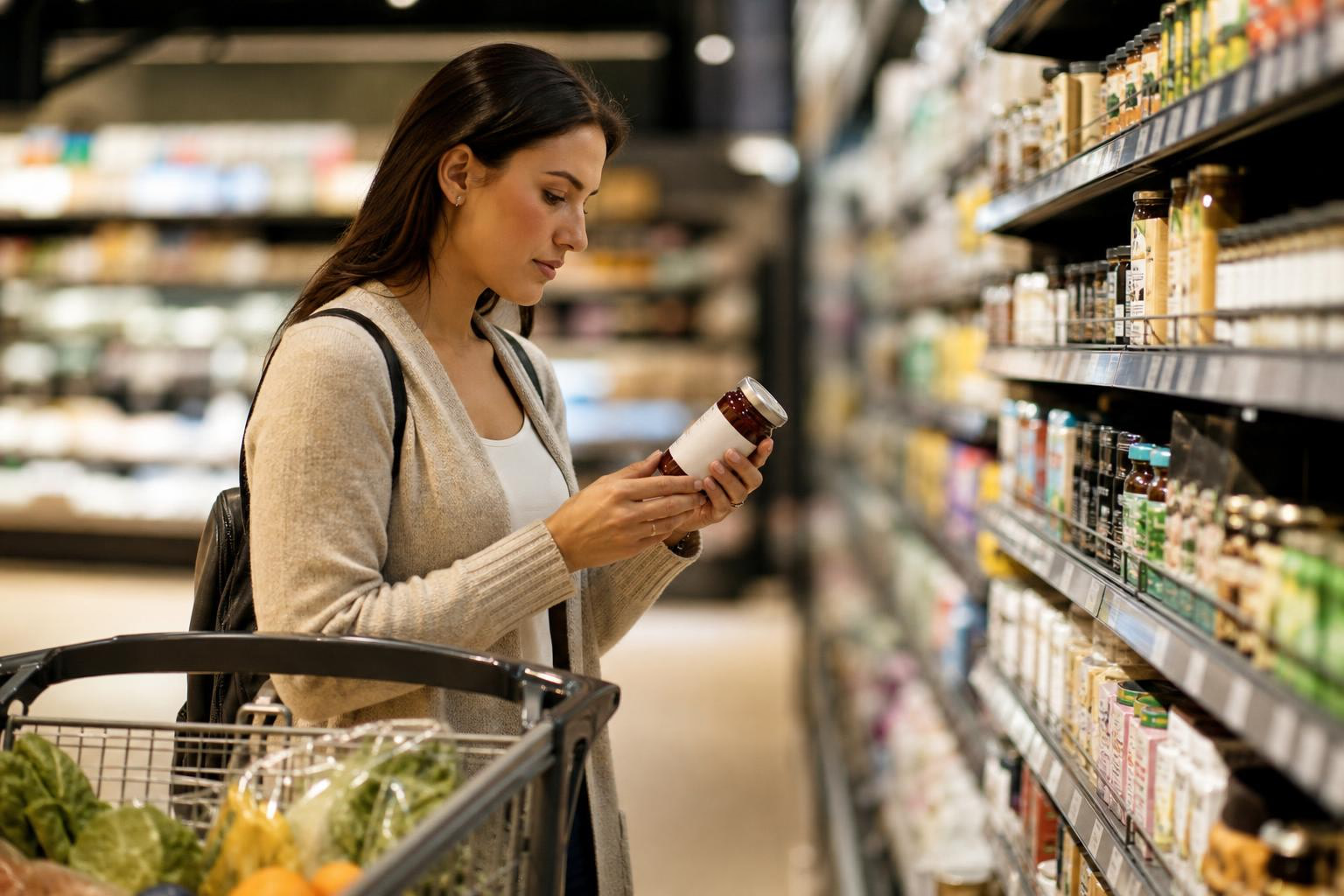
Cashback is a promotion where a shopper buys a qualifying product and receives money back after proving the purchase. In grocery and FMCG, this typically works through receipt upload, barcode scan, or retailer order confirmation via an app or website.
HMRC defines cashback as a payment made by a manufacturer (directly or through a recovery agency) to the customer of a wholesaler or retailer, typically tied to product-specific promotions.
Plain example: “Buy our new protein yoghurt at Tesco, upload your receipt, and get £1 back.”
When cashback works best
Cashback is strongest when a brand wants a shopper to buy a real SKU in a real retailer and then prove it. That makes it more measurable than most sampling campaigns. Practitioners on LinkedIn describe FMCG cashback as a way to validate purchase, create first-party data, and connect follow-up activity to actual buyers. One shopper marketing practitioner framed it as learning who bought, why they chose the product, what else was in the basket, and whether they opted into a brand-owned relationship.
Good use cases include:
- New product launches where price is the barrier
- “Try me free” campaigns
- Retailer-specific activations where the brand wants conversion proof
- Review follow-up after verified purchase
- Premium products where shoppers need risk reduction
For a deeper look at how cashback works in practice, see this guide to cashback promotions for FMCG.
The hidden cost: shopper friction
Cashback sounds simple on paper. In practice, shoppers on MoneySavingExpert forums report a more complicated experience. Users discuss receipt-upload apps like Shopmium, CheckoutSmart, and GreenJinn, but frequently mention payout thresholds, delayed payments, rejected claims, and products that aren’t stocked locally.
One forum user described certain offers as “wild goose chases” where the app showed availability but store staff had never seen the product. Another reported waiting 10 days after an email claimed their PayPal payment had been sent. A separate thread discussed Shopmium’s move to a £10 payout threshold, which frustrated users with small balances.
This matters for brand teams. A campaign can look generous in the media plan but fail if shoppers can’t find the SKU, don’t understand the claim flow, or don’t trust the payout. Distribution and on-shelf availability aren’t just supply chain problems. They’re promotion problems.
When running cashback campaigns, in-store compliance checks can prevent the embarrassment of promoting a product shoppers can’t actually find.
Cashback compliance in the UK
The ASA says advertisers should not subtract cashback from the headline price if doing so misleads consumers about what they must pay at the point of purchase. If a shopper pays £3.50 and later claims £1 cashback, the ad should not present it as “£2.50” without making the claim process clear.
What to measure
- Claims submitted and approved
- Approval rate
- Cost per verified trial
- New-to-brand rate
- Repeat purchase rate
- Review completion rate (if tied to a review campaign)
What is a rebate in FMCG?
A rebate is money returned after a buyer meets defined conditions. The word covers a wide range of arrangements, from consumer mail-in offers to complex trade deals between manufacturers and retailers.
In UK FMCG, “rebate” most often refers to a trade or B2B commercial incentive. A retailer, wholesaler, or distributor receives money back after hitting volume, value, growth, or product-mix targets. Loyalty Magazine described rebate programmes as reimbursement for part of a product’s purchase price following its sale, reporting that 50% of retailers used rebates as part of their loyalty and promotions mix, with top-line revenue cited as the primary driver by 64% of retailers.
Plain example: “If a wholesaler buys 10,000 cases this quarter, the manufacturer pays a 3% end-of-quarter rebate.”
Consumer rebate vs trade rebate
This is the critical distinction most glossaries miss. A consumer rebate works like cashback: the shopper pays, proves the purchase, and gets money back. But in UK grocery, “cashback” is almost always the better word for consumer-facing promotions. “Rebate” sounds corporate, and shoppers don’t think in rebate language.
Trade rebates are different. They sit in the commercial agreement between manufacturer and retailer. Types include volume rebates, value rebates, growth rebates, product-mix rebates, and loyalty rebates. Each rewards a specific commercial behaviour after it has been delivered, not before.
Cashback vs rebate: the simplest distinction
If the shopper sees it in an app or on-pack as “buy this and get £1 back,” call it cashback. If the commercial team accrues money against volume, value, distribution, or year-end growth targets, call it a rebate.
In practice, cashback is a type of rebate. But in FMCG marketing language, the two words live in different departments. Cashback belongs to shopper marketing and brand activation. Rebate belongs to commercial finance and category management.
When rebates work best
- Retailer or distributor volume incentives
- Growth-based deals tied to year-on-year performance
- Product-mix targets (encouraging a customer to stock both core and NPD)
- Margin-controlled promotional funding
- Long-term account planning
What to measure
- Incremental volume and value
- Net revenue after rebate
- Cost per incremental case
- Retailer compliance with agreed terms
- Accrual accuracy and dispute rate
What is sampling in FMCG?
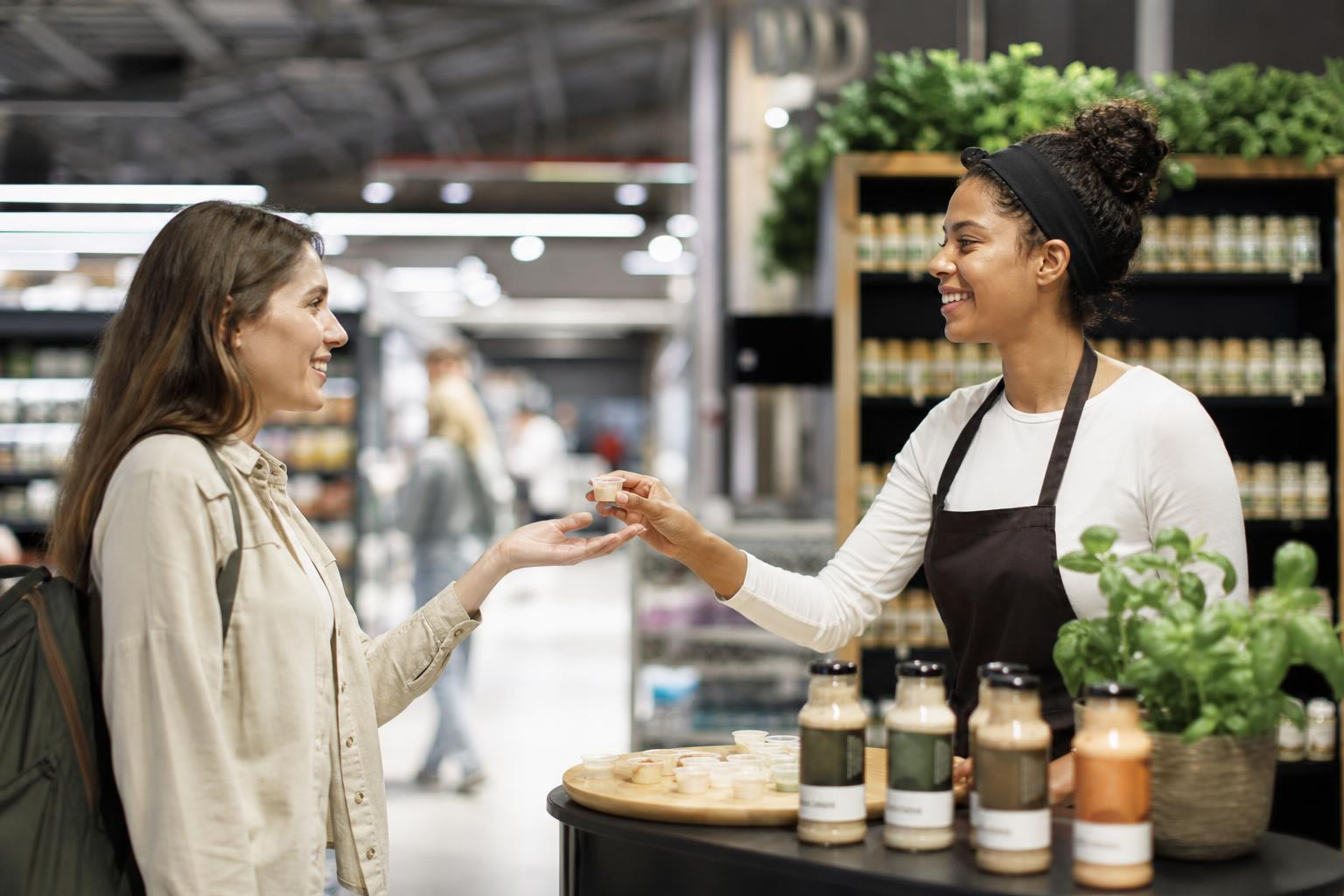
Sampling is a promotional activity that gives shoppers a chance to try a product before committing to a normal purchase. It can be a taste sample in-store, a sachet through the letterbox, a trial pack at an event, or a full-size product bought and then reimbursed.
HMRC defines a sample as a specimen intended to promote sales and allow the characteristics and qualities of the product to be assessed. That’s the technical version. In practice, sampling is about removing uncertainty.
Plain example: “Try a small serving of a new chilled coffee in-store, then use a money-off coupon to buy the full bottle.”
When sampling works best
Sampling is strongest when the barrier is experiential. If shoppers don’t know what the product tastes like, smells like, or feels like, no amount of advertising will replace putting it in their hands. That makes sampling particularly valuable for:
- Taste-led NPD (new flavours, unfamiliar ingredients)
- Premium products where shoppers need proof before paying
- Health and functional products that need explanation
- Categories where habit is the main competitor
Industry analysis from SMG, reported by The Grocer, found that sampling campaigns produced an average 95.2% sales increase, with fixture advertising producing a 30.4% lift. Those numbers suggest sampling can deliver strong in-store results when execution is right.
But sampling doesn’t always work
The evidence is more mixed than vendor pitches suggest. An FSA-commissioned trial tested free samples and loyalty cards across 29 workplace food outlets. The result: no statistically significant effect on plant-based meal sales from either intervention. Workers who tried the samples tended to like them, but liking didn’t translate into purchases. The process evaluation pointed to low footfall, rushed customers, limited awareness, and entrenched habits.
The takeaway isn’t that sampling never works. It’s that sampling works when execution, setting, product availability, messaging, and follow-up all line up. Without those, a brand is paying for activity rather than outcomes.
For a broader look at how sampling fits into store-level plans, see this guide to in-store activation strategy.
The automated sampling debate
A LinkedIn discussion about Asda’s automated free-sample vending machine highlighted both sides of sampling’s evolution. Supporters saw efficiency, lower cost, shopper data, and real-time intelligence. Critics argued sampling works best when it includes human interaction, product education, and a purchase nudge at the shelf. The right choice depends on whether the product needs explanation or simply a risk-free first try.
What to measure
- Samples distributed
- Conversion to purchase
- Sales uplift during and after the activity
- Cost per sample and cost per incremental buyer
- Repeat purchase rate
- Review rate (if combined with a follow-up campaign)
Why digital sampling blurs the line between cashback and sampling
This is where the cashback vs rebate vs sampling conversation in FMCG gets interesting. Digital sampling is not a fourth category. It’s a hybrid where the sampling objective is delivered through a cashback mechanic.
Traditional sampling model: Give a small amount of product away. Hope the shopper buys later.
Digital sampling model: Shopper buys the full-size SKU at a real retailer, uploads proof of purchase, receives cashback or full reimbursement. The brand captures verified trial data and can follow up with a survey, a repeat-purchase offer, or a review request.
Consider the flow: a shopper buys a £3.50 chilled coffee in Sainsbury’s, uploads the receipt, receives £3.50 cashback, then gets asked for honest feedback. The brand has delivered sampling, but the mechanic was cashback. The shopper tried the real product, in a real store, as part of a real shopping trip.
Practitioners on LinkedIn frame receipt-based sampling as a way to replace tiny samples with full-size product experience in the shopper’s natural buying journey, while giving the brand verified purchase data and basket insights.
Why digital sampling is growing
Digital sampling solves several problems that traditional sampling can’t:
- Proof of purchase. The brand knows who bought, where, and when.
- Full-size trial. A spoonful of yoghurt in-store is not the same as eating it at home.
- Follow-up. The brand has a verified buyer to contact, not an anonymous taster.
- Basket context. Receipt data reveals what else the shopper bought.
It introduces new problems, though. Claim friction, fraud checks, and payout trust all affect participation. The experience can feel like admin rather than discovery if the journey is clunky.
For a detailed comparison, see product sampling vs cashback.
Meal deals: an overlooked digital sampling opportunity
One practitioner on LinkedIn argued that meal deals are a high-frequency habit loop where cashback can remove risk from trying a new drink or snack. The follow-up (repeat offers, reviews, advocacy) is what builds lasting behaviour change. That insight applies broadly: FMCG cashback and sampling create the first trial, but value compounds when trial feeds into data, reviews, and repeat purchase.
Which mechanic should you use for an FMCG launch?
The cashback vs rebate vs sampling question in FMCG isn’t really “which is best.” It’s “which matches the problem.”
| Launch problem | Best approach | Why |
|---|---|---|
| No one knows what the product tastes like | Sampling (in-store or digital) | Experience removes uncertainty |
| Shoppers think the product is too expensive | Cashback | Lowers risk without cutting shelf price |
| Retailer wants proof of sell-through | Rebate or verified cashback | Pays after evidence, not before |
| Product page has no reviews | Buy-try-review campaign | Turns trial into social proof |
| Distribution is patchy | In-store audit before any promotion | Avoids paying to send shoppers to empty shelves |
| Product needs education | Staffed sampling or guided community | Human explanation matters |
| Brand needs first-party data | Receipt cashback or digital sampling | Captures verified buyer signals |
Notice how the mechanic changes depending on whether the problem is awareness, price, trust, data, or distribution. A plant-based ready meal with a taste barrier needs sampling. A premium ice cream with low awareness needs targeted cashback plus reviews. A retailer wanting volume proof needs a rebate structure.
For teams planning the full sequence from listing to activation, the UK FMCG retail launch checklist covers each stage.
Where reviews fit: trial is not the finish line
Cashback and sampling can get products tried. But in UK FMCG, trial without evidence is a leaky promotion. If a brand funds cashback or sampling but gets no reviews, no product page content, and no proof of execution, it has paid for activity rather than assets.
This is the gap that buy-try-review campaigns fill. A shopper buys the real product from a target retailer, tries it, and leaves an honest review on the retailer’s product page. The brand gets verified purchase, PDP content, review velocity, and social proof from a single campaign.
The numbers support why this matters. Products with fewer than 20 to 30 reviews often fall below the credibility threshold where shoppers trust the listing. Review recency matters too: a steady flow of new reviews outperforms a one-time spike. Retailer search algorithms tend to favour products with higher ratings and more recent review activity. Read more about the first 30 product reviews and why they set the credibility floor.
The compliance line for reviews
Buy-try-review campaigns sit at a sensitive compliance boundary. CMA guidance is clear: concealed incentivised reviews are a banned practice. Businesses must not offer inducements to write positive reviews. Review publishers must take reasonable steps to prevent and remove fake reviews and concealed incentivised content.
Compensated review campaigns must be designed around honest, transparent feedback. Never positive-review guarantees, review gating, or hidden incentives. For a full breakdown of the rules, see this guide to UK product review compliance.
See how verified product reviews work for UK FMCG brands
UK compliance checklist for FMCG cashback, rebate, and sampling campaigns
Compliance is not a footnote. Getting it wrong can mean ASA adjudications, CMA enforcement, or retailer bans. Here are the practical watch-outs for UK FMCG teams comparing cashback vs rebate vs sampling mechanics.
1. Make cashback conditions clear upfront
The CAP Code requires significant conditions to appear in the initial promotional material. That includes qualifying SKUs, eligible stores, purchase dates, claim deadlines, receipt requirements, payout method, timing, maximum claims per household, and what happens if a receipt is rejected.
2. Don’t mislead on headline price
The ASA has specifically warned against deducting cashback from prices in a way that misleads consumers about what they actually pay at the till. Show the real purchase price. State the cashback value separately.
3. Handle incentivised reviews transparently
CMA guidance says concealed incentivised reviews are banned. If a shopper receives compensation for a review, that must be disclosed. Brands must never require positive feedback as a condition of payment.
4. Check HFSS rules for food and drink
England’s HFSS location restrictions came into force on 1 October 2022. Volume price promotion restrictions came into force on 1 October 2025, with a packaging transition period until 30 September 2026. Multi-channel promotions need extra care because packaging rules and advertising rules can apply differently.
5. Remember VAT treatment differs
HMRC treats samples, gifts, coupons, vouchers, and cashbacks differently for VAT purposes. A cashback payment from a manufacturer to a consumer has different implications than a free sample handed out in-store. Seek specific tax advice for your campaign structure.
6. Watch retailer moderation rules
Each UK retailer has its own policies about reviews, promotional claims, and in-store activity. A campaign that complies with ASA rules may still breach a retailer’s moderation policy. Check before you launch, not after reviews get rejected.
Putting it together: mechanic, objective, and proof
The biggest mistake in the cashback vs rebate vs sampling FMCG debate is treating all three as equivalent promotional choices. They answer different questions:
- Cashback answers: how will we return value to the shopper after purchase?
- Rebate answers: how will we return value after a commercial condition is met?
- Sampling answers: how will we get the product experienced?
A “try me free” campaign can be both cashback and sampling. A consumer “free after rebate” offer is a rebate and a sampling mechanic. A trade allowance paid after sell-through is a rebate but not sampling. A spoonful of yoghurt in-store is sampling but not cashback.
The strongest FMCG campaigns don’t pick one in isolation. They match the mechanic to the objective, build in proof of purchase, and connect trial to outcomes that last: verified reviews, first-party data, repeat purchase signals, and retailer confidence. Trial that produces evidence beats trial that produces nothing but cost.
FAQ
Is cashback the same as a rebate?
Not exactly. Cashback is usually the consumer-facing form: a shopper buys a product and gets money back after proving purchase. A rebate is the broader financial mechanism that can apply to shoppers, retailers, wholesalers, or B2B customers after defined conditions are met. In UK FMCG shopper marketing, “cashback” is the more common and more intuitive term for consumer promotions.
Is sampling better than cashback for FMCG launches?
It depends on the barrier. Sampling is better when the product experience itself is what shoppers need (taste, texture, smell). Cashback is better when the brand wants a verified purchase, receipt-level data, and a follow-up opportunity. Digital sampling combines both by using cashback to fund a full-size product trial.
What is digital sampling in FMCG?
Digital sampling is a campaign where shoppers buy a full-size product and receive cashback or reimbursement after proof of purchase. It delivers a sampling outcome (the shopper tries the product) using a cashback mechanic. The brand gets both product experience and verified purchase data.
What is a “try me free” campaign?
A “try me free” campaign typically means the shopper buys a product at the normal price and claims back some or all of the purchase price through receipt upload or a claim form. It functions as both a cashback promotion and a digital sampling campaign.
Can brands pay shoppers for reviews in the UK?
Brands must be very careful. CMA guidance says concealed incentivised reviews are banned. Incentives must be disclosed, and brands must never require positive reviews or gate feedback so only favourable responses are published. Review campaigns should be designed around honest, unfiltered shopper feedback.
What’s the biggest risk with FMCG cashback campaigns?
Shopper friction. If the SKU isn’t stocked locally, the receipt gets rejected, or the payout takes too long, the campaign creates frustration rather than trial. Forum users on MoneySavingExpert regularly discuss these issues with apps like Shopmium and CheckoutSmart. Checking distribution before launch can prevent wasted promotional spend.
How do cashback, rebates, and sampling overlap in FMCG?
They overlap constantly. A cashback campaign that reimburses the full price is, from the brand’s perspective, digital sampling. A consumer rebate offer works like cashback but uses different language. A sampling event with a money-off coupon starts blending into cashback territory. The key is matching the mechanic to the objective rather than treating the labels as rigid, separate categories.