
TL;DR
Cashback promotions for FMCG brands are sales incentives where shoppers receive a partial or full refund after purchasing a qualifying product, typically by uploading a receipt to an app or platform. Unlike discounts, cashback keeps the shelf price intact, protecting brand value while driving trial, capturing first-party data, and generating product reviews. In the UK, these promotions are governed by ASA and CAP Code rules around headline pricing, “free” claims, and significant conditions. When structured well, cashback is one of the few promotional levers FMCG brands can control independently of retailers.
What Is a Cashback Promotion?
A cashback promotion is a sales promotion where customers receive money back after buying an eligible product. The refund, whether partial or full, is delivered retrospectively rather than applied at the point of sale. This is the core distinction that separates cashback from discounts, coupons, and other price-reduction mechanics.
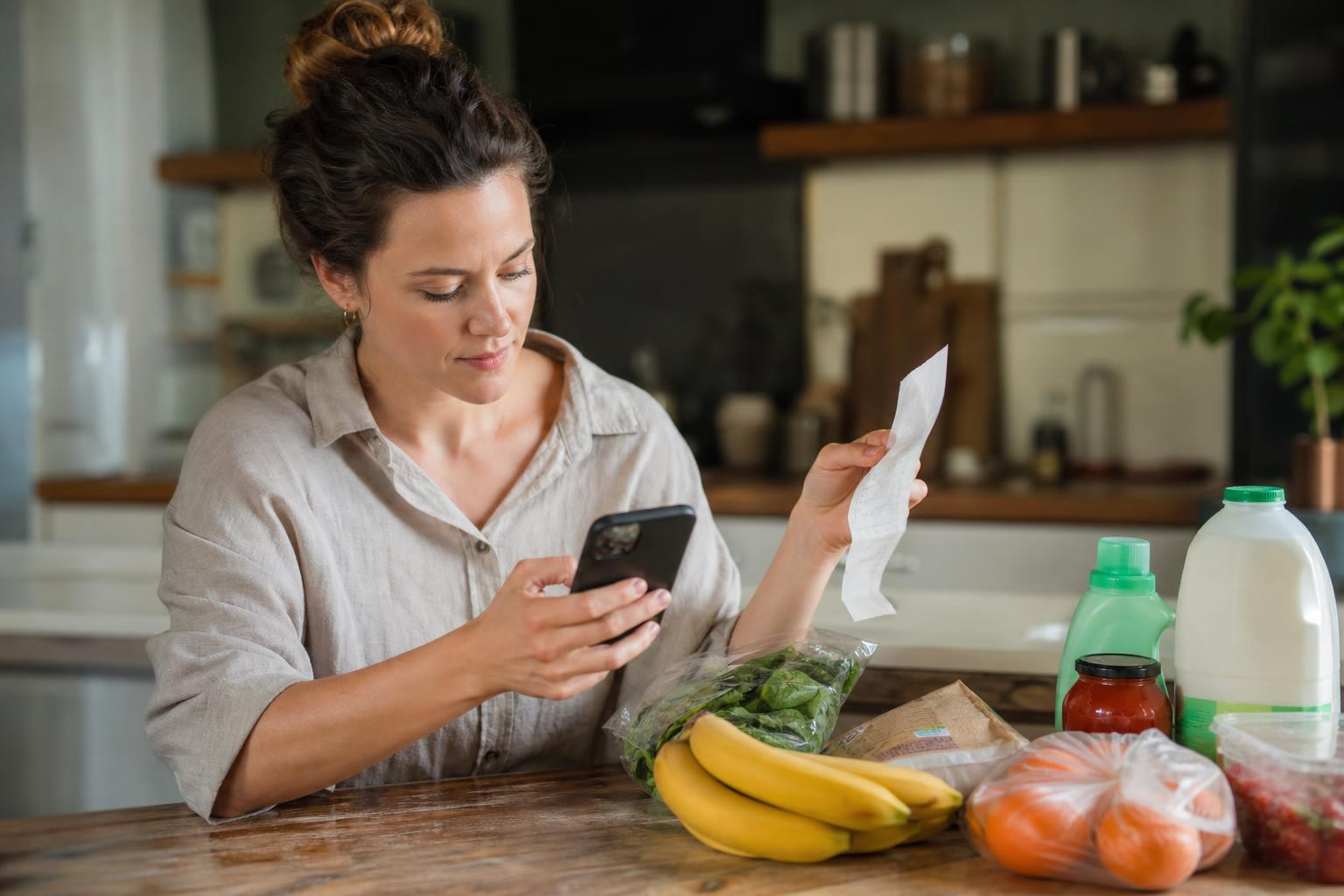
In an FMCG context, cashback most commonly works through receipt-based apps. A shopper buys a product at a supermarket, photographs their receipt, uploads it to the app, and receives a refund once the purchase is validated against the campaign rules. Payouts typically arrive via bank transfer, PayPal, or prepaid card.
There are two main types:
Partial cashback returns a percentage or fixed amount of the product’s price. A £4.50 cereal box might offer £1.50 back, for example.
Full (100%) cashback refunds the entire purchase price. This is effectively a free trial funded by the brand, commonly used for new product launches where getting the product into someone’s hands matters more than immediate revenue.
Cashback sits within the broader discipline of shopper activation, alongside sampling, in-store demos, and retailer promotions. But it occupies a unique position because the brand funds and controls the promotion directly, without needing retailer permission or shelf-space negotiation.
How it differs from related mechanics
People frequently confuse cashback with other promotional tools. Here’s how they actually differ:
| Mechanic | How it works | When the saving happens |
|---|---|---|
| Cashback | Refund after purchase, validated via receipt or transaction data | Post-purchase |
| Discount | Price reduction applied at the shelf or checkout | At point of sale |
| Coupon/voucher | Pre-issued offer redeemed at till | At point of sale |
| Money-back guarantee | Full refund if unsatisfied (risk-reversal promise) | Post-purchase, conditional on dissatisfaction |
| Rebate | Historically a mail-in form; cashback is the digital successor | Post-purchase |
The distinction matters strategically. A discount changes the price on shelf. A cashback promotion does not. That single difference drives most of the reasons FMCG brands choose cashback over alternatives.
Cashback vs Discount: Why the Difference Matters for FMCG
This comparison deserves its own section because it’s the most common question brand managers ask. On the surface, cashback and discounts both put money back in the shopper’s pocket. Underneath, they work very differently.
| Factor | Cashback | Discount |
|---|---|---|
| Shelf price | Stays intact | Reduced |
| Margin impact | Deferred; not everyone redeems | Immediate hit on every unit |
| Brand perception | Protected, even premium | Risk of devaluation over time |
| Data capture | Yes (claim form requires shopper details) | Minimal or none |
| Consumer engagement | Post-purchase touchpoint | Ends at checkout |
| Setup speed | Days to weeks via app platforms | Requires retailer negotiation |
| Best for | NPD trial, premium brands, range review defence | Clearance, impulse categories, volume pushes |
Premium brands tend to prefer cashback because it lets them reward shoppers without training them to expect a lower price. Value-oriented brands in impulse categories may find straight discounts more effective, since the saving needs to be visible at the moment of decision.
Cashback also has a natural breakage rate. Not every shopper who buys the product will bother to claim. This makes the effective cost per unit lower than a blanket discount, though brands should model redemption scenarios carefully rather than banking on low uptake.
Why FMCG Brands Use Cashback Promotions
Protecting price integrity
This is the primary reason. In UK grocery, constant discounting erodes both margin and brand perception. As one marketing practitioner noted on Medium, brands should “use promotions as a precision tool to drive volume without eroding your brand’s premium image.”
Cashback delivers exactly this. The product sells at its full shelf price. The incentive happens behind the scenes, between the brand and the shopper, after the transaction. Retailers see full-price sales in their EPOS data, which matters enormously during range reviews.
Bypassing retailer gatekeeping
UK grocery retailers operate under the Groceries Supply Code of Practice, which regulates how suppliers and retailers negotiate promotional activity. In practice, this means brands can’t always promote when or how they want to through the retailer. Some find they can’t promote at all during certain windows.
Cashback apps like CheckoutSmart, Shopmium, and GreenJinn solve this problem. The brand funds the promotion, the app facilitates it, and the retailer isn’t involved. The brand gains full control of timing, targeting, and terms.
This independence is particularly valuable for challenger brands and smaller manufacturers who lack the commercial leverage to secure prime promotional slots with major grocers.
Driving trial for new product launches
Getting a new product into shoppers’ baskets is the single hardest challenge in FMCG marketing. Research suggests 80% of consumers are motivated to try a new brand when presented with an enticing offer. Full cashback (effectively a free trial) removes the financial risk of trying something unfamiliar.
This makes cashback a natural complement to product sampling campaigns. Where sampling puts products directly into hands at events or through letterboxes, cashback drives trial through the actual retail environment, creating real sales data in the process.
Defending range reviews
Every FMCG brand manager dreads the range review conversation where a buyer points to underperforming rate-of-sale numbers and threatens delisting. Running a targeted cashback campaign in specific retailers in the weeks before a range review can lift sales enough to protect vulnerable SKUs.
This only works if the product is actually on shelf and correctly merchandised, of course. An in-store compliance audit alongside the cashback campaign ensures the promotion isn’t wasted on stores where the product is missing or mis-shelved. Without that visibility, even well-funded cashback campaigns can underperform because of what amounts to retail’s invisible revenue leak.
Capturing first-party data
Every cashback claim requires the shopper to provide personal information: name, email, often location and retailer preference. This is a genuine data capture opportunity in a sector that historically has almost no direct relationship with its end consumers.
That data feeds CRM programmes, retargeting, and future campaign planning. It also helps brands understand which retailers and regions are responding to promotions, information that’s otherwise locked inside retailer EPOS systems.
Targeting heavy category buyers
Not all shoppers are equal. Analysis from CheckoutSmart found that 25% of consumers account for an average of 67% of category value, peaking at 78% in baby food and 74% in wine. Cashback platforms can target these high-value shoppers based on their purchase behaviour, concentrating promotional spend where it generates the highest return.
Meeting cost-of-living demand
Price sensitivity is shaping UK grocery behaviour in ways that aren’t going away soon. Research shows 54% of consumers search for or wait for promotions before purchasing, and 40% actively shop around for better prices. A Savi/OnePoll survey from December 2023 found that one in three UK shoppers are directly influenced by cashback promotions. Brands that don’t offer some form of value-back mechanic are leaving these shoppers to competitors.
How Cashback Promotions Work in UK Grocery
The mechanics vary slightly by platform, but the standard flow for a receipt-based FMCG cashback campaign looks like this:
Step 1: Campaign setup. The brand defines the qualifying product(s), participating retailers, cashback value, promotional period, and any limits (one claim per person, for example). This happens through a cashback platform or agency.
Step 2: Promotion goes live. The offer appears in the cashback app. Some brands also promote via their own channels, social media, or in-store POS materials.
Step 3: Shopper purchases. The consumer buys the product at its full shelf price from a participating retailer.
Step 4: Receipt upload. The shopper photographs their receipt and uploads it through the app. Some platforms also accept online order confirmations.
Step 5: Validation. The platform checks the receipt against campaign parameters: correct product, correct retailer, within the promotional period, within claim limits. Modern platforms automate most of this with OCR (optical character recognition) and rule-based validation.
Step 6: Payout. Once approved, the cashback amount is credited to the shopper’s account. Depending on the platform, they can withdraw via bank transfer, PayPal, or prepaid card, subject to minimum withdrawal thresholds (typically £5 to £10).
The entire process usually takes a few days, though some platforms offer near-instant approval.
For brands considering cashback as part of a broader promotions strategy, the setup timeline is significantly shorter than negotiating a retailer-led promotion. Most app-based campaigns can go live within one to two weeks.
The UK Cashback Ecosystem for FMCG Brands
The UK market has a surprisingly layered ecosystem of cashback platforms, each serving different purposes. Understanding which does what is essential for choosing the right partner.
Receipt-based cashback apps (consumer-facing, brand-funded)
These apps are consumer-facing but funded by brands. They’re the most common cashback channel for FMCG in the UK.
Shopmium claims over 8 million users. Offers rotate weekly, covering major grocery categories. The app has a £10 minimum withdrawal threshold. Practitioners on Reddit and deal-hunting forums report that Shopmium tends to feature the highest-profile brands and NPD launches, making it the default choice for many brand managers.
CheckoutSmart takes a different approach. Beyond standard cashback offers, it runs a “Review Rewards Programme” where selected users receive access to significantly more deals, often 100% cashback, in exchange for writing honest product reviews that get posted directly to supermarket websites. Users on consumer forums describe this as the most lucrative programme but note you need to be invited. CheckoutSmart charges a 5% withdrawal fee, which generates some friction.
GreenJinn focuses on healthier and more sustainable brands, giving it a naturally curated audience. It’s a strong fit for organic, plant-based, and free-from NPD.
Brand-managed cashback platforms
These platforms work on the brand side rather than the consumer side, providing the technology and fulfilment infrastructure for cashback campaigns.
Savi manages £610 million through its platform and works with 70% of the most-chosen FMCG brands, running over 14,000 promotions. It offers both digital and physical promotional mechanics.
SamplPay (from Sampl) positions itself differently from consumer-facing apps. It combines cashback mechanics with digital sampling precision and gives brands more control over data and targeting. It’s designed for brand teams that need measurable proof of performance.
MRM specialises in promotional fulfilment and risk management, offering cashback as one mechanic within a broader promotional toolkit.
For a wider view of how these platforms compare to review-focused alternatives, see this guide to the best product review platforms for FMCG brands.
Affiliate and card-linked cashback
These operate differently from receipt-based models and are less commonly used for single-product FMCG promotions, but they’re part of the broader ecosystem:
TopCashback and Quidco use an online click-through model. Shoppers visit a retailer’s website via the cashback portal and receive a percentage of their total spend. More relevant for online grocery orders than individual product promotion.
JamDoughnut and Cheddar use a gift-card pre-purchase model, where shoppers buy discounted retailer gift cards and pay with those in-store.
Airtime Rewards uses card-linked technology, automatically detecting qualifying purchases and crediting rewards against the shopper’s phone bill.
UK Compliance: ASA and CAP Code Rules for Cashback Promotions
This is where many FMCG cashback campaigns go wrong. The Advertising Standards Authority (ASA) actively polices cashback advertising, and several high-profile rulings in 2023 and 2024 set clear precedents. Ignoring these rules risks having your promotion pulled and your brand publicly named in an ASA ruling.
Headline pricing
The ASA has repeatedly found that ads which subtract a cashback amount from the headline price are misleading. Consumers expect to be able to purchase a product at the price stated in an advert. If a printer costs £70 and offers £20 cashback, the ad must say “Printer £70, and claim up to £20 cashback.” It cannot say “Printer from £50.”
This applies equally to FMCG. If a product retails at £4.50 with £1.50 cashback, the advertised price must be £4.50.
“Free” claims
In 2024, the ASA ruled against Samsung for stating “Claim 6 months free Persil detergent when you buy a Samsung washing machine.” In reality, consumers received coupons that only partially covered the cost. The ruling made clear that advertisers must not describe a promotional item as “free” if consumers have to pay anything towards its cost.
For FMCG, this means full (100%) cashback offers can be described as “free” only if the consumer genuinely pays nothing out of pocket and is fully reimbursed. Partial cashback should never use the word “free.”
“Up to” claims
The ASA ruled one promotion misleading because only two of 84 qualifying products actually reached the maximum advertised cashback amount of £300. The remaining products qualified for significantly less. “Up to” claims need to reflect what a meaningful proportion of products or customers will actually receive.
Significant conditions
Promotions must not hide important conditions. In one ruling, a website promotion was found to have misleadingly described a promotional item as “free,” failed to make clear that items had to be purchased upfront before being redeemed via cashback, and omitted significant conditions of the offer.
The practical takeaway: every cashback promotion needs clear, prominent terms covering the claim process, deadlines, any upfront costs, payout method, and any exclusions. Burying these in small print or on a separate page is not compliant.
For brands running cashback campaigns that also generate product reviews on retailer websites, there’s an additional compliance layer. Reviews must meet retailer moderation standards and reflect genuine opinion, regardless of whether the purchase was incentivised.
Cashback Promotions and Product Review Generation
Here’s where cashback gets genuinely interesting for FMCG brands, and where most competitor guides stop too early.
The CheckoutSmart Review Rewards Programme already demonstrates that cashback and review generation are being bundled in the UK grocery ecosystem. Shoppers receive 100% cashback in exchange for purchasing a product and writing an honest review that appears on the supermarket’s product page. This creates a compound effect that no other single mechanic delivers.
A well-structured cashback campaign can simultaneously:
- Drive trial and rate-of-sale, creating real purchase signals at store level that influence range reviews
- Generate authentic product reviews on retailer product detail pages (PDPs), improving conversion for future shoppers
- Capture first-party shopper data for CRM and retargeting
- Build review volume past the credibility threshold, since products with fewer than 20 to 30 reviews struggle to convert browsers into buyers
This matters because review coverage on UK grocery websites is thin. The average grocery review rate sits at just 0.1% to 0.3%, compared to 2% to 5% on Amazon. Products without reviews are effectively invisible in retailer search results, a dynamic explored in detail in the Netflix effect: if it’s not rated, it’s not watched.
For FMCG brands that want to combine cashback-driven trial with systematic review generation across multiple UK retailers, Brand Allies’ reviews service offers a managed approach using a verified UK shopper community, with reviews posted directly to Tesco, Sainsbury’s, Morrisons, Ocado, Boots, and other major retailer websites.
Key Metrics for Measuring Cashback Campaigns
Redemption rate is the metric everyone tracks, but it’s not the only one that matters. A successful cashback campaign for FMCG brands should be measured across several dimensions:
Redemption rate. The percentage of purchasers who actually claim their cashback. This indicates how compelling and accessible the offer is. If redemption is very low, the claims process may be too complicated or the offer too hard to find. If it’s unexpectedly high, budget projections may be at risk.
Incremental sales. The most important metric. How many additional units sold versus the baseline? Not all cashback-driven purchases are incremental; some would have happened anyway. Comparing promoted stores against control stores, or promoted periods against non-promoted periods, gives a clearer picture.
Cost per trial. Total campaign cost (cashback payouts plus platform fees plus creative) divided by the number of first-time buyers. This lets you compare cashback against sampling, couponing, and other trial-driving mechanics on a like-for-like basis.
Data capture volume. How many new shopper records were added to the brand’s CRM database? What’s the quality of those records (email, location, retailer preference)?
Review output. If the campaign is structured to generate reviews, how many were posted? On which retailers? What’s the average star rating? Review volume and recency are increasingly important for retailer search algorithms. For more on this metric, see the guide on how to get more product reviews for UK FMCG brands.
Repeat purchase rate. Research suggests cashback programmes can deliver a 20% lift in repeat purchase rates. Tracking whether cashback-acquired customers come back for a second purchase at full price is the ultimate test of whether the promotion built genuine preference or just bought a one-time transaction.
Average order value (AOV). Tiered cashback structures (spend more, get more back) have been shown to increase AOV by up to 28%. This metric is more relevant for online grocery baskets than individual product promotions.
Common Mistakes to Avoid
Overcomplicating the claims process
Long or confusing claim journeys lead to abandoned claims and frustrated shoppers. Every additional step between purchase and payout reduces completion rates. The best-performing campaigns ask for a receipt photo and nothing else. Mobile-optimised flows are non-negotiable: 78% of users access cashback programmes via mobile, and mobile redemption rates run 20% higher than desktop.
Setting the cashback value wrong
A cashback value that’s too low won’t move the needle on sales. A value that’s too high will blow through the marketing budget if redemption exceeds projections. Stress-testing multiple redemption scenarios before launch is time well spent. Model the best case (high redemption), worst case (budget overrun), and most likely case, then set the value accordingly.
Ignoring terms and conditions communication
Practitioners on cashback app forums consistently report that the most common source of complaints is shoppers not understanding the rules. Claim windows, eligible retailers, product variants, and per-household limits all need to be stated clearly and prominently. The ASA has ruled against promotions that buried significant conditions, so this isn’t just a customer experience issue; it’s a compliance requirement.
Treating redemption rate as the only success metric
A campaign with a 15% redemption rate and strong incremental sales is better than a campaign with a 40% redemption rate that mostly subsidised purchases that would have happened anyway. Measure what actually matters to the brand’s commercial objectives.
Neglecting fraud prevention
Receipt fraud is a real problem in the cashback ecosystem. Shoppers share photos of qualifying receipts, edit dates, or claim multiple times from different accounts. Validation rules, unique receipt checks, and claim limits need to be baked in from day one. The technology exists; the mistake is assuming it won’t happen.
Running cashback without checking in-store execution
A cashback campaign is only as effective as the product’s availability on shelf. If stores are out of stock, have incorrect pricing, or are missing the promotional POS, the campaign budget is wasted. Pairing cashback with in-store compliance checks ensures the promotion has the best possible chance of converting.
Frequently Asked Questions
What is the difference between cashback and a money-back guarantee?
Cashback is a planned marketing incentive where all qualifying purchasers receive a refund (partial or full) regardless of satisfaction. A money-back guarantee is a risk-reversal promise that refunds dissatisfied customers only. Cashback is proactive promotion. Money-back guarantees are reactive customer service.
How much does it cost to run a cashback promotion for an FMCG brand?
The total cost depends on three variables: the cashback value per unit, the expected redemption rate, and the platform or agency fee. A £1 cashback offer on a product selling 10,000 units during the promotional period with a 25% redemption rate would cost £2,500 in payouts alone, plus platform fees (typically a percentage of total cashback distributed or a flat campaign fee). Always model multiple redemption scenarios before committing to a budget.
Can cashback promotions generate product reviews?
Yes. Some platforms, notably CheckoutSmart’s Review Rewards Programme, explicitly bundle cashback with review writing. Shoppers receive cashback in exchange for purchasing the product and posting an honest review on the retailer’s website. This creates a compound return from a single campaign. For brands wanting a systematic approach to review generation, Brand Allies’ promotions service can help structure campaigns that drive both trial and review volume.
Are cashback promotions legal in the UK?
Cashback promotions are legal but regulated. They must comply with the CAP Code as enforced by the ASA. Key rules include: advertised prices must reflect the amount paid at checkout (not after cashback), “free” claims require genuinely zero consumer cost, “up to” cashback amounts must be achievable by a meaningful proportion of participants, and significant conditions must be prominently displayed.
Which UK cashback apps work best for FMCG brands?
Shopmium (8 million+ users, strong for major brand NPD), CheckoutSmart (review rewards programme, strong for range review defence), and GreenJinn (health and sustainability focus) are the three main receipt-based platforms. On the brand-managed side, Savi, SamplPay, and MRM offer campaign infrastructure and fulfilment. The right choice depends on the brand’s objectives, target audience, and whether review generation is part of the goal.
How do I measure whether a cashback promotion actually worked?
Track incremental sales (not just total sales during the period), redemption rate, cost per trial, first-party data captured, review volume generated, and repeat purchase rate. Comparing promoted versus non-promoted stores or periods gives the clearest picture of true incrementality. Redemption rate alone tells you how popular the offer was, not whether it moved the business forward.
Do cashback promotions work for low-price FMCG products?
They can, but the economics need to make sense. A 50p cashback offer on a £1.20 product has a very different margin profile than £2 back on an £8 product. For very low-price items, full (100%) cashback works well as a trial mechanic because the absolute cost per redemption is small. Partial cashback on low-price products risks being too small to motivate behaviour change.