

7 Best FMCG Product Review Platforms for UK Brands in 2025
TL;DR
Most UK FMCG brands don't need a review widget or enterprise software. They need real shoppers buying their products on Tesco, Sainsbury's, Ocado, or Boots and leaving honest reviews where the purchase actually happens. This guide compares seven platforms across managed retailer site review services, enterprise UGC syndication tools, product sampling communities, cashback apps, and field task networks. Brand Allies leads the list for brands whose core goal is verified FMCG product reviews on UK retailer PDPs, with pay per completed review pricing and a managed service model.
Online grocery in the UK hit £27.1bn in 2025, representing roughly 12% of total grocery sales according to Mintel's market report. That is not a pandemic hangover. It is routine shopping behaviour.
And when shoppers browse a retailer product page, they look at reviews. PowerReviews found that 94% of consumers read ratings and reviews when shopping for groceries online at least occasionally, up from 82% in 2021. Even more telling: 63% said they were more likely to click through to a product page when ratings and reviews were visible in search results or homepage placements.
For FMCG brands, this creates a straightforward problem. If your product pages on Tesco, Ocado, or Boots have zero reviews, or only stale ones from 2022, you are losing clicks and conversions to competitors who have fresh, authentic feedback. FMCG product reviews are not a "nice to have" for the digital shelf. They are operating infrastructure.
But how you generate those reviews matters enormously. The UK's Competition and Markets Authority updated its fake reviews guidance in April 2025, and the Digital Markets, Competition and Consumers Act 2024 (DMCC) gave the CMA direct enforcement powers that took effect from April 2025. The CMA opened investigations into five businesses in March 2026 for practices including undisclosed incentives and suppressed negative reviews. Fines can reach 10% of global turnover.
This guide compares seven platforms and services that help UK FMCG brands generate product reviews, each solving a different piece of the puzzle.
Book a demo with Brand Allies to see how verified retailer reviews work in practice.
At a Glance Comparison
| Platform | Best for | Pricing visibility | Review destination | Key strength | Key tradeoff | User rating |
|---|---|---|---|---|---|---|
| Brand Allies | UK retailer PDP reviews | Bespoke, pay per verified review | Tesco, Sainsbury's, Ocado, Boots, Amazon, TikTok Shop, others | Managed UK service, real shoppers, pay only for completed reviews | No cross retailer syndication, no public pricing | Trustpilot 4.3/5 (shopper side) |
| Bazaarvoice / Influenster | Enterprise UGC syndication | Custom, ~$25k to $184k/year per third party benchmarks | Own site + retailer syndication network | Scale, moderation, global retailer reach | Expensive, contract complexity | G2 4.2/5 (~790 reviews) |
| PowerReviews / BzzAgent | Review tech + sampling | Custom, perceived as $$$$$ on G2 | Own site + syndicated ecosystem | Established platform, sampling integration | Software led, less UK grocery focus | G2 4.4/5 (196 reviews) |
| Home Tester Club | Consumer product testing | Not public | Community site + campaign dependent | Large testing community | Mixed support/website sentiment | Trustpilot 3.1/5 (338 reviews) |
| Field Agent UK | Retail audits + shopper tasks | Not public | Task dependent | Connects reviews with store level execution | Limited mission availability, rejection risk | Trustpilot 4.1/5, G2 4.5/5 |
| Shopmium | Cashback led FMCG trial | Not public (brand side) | App/campaign dependent | Drives purchase through cashback offers | Not pure review generation, user friction | Trustpilot 3.4/5 (753 reviews) |
| The Insiders | Deeper product trials and WOM | Not public | Campaign dependent | Richer real life product testing | Reimbursement friction, less FMCG PDP specific | Trustpilot 3.8/5 (1,350 reviews) |
How to Choose an FMCG Product Review Platform
Not every review platform solves the same problem. Before comparing vendors, identify your review destination and primary goal.
Five routes to FMCG product reviews:
Route 1: Retailer native verified reviews. A real shopper buys your product through the retailer, tries it, and writes a review on that retailer's site. Best when you need reviews directly on Tesco, Sainsbury's, Ocado, or Boots PDPs. This route also carries the strongest retailer SEO benefit, since reviews posted natively on a retailer site feed directly into that retailer's on site search algorithm.
Route 2: Enterprise UGC collection and syndication. Collect reviews centrally on your own site, moderate them, then syndicate across a network of retail partners. Best for large brands with many SKUs and a mature DTC channel.
Route 3: Product sampling communities. Send free products to targeted consumers in exchange for honest feedback. Best for NPD launches or refreshing stale review coverage. Worth noting: free sample review bias is a documented phenomenon. Research consistently shows that consumers who receive free products tend to rate them higher than paying customers, partly because of reciprocity effects and partly because self selected testers are already predisposed to like the category. For brand teams, this means sampled reviews may inflate average ratings and create a credibility gap if the rating distribution looks unrealistically positive. A product sampling vs review campaign comparison explains how to account for this.
Route 4: Cashback and rebate led trial. Consumers buy at retail, upload a receipt, and receive money back. Best for driving purchase velocity, though reviews are a secondary outcome.
Route 5: Field task shopper networks. Crowdsourced shoppers complete purchase and review missions alongside store audits, POS checks, or shelf photos. Best when review generation sits inside a broader retail execution challenge.
The important thing to understand: these routes overlap but are not interchangeable. Sampling creates trial. Cashback creates purchase events. Neither automatically puts a verified review on a Tesco product page.
DMCC 2024 Compliance: What Changed and Why It Matters
This section is not optional reading. If you skip compliance, you risk CMA enforcement, retailer delistings, and reputational damage.
The Digital Markets, Competition and Consumers Act 2024 (DMCC) represents the most significant change to UK review regulation in years. It gave the CMA direct enforcement powers, meaning the regulator can now impose fines without going through the courts. Previously the CMA had to negotiate or litigate. Now it can act unilaterally. The practical effect: faster investigations, larger penalties, and a much lower threshold for brands to attract regulatory attention.
The CMA's April 2025 fake reviews guidance defines a fake review as one that "appears to be based on a person's genuine experience but is not." It also covers review information broadly, including overall ratings, summaries, review counts, and rankings. (CMA fake reviews guidance PDF)
Key rules under the new framework:
- Incentivised reviews are not automatically illegal, but concealing the incentive is. Where a platform permits incentivised reviews, they must be clearly identifiable as such.
- Many platforms ban incentivised reviews entirely. Submitting one where it is prohibited is likely to be misleading under the CMA's interpretation.
- You cannot ask for only positive reviews. CAP Code rule 3.45 requires that marketing communications make clear where reviews have been incentivised, and CAP's advice explicitly warns against incentivising only positive feedback or giving positive reviews greater prominence.
- You cannot suppress negative reviews. The CMA's March 2026 investigations targeted businesses for exactly this behaviour.
- Businesses that commission, facilitate, or publish fake reviews are all potentially liable under DMCC provisions, not just the person who writes the review.
For any FMCG review provider, the baseline standard is: real shoppers, real purchases, honest opinions, clear disclosure where required, and no suppression of negative feedback. A detailed breakdown of what this means for campaign design is covered in the product review compliance glossary. If a vendor cannot explain how they meet these criteria, walk away.
Review Moderation and Transparency Policy
Beyond regulatory compliance, brands need to understand how review moderation actually works at the retailer level, because it directly affects campaign outcomes.
Every major UK retailer runs its own moderation process. Tesco, Sainsbury's, Ocado, and Boots all use either in house teams or third party moderation services (often powered by Bazaarvoice's backend) that screen reviews for profanity, irrelevance, competitor mentions, and suspected manipulation. This moderation is not transparent to brands. You submit reviews through shoppers, and some percentage gets rejected without detailed explanation.
This creates a practical challenge: brands cannot control what passes moderation, and rejection rates vary by retailer. Practitioners on Reddit and LinkedIn report rejection rates ranging from 5% to 25% depending on the retailer, the product category, and whether the review triggers automated fraud filters.
A strong transparency policy from your review partner should cover:
- What happens when a review is rejected. Does the brand get notified? Is there a retry process?
- Whether rejected reviews are still charged. Some vendors bill on submission, others on publication. The difference matters.
- How moderation compliance is tracked. A live dashboard showing submitted vs. published vs. rejected gives brands real time visibility.
- Whether the provider coaches review content. Any provider that scripts or templates review language is creating compliance risk. The correct answer to "do you tell reviewers what to write" is no.
Brand Allies handles this through a managed service model where the team tracks submissions through to publication and reports on rejection rates per retailer. For brands evaluating any provider, the key question is whether you are paying for reviews submitted or reviews published.
The 7 Best FMCG Product Review Platforms
1. Brand Allies
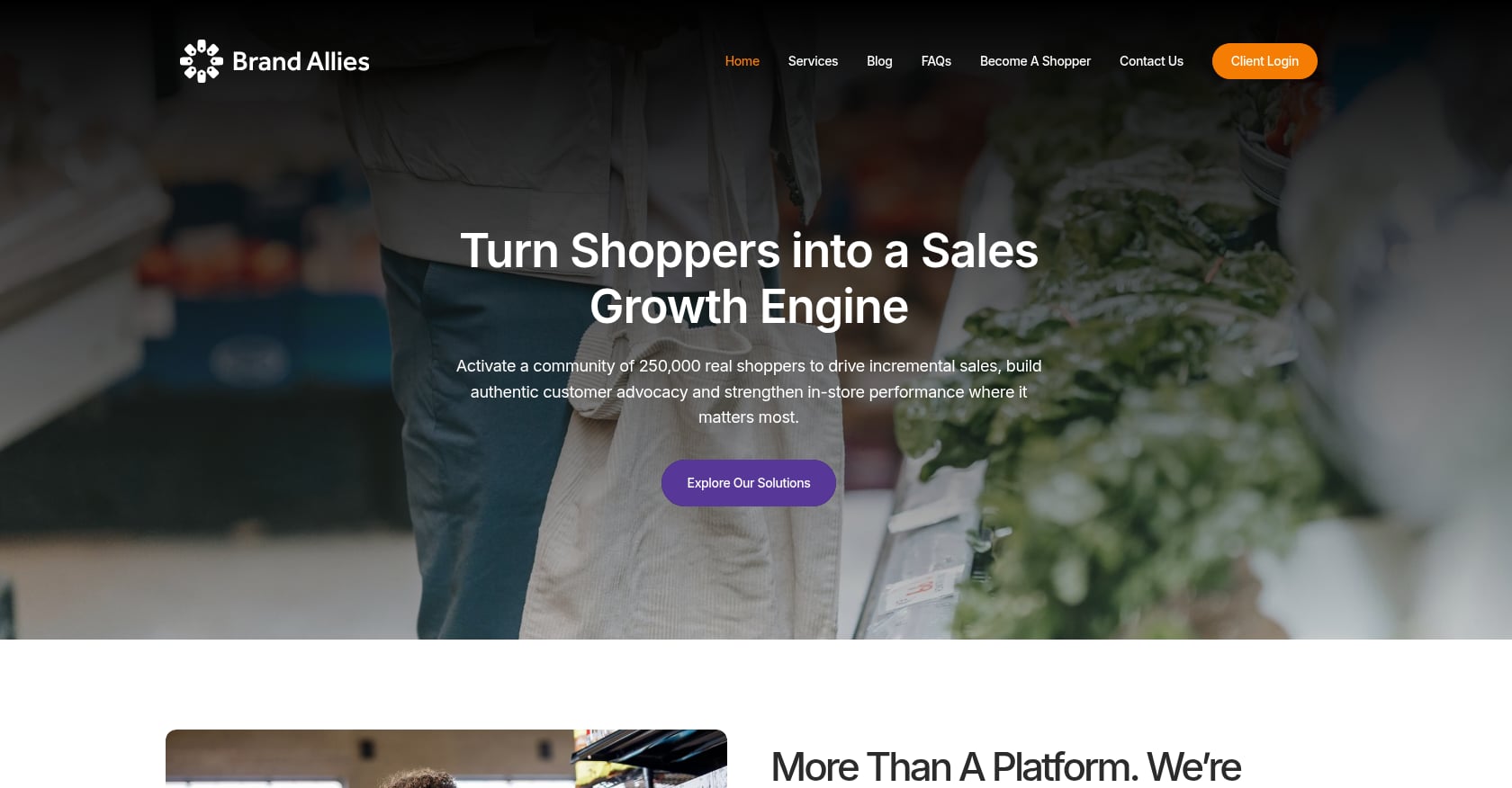
Best for: UK FMCG brands that need verified product reviews on specific UK retailer websites.
Brand Allies is a managed service shopper advocacy platform built specifically for the UK FMCG market. Powered by redwigwam's community of 250,000+ UK shoppers, the service works by having real shoppers buy products through a target retailer, try them, and leave honest reviews on that retailer's site.
Pricing:
- Bespoke, quoted per project.
- Pay per completed verified review model. You do not pay for unused software seats or uncompleted reviews.
- Demo only (no free trial). Book a demo here.
Key features:
- Reviews posted on Tesco, Sainsbury's, Morrisons, Waitrose, Ocado, Boots, Iceland, Holland & Barrett, Amazon, TikTok Shop, and other UK retailer sites.
- UK only shopper community, already ID verified and onboarded.
- Fully managed outreach, verification, and reporting.
- Live reporting dashboard tracking reviews, ratings, and compliance in real time.
- Five step process: Assess, Brief, Order, Review, Report.
- Additional service lines include in store compliance checks and discreet product withdrawals.
Tradeoffs:
- No cross retailer syndication. A review on Tesco stays on Tesco.
- No public pricing. Requires a demo conversation.
- Newer brand (launched 2024), so formal case studies are limited.
- Retailer moderation can reject some reviews, and that risk sits with the brand.
Real user perspective:
Brand Allies' Trustpilot profile (4.3/5 from 17 reviews) reflects shopper side feedback rather than brand side testimonials. Shoppers praise fast payments and an easy dashboard. Some note that pay can be lower than other redwigwam assignments.
Why it leads this list:
If your problem is not "we need review software" but "we need Tesco or Ocado shoppers to buy our product and leave an honest review on the PDP," Brand Allies is the most direct fit. Enterprise UGC platforms solve syndication. Sampling solves trial. Brand Allies solves the retailer product page gap.
2. Bazaarvoice / Influenster
Best for: Large brands with enterprise UGC needs, multi retailer syndication requirements, and global scale.
Bazaarvoice is the dominant enterprise UGC platform. It collects, moderates, and syndicates ratings and reviews across a large retailer network. Its sampling arm, Influenster, operates a consumer community that receives products and posts reviews.
Pricing:
- Custom quoted, no public price list.
- Third party benchmarks give a rough range: SpendHound reports an average annual spend of $25,165 for SMB customers and $184,248 for enterprise customers across 160 contracts. Vendr reports a $32,890 median annual contract value.
- Hidden costs include implementation fees, overage charges, premium support tiers, add on modules, and annual price escalators.
Key features:
- Ratings and reviews management across owned and retail sites.
- Retail syndication network.
- Sampling campaigns through Influenster.
- Visual and social UGC collection.
- Moderation, analytics, and enterprise reporting.
Tradeoffs:
- Expensive relative to managed pay per review services.
- Contract complexity and rigid renewal terms. G2 reviewers (4.2/5 from ~790 reviews) flag both customer service issues and inflexible contracts.
- May be overkill for brands that simply need 30 to 100 reviews on a few UK retailer PDPs.
- If you are not already collecting volume on your own site, the syndication benefit is limited.
Real user perspective:
A practitioner on Reddit's r/ecommerce discussed Bazaarvoice syndication and noted a common concern: if a brand is not already generating many reviews on its own site, syndication may not justify the investment. For a detailed comparison, see the Bazaarvoice alternative guide.
Influenster note:
Influenster's Trustpilot sentiment is polarised. Some users praise receiving products for honest testing. Others report product non arrival, support delays, and tasks requiring more content than expected. On Reddit's r/Influenster, participants flag a quality problem: low effort reviews, reviews written before proper testing, and stock photos used in place of genuine content. This connects directly to the free sample review bias issue. When the primary incentive is receiving a free product, the resulting reviews often skew positive and lack the specificity that shoppers find useful.
3. PowerReviews / BzzAgent

Best for: Brands that want an established ratings and reviews technology platform combined with a sampling workflow.
PowerReviews offers review collection, display, and syndication software. Its sampling community, BzzAgent, sends products to consumers who provide feedback and reviews.
Pricing:
- Custom. G2's pricing page shows a perceived cost of $$$$$ from user estimates, with an average two month implementation time and a 15 month ROI timeline.
- No transparent public tiers.
Key features:
- Ratings and reviews collection and display.
- Review syndication to retail partners.
- Digital product sampling through BzzAgent.
- Review analytics and management tools.
Tradeoffs:
- Software led rather than managed service led. Your team needs to manage campaigns.
- Custom pricing and likely annual contracts.
- Less obviously UK grocery specific than UK focused alternatives.
- Sampling through BzzAgent does not guarantee reviews land on specific retailer PDPs unless the campaign structure is carefully designed.
Real user perspective:
G2 gives PowerReviews 4.4/5 from 196 reviews. One retail reviewer praised syndicated reviews for helping customers understand how products work in real life, while also wishing for AI generated review summaries similar to Amazon's.
BzzAgent users on Reddit report highly variable selection frequency. Some receive products regularly. Others wait months between campaigns. Selection appears heavily demographic dependent, which means brands cannot always control who gets their product.
4. Home Tester Club
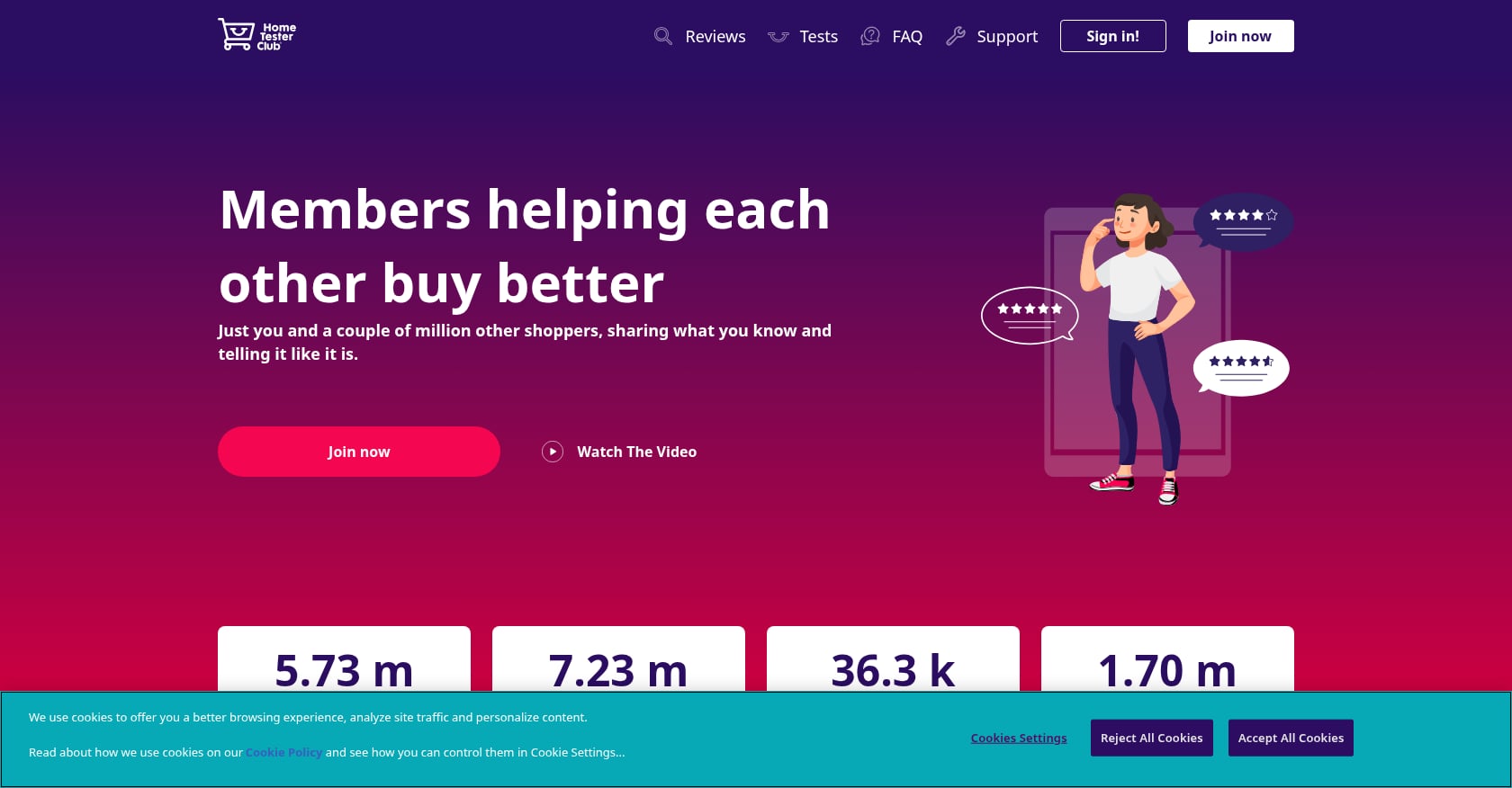
Best for: FMCG, beauty, personal care, and household brands that want broad consumer product testing and qualitative feedback.
Home Tester Club runs a product testing community where consumers apply to try products, use them, and submit reviews.
Pricing:
- Not publicly available on the brand side. Expect custom quoting.
Key features:
- Large product testing community.
- Consumer reviews and product feedback.
- Product discovery through campaign participation.
- Covers everyday FMCG categories: food, drink, personal care, household.
Tradeoffs:
- Not primarily a retailer PDP review service. Reviews live on Home Tester Club's own site unless the campaign specifically directs users elsewhere.
- Trustpilot shows 3.1/5 from 338 reviews. Negative reviews frequently cite customer support issues, website glitches, difficulty submitting reviews, and account flags.
- Selection opacity can frustrate participants, which affects review completion rates.
Real user perspective:
Reddit users describe Home Tester Club as legitimate but inconsistent. Some qualify for several products quickly. Others report that surveys, timing, or missing review windows create friction. Speed matters when applying for tests, according to UK focused discussion threads.
5. Field Agent UK
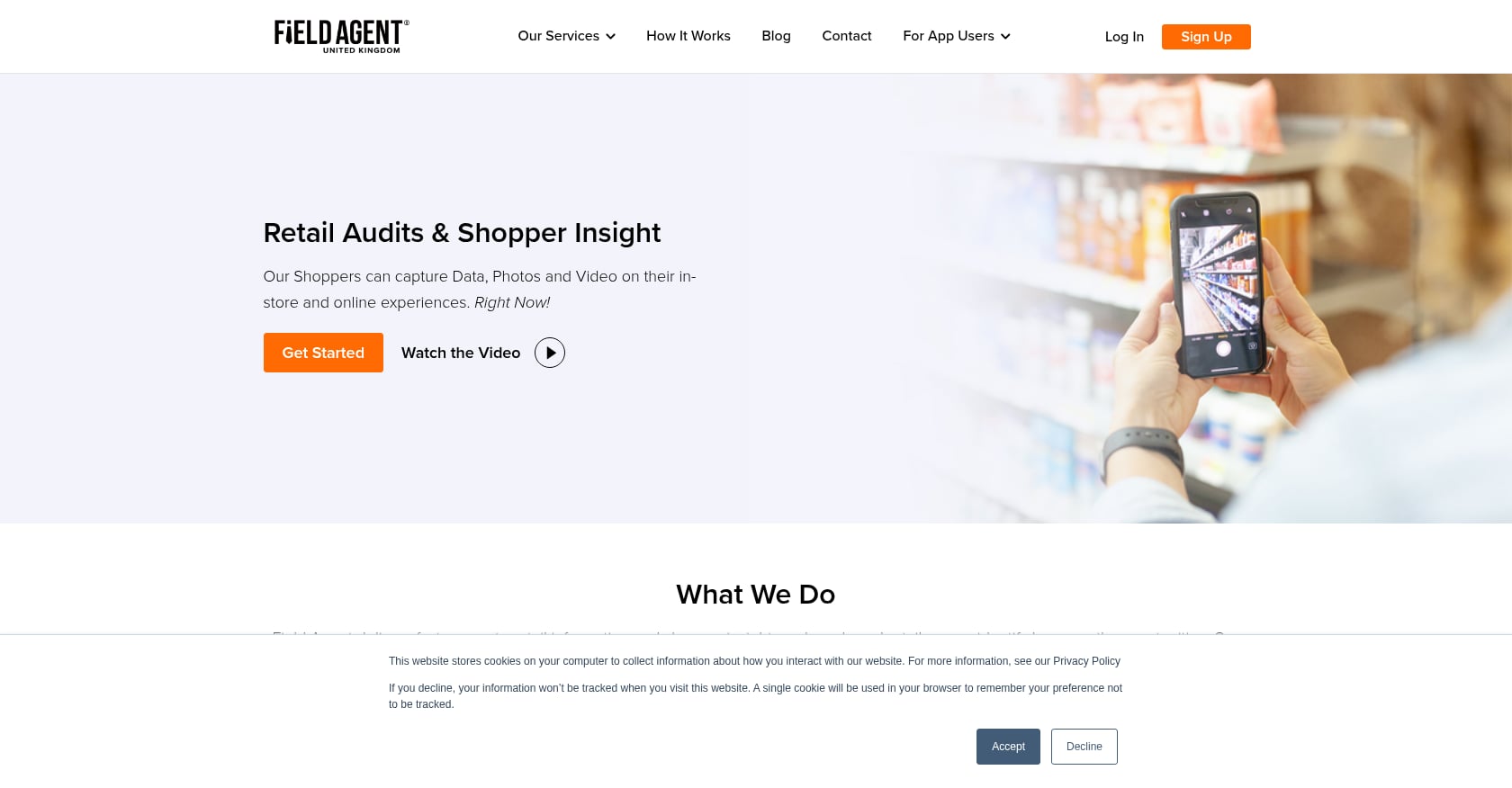
Best for: Brands that need product reviews combined with in store retail execution data like shelf audits, POS checks, and distribution verification.
Field Agent UK operates a mobile shopper task network. Shoppers complete missions such as purchasing and reviewing a product, photographing a shelf, or verifying promotional compliance.
Pricing:
- Not publicly available. Likely project based or per task.
Key features:
- Mobile crowdsourced shopper tasks.
- Retail audits, mystery shopping style missions, price checks.
- Purchase and review task options.
- Store level photo and data capture.
Tradeoffs:
- Task supply and geographic coverage vary. Not every store or product will have available shoppers.
- Trustpilot shows 4.1/5 from 139 reviews. Negative reviews cite low pay for time required, limited mission availability, product out of stocks blocking tasks, and rejected submissions.
- G2 rates Field Agent 4.5/5 from 14 reviews, though the sample is small.
- Not a pure FMCG review seeding specialist.
Real user perspective:
Field Agent users like clear task instructions and quick payments but regularly report a common crowdsourcing problem: products are sometimes unavailable in the assigned store, which kills the mission entirely. For brands running review campaigns, this means out of stock issues don't just hurt sales. They also block review generation.
For FMCG teams dealing with execution gaps between head office plans and store level reality, a stock availability audit can identify problems before they derail review campaigns.
6. Shopmium
Best for: Driving consumer trial through supermarket cashback offers, not primarily for retailer review generation.
Shopmium is a consumer cashback app. Shoppers browse offers, buy the product at a participating supermarket, upload their receipt and barcode, and receive money back.
Pricing:
- No public brand side campaign pricing. Consumer side model is cashback/rebate based.
Key features:
- Supermarket cashback offers on FMCG products.
- Receipt and barcode submission for verification.
- Grocery offer discovery for consumers.
- Trial driving promotions.
Tradeoffs:
- Cashback drives trial, but it is not the same as retailer site review generation. Users are motivated by savings, not by writing detailed product reviews.
- Trustpilot shows 3.4/5 from 753 reviews. Recent negative reviews cite declining offer quality, a £10 cashout threshold, inactivity/account fees, rejected claims, and customer service friction.
- Reviews generated through cashback platforms tend to be shallow when the primary motivation is the deal itself.
Real user perspective:
UK beermoney communities on Reddit regularly discuss Shopmium as a savings app. Some posts mention that certain offers involve writing a short review, but the consensus is that users are there for the cashback, not to produce high quality product feedback. That is an important distinction for brand teams whose KPI is review quality and retailer PDP coverage.
If your goal is shopper promotions and trial mechanics rather than verified reviews, cashback platforms have a role. Just don't confuse the two.
7. The Insiders

Best for: Brands that want consumers to test products in real life settings and share more detailed opinions, especially for higher consideration or story driven products.
The Insiders runs product testing campaigns where consumers receive products (sometimes at a discount or through a reimbursement model), use them, and share opinions through reviews and word of mouth.
Pricing:
- Not publicly available on the brand side. Consumer side campaigns may involve discounted purchase or reimbursement.
Key features:
- Product testing campaigns with deeper consumer engagement.
- Word of mouth style advocacy.
- Consumer reviews and campaign content.
- Suited to products that benefit from real life experience narratives.
Tradeoffs:
- Less cleanly suited to fast, low consideration FMCG review seeding where you need volume across dozens of SKUs.
- Trustpilot shows 3.8/5 from 1,350 reviews. Negatives mention reimbursement issues, poor communication, less attractive campaigns, and limited UK availability.
- Not clearly retailer PDP first. Reviews may end up on The Insiders' own platform rather than on Tesco or Boots.
Real user perspective:
Reddit users in mystery shopping forums describe The Insiders as legitimate but warn that some campaigns require purchasing the product upfront and being reimbursed later. That upfront payment model creates friction and trust issues, particularly when reimbursement timing or campaign rules are unclear. For brands, this means participant drop off is a real risk.
How Reviews Drive Retailer Search Ranking and In Store Sales
One of the most underappreciated benefits of FMCG product reviews is their effect on retailer search SEO. On platforms like Tesco.com and Ocado, the on site search algorithm determines which products appear first when a shopper types "oat milk" or "protein bar." Review count, average rating, and review recency are all confirmed or strongly suspected ranking signals in these algorithms.
This means reviews are not just a trust signal for the shopper reading them. They are a discoverability signal that determines whether the shopper sees the product at all.
Practitioners on LinkedIn have noted that products moving from zero reviews to even 15 to 20 reviews often see measurable ranking improvements in retailer search results within weeks. The logic is straightforward: retailers want to surface products that shoppers are likely to buy, and review data is one of the strongest indicators of purchase confidence.
The ROPOS Effect: Online Reviews Driving In Store Sales
The connection between online reviews and physical store sales is called ROPOS (Research Online, Purchase Offline). It is not theoretical. Industry data consistently shows that a significant share of grocery shoppers browse retailer websites or apps before visiting a physical store. When they research online and see strong review coverage, they are more likely to pick that product off the shelf.
This matters for FMCG brands because grocery is still overwhelmingly a physical channel. Even with £27bn in online grocery sales, roughly 88% of UK grocery purchases happen in store. If online reviews influence even a fraction of those in store decisions, the sales uplift from a review programme extends far beyond digital conversion rates. Brands running review campaigns on retailer PDPs are effectively merchandising for both channels simultaneously.
Do Not Optimise Only for Review Count
One pattern emerged clearly across community research: review volume without review quality backfires. Influenster Reddit threads are full of complaints about low effort reviews, reviews written before testing is complete, and people treating review platforms as "free product" machines.
For FMCG brand teams, the takeaway is this. A product page with 50 thoughtful, specific, recent reviews will outperform one with 200 vague one liners. PowerReviews' research supports this indirectly: products with ratings between 4.75 and 4.99 stars convert best, while perfect 5.0 ratings actually look suspicious and can convert at a similar rate to products rated 3.0 to 3.49.
Google's Merchant Center product ratings documentation reinforces the quality angle. Low quality reviews, including extremely short, boilerplate, or gibberish content, may be removed from product rating feeds entirely. And merchants need a minimum of 50 reviews in their Product Ratings feed to participate at all.
Free sample review bias compounds this problem. When every review comes from someone who got the product for free, the rating distribution often clusters unnaturally between 4.5 and 5.0, which both shoppers and algorithms can detect as inauthentic. Mixing verified purchase reviews (from paid transactions on retailer sites) with sampled reviews creates a more credible and useful profile. The product review ROI guide covers how to measure whether your reviews are actually driving conversion.
Review count is a starting metric, not an ending one. Track review recency, rating distribution, review length, sentiment themes, verified purchase status, and competitor review gaps.
Review Generation Is Not a Launch Task
Many FMCG brands treat reviews as a one off NPD launch activity. Generate 20 to 30 reviews, tick the box, move on. That is a mistake.
Practitioner commentary on LinkedIn from CheckoutSmart has argued that review exposure across UK FMCG portfolios can shift materially in just three months. Top visible reviews age quickly. A product that looked well reviewed in January can look stale by April if competitors are generating fresh feedback.
This reframes FMCG product reviews from a launch expense to a continuous digital shelf maintenance cost. Budget accordingly. For brands planning new SKU launches specifically, a new SKU review strategy checklist provides a week by week timeline.
There is also an emerging AI dimension. Practitioner posts on LinkedIn increasingly describe reviews as signals for AI powered shopping assistants and recommendation engines. This is still early, but as AI compresses product choice for consumers, review density and recency may become even more important discovery signals. Brands building a review programme now are positioning for that shift.
What to Ask Before Choosing a Review Partner
Before signing with any FMCG review provider, get clear answers to these questions:
- Which UK retailer sites can you support?
- Are reviews verified by actual purchase?
- Are your shoppers UK based?
- Do you guarantee completed reviews, or just outreach?
- What is your typical review rejection rate by retailer?
- What happens when the product is out of stock?
- How do you manage disclosure and DMCC compliance?
- Do you instruct reviewers on what to write? (The correct answer is no.)
- Can we see live reporting and dashboards?
- Can we benchmark review performance against competitor SKUs?
- Are there minimum contract lengths or annual commitments?
- Do we own the review data?
- Can we combine review campaigns with in store audits or activations?
- How do you handle negative reviews?
- How quickly can a campaign go live once a brief is approved?
- What is your review moderation and transparency policy?
Hidden costs to ask about by category:
- Enterprise UGC: Implementation fees, add on modules, syndication charges, support tiers, translation, annual price escalators, overage charges.
- Sampling: Product cost, fulfilment and shipping, incomplete review rates, content rights, wastage, free sample bias mitigation.
- Cashback: Cashback value, receipt validation, payout support costs, deal hunter behaviour.
- Field tasks: Per task fees, travel incentives, rejected task handling, out of stock failures.
- Managed reviews: Rejected review costs, retailer moderation failures, shopper incentives, product reimbursement, reporting access.
Best Platform by Use Case
| Use case | Best choice | Why |
|---|---|---|
| Reviews on UK retailer PDPs | Brand Allies | UK shopper community, managed service, pay per verified review |
| Enterprise syndication | Bazaarvoice | Broad UGC infrastructure and retailer syndication network |
| Review software + sampling | PowerReviews / BzzAgent | Established review platform with integrated sampling |
| Product testing and feedback | Home Tester Club | Large testing community across FMCG categories |
| In store audits + reviews | Field Agent UK or Brand Allies | Field task model, or Brand Allies if the priority is UK review + activation together |
| Cashback trial | Shopmium | Strong trial and purchase mechanic |
| Deeper WOM campaigns | The Insiders | More involved product experience campaigns |
| Retailer search ranking improvement | Brand Allies or Bazaarvoice | Native retailer reviews feed search algorithms directly |
Final Recommendation
For UK FMCG brands, the right choice depends on where you need reviews to appear.
If your problem is retailer PDP coverage, meaning you need real shoppers to buy, try, and review your products on Tesco, Sainsbury's, Ocado, Boots, Amazon, or other UK retailer sites, Brand Allies' managed FMCG product review service is the most direct option. Pay per verified review pricing removes the budget risk of enterprise software contracts, and the UK only shopper community means you are not paying for global infrastructure you don't need.
If you already have a mature UGC programme with strong DTC review volume and need enterprise syndication across many retail partners, Bazaarvoice or PowerReviews will serve that need better.
If your goal is trial and purchase velocity rather than review coverage, cashback and sampling platforms play a supporting role. But they should not be confused with verified retailer review generation.
Whatever route you choose, compliance matters more than volume. The DMCC 2024 gave the CMA real teeth. Real shoppers. Real purchases. Honest feedback. No suppression. That is the standard.
FAQ
What are FMCG product reviews?
FMCG product reviews are ratings, written feedback, photos, videos, or other user generated content about fast moving consumer goods. These include food, drink, personal care, beauty, household, pet, and health products. They appear on retailer websites, marketplace listings, brand sites, and third party review platforms.
How do FMCG brands get reviews on UK retailer websites?
The most direct method is having real shoppers purchase the product through the retailer, try it, and leave an honest review on that retailer's PDP. Brands can manage this through services like Brand Allies, which coordinates verified UK shoppers to buy and review products on specific retailer sites. Other methods include post purchase email flows (if the retailer supports them), sampling campaigns, and UGC syndication from owned channels.
Are incentivised reviews legal in the UK after the DMCC 2024?
Incentivised reviews are not automatically prohibited. However, the DMCC 2024 strengthened the CMA's enforcement powers, and the April 2025 guidance states that where incentivised reviews are permitted by a platform, they must be clearly identifiable as incentivised. Many retailer platforms do not allow incentivised reviews at all. Submitting one where it is banned is likely to be misleading under UK consumer protection law. The CMA can now impose fines directly without court proceedings. The safest approach is to work with providers that prioritise genuine shopper experience and comply with each retailer's terms.
What is the difference between product sampling and review seeding?
Product sampling gives free products to consumers to try. Review seeding is specifically designed to generate honest reviews on a target product page or platform. Sampling can support review generation, but it does not automatically create retailer site reviews unless the campaign is structured to direct participants to a specific PDP. Many sampling campaigns produce feedback that stays on the sampling platform's own site. Sampled reviews also carry a higher risk of free sample review bias, where recipients rate products more generously than paying customers.
Do FMCG product reviews actually improve online grocery conversion?
The evidence is strong. PowerReviews found that shoppers who interact with reviews convert at a rate 177% higher than those who do not. Products with ratings between 4.75 and 4.99 stars show the highest on page conversion rates in their dataset. At the discovery stage, 63% of online grocery shoppers said they were more likely to click through to a product page when ratings and reviews were visible.
How many reviews does an FMCG product need?
There is no universal number. The right target depends on the category, the retailer, competitor review counts, product maturity, and review recency. As a reference point, Google's Merchant Center requires a minimum of 50 reviews in a Product Ratings feed before a merchant can participate in product ratings. For retailer PDPs, even 10 to 15 recent, detailed reviews can make a meaningful difference compared to zero.
Do online reviews drive in store sales (ROPOS)?
Yes. Research Online, Purchase Offline is well documented in grocery. A significant share of shoppers check retailer websites or apps before visiting a physical store. Strong review coverage on a product's online listing influences in store purchase decisions. Since roughly 88% of UK grocery sales still happen in physical stores, the in store sales uplift from online reviews can be substantially larger than the direct e commerce conversion benefit.
What should brands do about negative FMCG product reviews?
Do not suppress them. Suppressing negative reviews creates compliance risk under CMA and ASA rules, and it damages long term trust. Instead, treat negative reviews as a source of product, packaging, pricing, and fulfilment insight. Respond constructively where the platform allows it. A product page with a mix of honest ratings (averaging 4.2 to 4.8) typically converts better than one with a suspicious looking perfect 5.0.
Does review recency matter for FMCG products?
Yes. Older reviews may still count toward total volume, but they do not reassure shoppers about current product quality, especially after reformulations, packaging changes, or range extensions. Practitioner commentary suggests FMCG review exposure can shift quickly across portfolios. Treat review generation as an ongoing digital shelf maintenance activity, not a one off NPD launch task. You can learn more about how Brand Allies approaches this on their FAQs page.