
What Steps Should I Take for Conducting Shopper-Led Store Audits?
TLDR
Conducting shopper-led store audits starts with a clear commercial question, not a vague instruction to “check some stores.” Define what you need to know, pick stores by risk and value, write a brief a shopper can follow in a busy aisle, collect photo-backed evidence, quality-check every submission, score results objectively, and route fixes before the promotion window closes. This guide covers the full process, a ready-to-use checklist, promotional compliance measurement for UK retailers, and the practical mistakes that most audit guides skip.
What Is a Shopper-Led Store Audit?
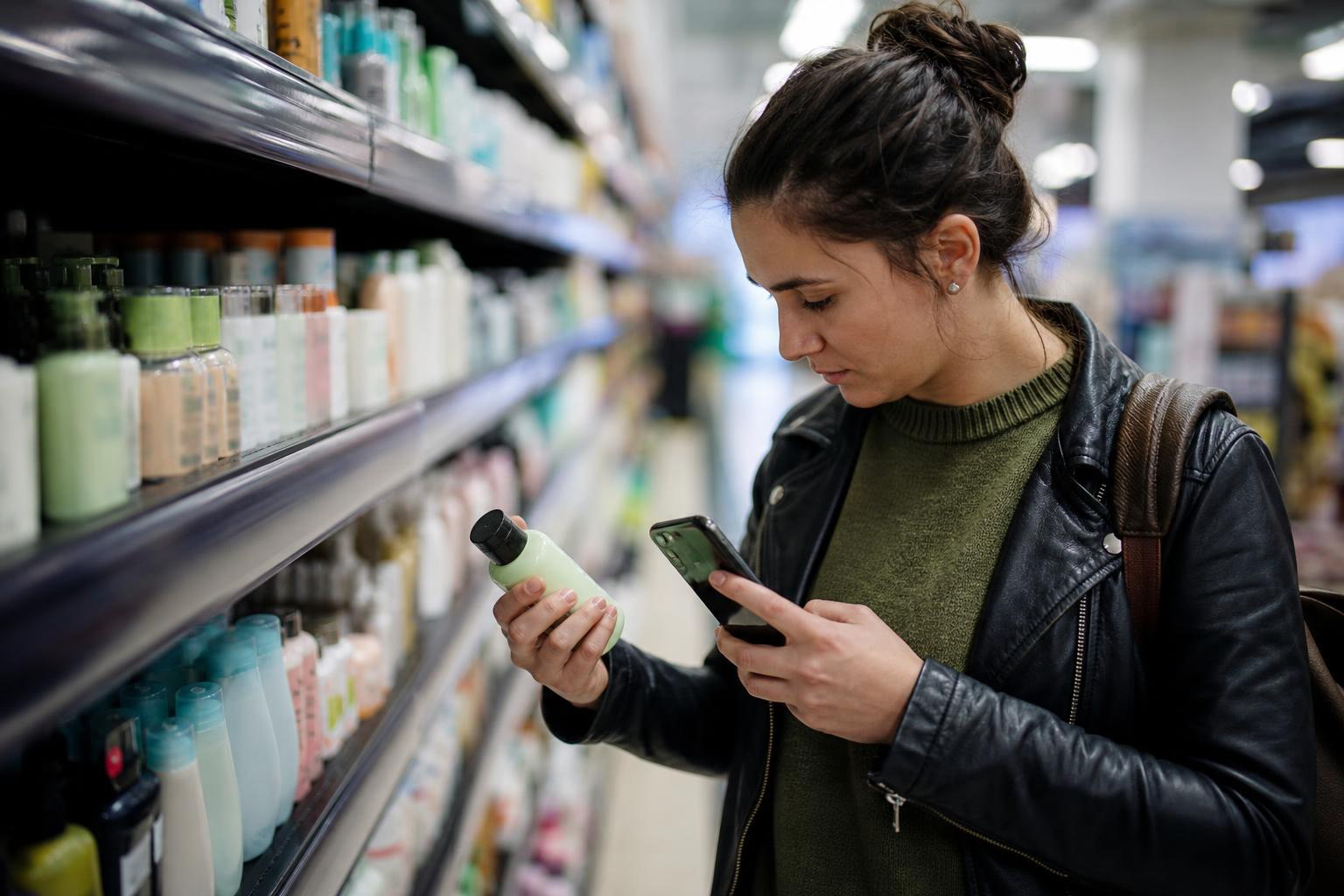
A shopper-led store audit is a structured in-store check completed by a real shopper using a mobile brief. The shopper visits a specific retailer, finds the agreed product or fixture, captures evidence (photos, price labels, stock status, POS materials, barcode or receipt proof), and answers objective questions. The brand then uses that evidence to measure execution and decide what needs fixing.
This approach overlaps with mystery shopping, but the emphasis is different. Mystery shopping usually evaluates the customer experience or service process. Shopper-led store audits for FMCG brands focus on shelf reality: availability, visibility, pricing, POS, promotion, display, and competitor activity. The Market Research Society defines mystery shopping as trained individuals acting as potential customers and reporting their experience objectively, and shopper-led audits borrow that real-customer lens while concentrating on execution evidence rather than service narrative.
Practitioners on UK beermoney forums describe these tasks plainly. One user notes that many jobs are not true mystery shopping but are “more like taking photos of shelves to check whether a promotional item is set up or how many products are on shelf.” That framing is accurate. Shopper-led store audits are best understood as structured shelf evidence from real shoppers.
For a deeper look at how mystery shopping overlaps with and differs from FMCG retail audits, see this guide to mystery shopping for FMCG.
Explore Brand Allies in-store compliance audits
Why UK FMCG Brands Need Shopper-Led Store Audits
Three problems make shopper-led store audits essential for brands selling through UK retailers.
Promotions fail at the last mile
A promotion that is not built, stocked, priced, or visible is not a promotion. It is a trade-spend leak. A POPAI UK & Ireland compliance report found that average full compliance in some developed retail markets can be as low as 29%, while 79% of retailers assume displays are being executed without independently checking. A UK promotional verification provider reports average compliance sitting around 50% to 60%, with some campaigns as low as 15%.
The common causes are familiar to anyone who has worked a launch week: late store communication, missing stock or POS, staff shortages, poorly briefed colleagues, fragile display components, and units taken down early. Without evidence from the store itself, the brand has no way to know which stores executed and which did not.
On-shelf availability is not the same as distribution
Being listed, ranged, or “in stock” in a retailer system does not guarantee the shopper can buy the product. A recent UK grocery availability report found that one in five UK grocery trips involves at least one out-of-stock item, equivalent to roughly 930 million shopping visits a year, with an estimated £2.1 billion of grocery sales at risk from stock gaps.
Harvard Business School research on retail execution found large store-to-store variation in inventory record error and misplaced SKUs, with misplaced assortment in storage areas ranging from 0.2% to 10% across stores, even where stores had the same IT and incentives. LinkedIn practitioners reinforce this point. One retail analytics consultant breaks on-shelf lost sales into multiple causes: no inventory, stock trapped in the backroom, too few facings, replenishment after the selling window, or product technically in stock but not visible or correctly placed. A shelf gap is a signal, not a diagnosis.
For a fuller look at the out-of-stock problem and how to audit it, read this out-of-stock audit guide.
Phantom inventory misleads everyone
Reddit threads from retail store workers reveal the daily reality of phantom inventory. Store systems say an item is on hand while the shelf sits empty, leading staff and online fulfilment teams to waste time searching. One Target employee thread explains that auditing an item to zero can stop future wasted searches and online order problems when a store clearly does not have the product. A recent grocery inventory study covering about 24,000 SKUs across 11 stores found that a stockcount audit was associated with an 11% store-wide sales lift, concentrated on items where the system showed more inventory than physically existed.
The takeaway: digital shelf reports, EPOS data, retailer portals, and central promo plans cannot always tell a brand whether the product is actually visible, correctly priced, on promotion, and buyable in a specific store at a specific moment. That is the gap shopper-led store audits fill.
What Can a Shopper-Led Store Audit Check?
A well-scoped audit covers one or two of these areas, not all of them at once:
Product availability. Is the SKU on the shelf and buyable?
Shelf gaps. Is there an empty space where the product should be?
Distribution. Is the product stocked in the stores where it should be ranged?
Shelf location and facings. Is the product in the right bay, at the right height, with the agreed number of facings?
Planogram compliance. Does the shelf layout match the agreed planogram?
Promotional display. Is the FSDU, gondola end, or secondary display built and stocked?
POS materials. Are shelf strips, wobblers, barkers, or header cards present and undamaged?
Shelf-edge label. Is the price ticket present and readable?
Price and offer accuracy. Does the shelf or display price match the agreed promotion?
Secondary locations. Is the product visible in additional spots like till areas or seasonal bays?
Competitor activity. Are competitors running visible promotions or taking extra space?
Staff awareness. Does the store colleague know about the product or promotion when asked?
Receipt proof. Can the shopper buy the product and confirm the till price?
For brands running display campaigns, a detailed breakdown of display compliance checks explains what to measure and what “compliant” actually means in practice.
What Steps Should I Take for Conducting Shopper-Led Store Audits?
This ten-step process works for availability checks, promotional compliance audits, NPD launch verification, POS compliance audits, and competitor benchmarking. The steps are sequential. Skipping the early ones (especially the brief and standard) is the most common reason audits produce unusable data.
Step 1: Define the Commercial Question
Do not start with “visit 200 stores.” Start with the decision the audit must support.
Good commercial questions sound like this:
Is our NPD actually on shelf in the launch stores?
Is the FSDU built by day one?
Is the shelf-edge label correct?
Is the promotional price visible and consistent with the retailer’s advertised offer?
Are we out of stock, misplaced, or hidden behind competitor products?
Is POS present, damaged, or missing?
One audit should answer one or two commercial questions well, not twenty questions badly. Every additional question adds time, complexity, and photo requirements for the shopper, which increases rejection risk and reduces completion rates.
Step 2: Select Stores Using a Risk-Based Sample
A random store list wastes budget. Use a risk-based approach.
Segment stores by retailer, store format (superstore, convenience, high street, petrol forecourt), region, sales value, promotion investment, distribution importance, previous compliance issues, and proximity to available shoppers. Audit all high-value or high-risk stores where the promotion or launch investment is material. Use a stratified sample across retailer, region, and format for the long tail. Re-check failed stores rather than spending the full budget on one broad but shallow snapshot.
Step 3: Set the Execution Standard
The audit must compare the store to a defined standard. Without that standard, compliance scoring becomes subjective.
The standard should include the must-stock SKU list, product barcode or pack image, expected shelf location, expected number of facings, promotion start and end dates, agreed POS materials, shelf-edge label requirements, correct price or offer mechanic, secondary location requirements, and “not applicable” rules by store format.
For grocery brands, the Groceries Supply Code of Practice provides useful context. GSCOP says retailers must not require payment for better positioning unless in relation to promotions, and where a retailer requires supplier payment for a promotion, the promotion must proceed only after reasonable written notice. Having your own compliance evidence strengthens these conversations.
Step 4: Write a Short, Visual Shopper Brief
This is where most shopper-led audits succeed or fail. The brief must be written for someone standing in a busy aisle with a phone, not for someone sitting in a boardroom.
A good brief includes:
Mission purpose in one sentence.
Retailer and store details.
Product identification: name, pack image, barcode, variant list.
Where to look: aisle, bay, secondary display, promo end, chilled cabinet.
Photo requirements: wide bay, close-up product, shelf-edge label, POS or display, out-of-stock gap.
Question format: mostly yes/no, count, price, dropdown reason codes.
What to do if the product is not found.
Whether to ask staff.
Whether to purchase the product.
Privacy instructions: avoid identifiable staff or customer faces.
Examples of acceptable and unacceptable photos.
Expected time in store.
Submission deadline.
Shopper communities on Reddit consistently report that unclear photo rules are the top source of frustration. One mystery shopping thread describes rejected shops due to wrong angles and customers appearing in images. Another UK user mentions store audit tasks being rejected because “the angles weren’t right.” The practical lesson: include sample “good” and “bad” photos in every brief. A poor brief does not just annoy shoppers; it corrupts the data.
For more on what makes photo evidence valid, see this guide to retail audit photo evidence.
Step 5: Choose the Visit Mode
Not every audit works the same way. Three common modes:
Covert shelf check. The shopper visits like a normal customer and photographs the shelf without drawing attention. Best for availability, price labels, POS presence, display presence, and competitor facings. Not suitable for backroom checks or staff evaluation.
Revealed audit. The shopper may need permission or needs to identify themselves. Best for audits requiring access, display-build tasks, or correction work.
Check, Ask, Purchase. The shopper checks the shelf, asks a natural customer question if the item is missing (“Do you have this product?”), and buys the product if found. This creates stronger evidence than a photo-only audit because it generates receipt proof and a real sales signal.
The check-ask-purchase model is particularly useful for UK FMCG brands. It combines availability verification, a natural staff interaction that may trigger replenishment, and a confirmed till price. But it costs more per mission and requires reimbursement logistics.
Step 6: Recruit Verified Shoppers
Shoppers should be selected by proximity to target stores, retailer access, category eligibility, device and photo quality, reliability history, and task completion history. Apply exclusion rules if repeated visits to the same store could make a shopper identifiable.
Age restrictions matter for audits involving alcohol, age-gated categories, or regulated products. The shopper pool should be large enough to cover stores nationally without overloading the same individuals.
Step 7: Capture Evidence in the Right Order
Recommend this in-store capture sequence:
Storefront proof where required.
Aisle or category bay wide shot.
Product close-up if present.
Shelf-edge label or price ticket.
Promotion, POS, or display proof.
Out-of-stock gap proof if absent.
Alternative location proof (gondola end, FSDU, chiller, seasonal area, till area, entrance).
Competitor proof if in scope.
Staff-answer note if the shopper asked.
Receipt proof if purchase is required.
The operating principle: the evidence must prove the answer without relying on the shopper’s opinion. A photo of an empty shelf is useful. A photo of an empty shelf with the shelf-edge label, store context, timestamp, and SKU reference is evidence.
Step 8: Quality-Check Every Submission
Before any submission enters the compliance score, verify:
Correct store, date, and time.
GPS or location plausibility.
Photo freshness (not reused from a previous visit).
Photo clarity and required angles present.
Correct SKU or variant.
Shelf label readable.
No privacy breach (no identifiable staff or customer faces).
No contradictions between answers and photos.
No duplicate or suspicious submissions.
Receipt validity if purchase was required.
Submissions that fail QA should have a resubmission window where possible, not an instant rejection. Instant rejection without explanation is a frequent complaint among shopper communities and leads to supply-side attrition.
Step 9: Score Compliance with Objective KPIs
Use objective formulas, not 1-to-5 subjective scales. Subjective ratings vary across auditors and make store-to-store comparison unreliable.
KPI | Formula | Use |
|---|---|---|
On-shelf availability | SKUs found on shelf / SKUs expected | Measures buyability |
OOS rate | 1 minus OSA | Measures missing products |
Distribution found rate | Stores where SKU found / stores where SKU expected | Launch and range verification |
Display compliance | Correct displays present / displays expected | Promo execution |
POS compliance | Correct POS visible / POS expected | In-store media execution |
Price compliance | Correct price shown / audited SKUs | Price and promo trust |
Evidence pass rate | Accepted submissions / total submissions | Data quality indicator |
Re-check recovery rate | Failed stores later passed / stores re-checked | Action effectiveness |
Then attribute root cause, not just pass or fail. Use reason codes: product not ranged, product ranged but not found, shelf gap with label present, product in wrong location, product in backroom per staff, POS missing, POS damaged, display not built, display built but not stocked, price or offer mismatch, wrong variant on display, competitor occupying space, staff unaware of promotion, store refused audit. Pass/fail tells you the score. Reason codes tell you what to fix.
Explore promotional compliance services
Step 10: Route Issues and Re-Check Failed Stores
Audit data is perishable. A missing display found on day three of a two-week promotion still leaves time to recover. A missing display found after the promotion ends is just an expensive regret.
Route issues by type:
Missing display on day one: notify account team, retailer contact, or field team.
OOS with shelf label present: check EPOS, ask store, re-check.
POS delivered but not installed: field or agency escalation.
Wrong price label: retailer store execution or central price file issue.
Repeated regional gap: depot, supply, or retailer format problem.
A shopper-led store audit is commercially useful only when it creates action. Most generic audit guides stop at reporting. The ones that drive results close the loop with re-checks.
For the recommended re-check cadence: check readiness before launch, verify on day one or two, re-check at mid-cycle, and inspect the final week for long campaigns. After the campaign, compare compliance to sales, rate of sale, and retailer feedback.
Shopper-Led Store Audit Checklist Template
This checklist can be adapted for availability, promotional compliance, or NPD launch missions.
Area | Question | Evidence Required | Answer Type |
|---|---|---|---|
Store proof | Is the shopper in the correct store? | Storefront or location proof | Photo/GPS |
Product found | Is the target SKU present? | Product close-up or shelf gap | Yes/No |
Availability | How many facings or units are visible? | Shelf photo | Count |
Shelf label | Is the label present and readable? | Shelf-edge label photo | Yes/No |
Price | Does the price match the brief? | Label or receipt | Price field |
Promo display | Is the display built? | Wide display photo | Yes/No |
POS | Are POS materials present and undamaged? | POS photo | Yes/No |
Location | Is the product or display in the agreed location? | Aisle or display context shot | Dropdown |
Competitor | Are competitor promos visible? | Competitor bay photo | Optional |
Issue reason | If failed, why? | Reason code plus photo | Dropdown |
Purchase | Was the product bought? | Receipt photo | Optional |
How to Measure Promotional Compliance for UK Retailers
Promotional compliance measurement is the process of checking whether an agreed retail promotion is actually live in store as planned. For UK FMCG brands, that means checking five things.
1. Product Availability
Can the shopper actually buy the promoted product? Capture a product photo, shelf gap photo if absent, shelf-edge label, secondary display shot, staff answer if asked, and receipt if purchased.
2. Display and POS Presence
Was the promotional display or POS built and visible? Capture a wide display photo, POS close-up, header or wobbler shot, display location photo, and damage or missing component photo.
3. Price and Offer Accuracy
Does the shelf, display, or offer communicate the correct promotion? CMA guidance says prices must not be misleading and should be presented clearly and in a timely way. A shopper can document a mismatch; the brand’s legal or commercial team should decide what it means.
4. Location and Placement
Is the product in the agreed shelf or display location? For HFSS products in England, location restrictions came into force on 1 October 2022, covering key locations such as store entrances, aisle ends, and checkouts for qualifying stores. Volume price promotion restrictions followed on 1 October 2025. Brands selling products that may fall under HFSS rules should align with their legal teams and use audits to gather evidence for internal review.
5. Timing and Persistence
Was the promotion live on time, and did it stay live? Date and time-stamped submissions at day one, mid-cycle, and final week answer this question.
Suggested Promotional Compliance Scorecard
Pillar | Weight | Pass Condition | Knockout? |
|---|---|---|---|
Product available to buy | 30% | Product found in expected location | Yes |
Promotion or display present | 25% | Display present as briefed | Yes for display campaigns |
Correct price or offer visible | 20% | Label matches agreed offer | Yes for price campaigns |
Correct location | 15% | Product or display in agreed place | No, unless paid placement |
POS quality and visibility | 5% | POS readable, undamaged | No |
Evidence quality | 5% | Required photos accepted | Yes for data validity |
Here is what that looks like in practice. If 100 stores are audited and 72 have the product available, 61 have the display built, 58 have the correct price visible, and 54 pass all core checks, the campaign’s full promotional compliance rate is 54%. If the brand assumed 100% execution when calculating ROI, the promotion analysis should be adjusted because nearly half the audited stores did not deliver the full shopper experience.
For a deeper dive into promotional compliance scoring, formulas, and reporting, see this promotional compliance guide.
Shopper-Led Audits vs Field Teams: Which Model Fits?
Neither model wins in every situation.
Model | Best For | Weakness |
|---|---|---|
Shopper-led audit | Fast, scalable, discreet evidence across many stores | Limited ability to fix issues, negotiate, or access backrooms |
Field team audit | Relationship building, intervention, merchandising, complex fixes | Slower and more expensive to scale nationally |
Hybrid | Shoppers find issues quickly; field teams fix priority stores | Requires clear triage and data handoff |
The hybrid approach works best for most serious FMCG brands. Use shopper-led store audits as a coverage and speed layer: real shoppers can check many stores quickly, while field teams focus on intervention, retailer conversations, and complex fixes at the stores where problems are confirmed.
Shopper-led audits are the wrong tool when the task requires entering backrooms, moving heavy fixtures, immediate negotiation with a store manager, expert merchandising knowledge, or when the product is age-restricted and shopper eligibility is not controlled.
For a detailed comparison of these models, read the guide on field teams vs crowdsourced audits.
How to Make Shopper-Led Audit Data Trustworthy
Trust is the currency of shopper-led audit data. If your account team or buyer does not trust the evidence, the audit achieves nothing.
Build trust through:
Verified shopper pool. ID-checked, geo-indexed, with reliability history.
Clear brief. Ambiguity causes bad data. Sample photos prevent arguments.
Mandatory photos. Every answer should be backed by a photo where possible.
GPS and timestamp. Proves the shopper was at the right store at the right time.
In-app capture. Photos taken inside the app, not uploaded from the gallery, prevent reuse of old images.
QA before dashboarding. No submission enters the compliance score without human or automated review.
Duplicate detection. Flag identical or suspiciously similar submissions.
Resubmission window. Give shoppers a chance to fix a photo error rather than losing the visit entirely.
Calibration tasks. New shoppers complete a practice mission before live work.
An evidence hierarchy helps the team understand what it can and cannot claim.
Strength | Evidence Type | Usability |
|---|---|---|
Strongest | Receipt plus product photo plus shelf label plus GPS/time | Purchase verification, price proof, availability proof |
Strong | Product photo plus shelf label plus bay context | Availability and price validation |
Medium | Wide bay photo only | Shelf condition, broad display context |
Weak | Shopper answer with no photo | Directional only |
Invalid | Blurry, old, wrong-store, wrong-SKU, or privacy issue | Reject or resubmit |
Common Mistakes When Conducting Shopper-Led Store Audits
These are the errors that make audits expensive, unreliable, or ignored.
1. Auditing too many questions in one visit. Every additional question adds time and photo requirements. Shopper completion rates drop, rejection rates rise, and evidence quality suffers.
2. Using subjective scoring. A five-point “how well displayed?” scale means different things to different shoppers. Use yes/no, count, price, and reason code fields instead.
3. Forgetting “not applicable” rules. A convenience store will not have a gondola end display. If the brief does not account for format differences, the data will show false failures.
4. Not giving sample photos. This is the single most fixable mistake. Shoppers need to see what a good photo looks like before they enter the store.
5. Treating “not found” as the final answer. A product might be in a secondary location, in the backroom, or misplaced three bays over. The brief should tell the shopper where else to check and what reason code to use.
6. Waiting until the promotion is over to read the data. Audit data is perishable. If the report arrives after the promotion ends, it documents a loss. If it arrives on day two, it creates a recovery window.
7. Not re-checking failed stores. The first audit finds the problem. The re-check confirms whether anyone fixed it.
8. Measuring promotion ROI as if compliance was 100%. If only 54% of stores fully executed, the promotion’s ROI calculation should reflect that. Otherwise the brand blames the mechanic when the real problem was execution.
9. Asking shoppers to perform field-rep work. Building display units, asking stores to replenish, or checking backroom stock require clearer permissions, training, and risk controls than a quick shelf check. Some shopper platforms offer these tasks, but they are operationally more demanding.
10. Photographing staff or customers unnecessarily. MRS guidance is clear: mystery shopping scenarios should be safe, objective, and limited in complexity. Shopper-led audits should capture shelf, fixture, price, product, and POS evidence. Avoid identifiable faces unless there is a lawful basis and proper controls.
How Brand Allies Supports Shopper-Led Store Audits
Brand Allies is a UK-only managed-service shopper advocacy platform for UK FMCG brands. Powered by redwigwam, it uses a 250,000 UK shopper community to support in-store activations and audits covering promo compliance, POS checks, distribution, and in-store execution.
For brands asking what steps they should take for conducting shopper-led store audits, Brand Allies handles the operational complexity: briefing, shopper recruitment, evidence collection, quality control, and reporting. The community is already ID-verified and geo-indexed, which means activation can happen in hours rather than weeks.
Brand Allies also supports online product reviews and discreet product withdrawals, giving FMCG brands a single partner across reviews, field audits, and market withdrawals.
Get a UK in-store compliance audit quote
Frequently Asked Questions
What steps should I take for conducting shopper-led store audits?
Define the commercial question, choose stores by risk and value, set the execution standard, write a short mobile brief with sample photos, recruit verified shoppers near target stores, collect photo-backed evidence in a structured order, quality-check every submission, score compliance with objective KPIs, attribute root causes using reason codes, route issues to owners, and re-check failed stores while there is still time to recover.
Can you explain the process of promotional compliance measurement for UK retailers?
Promotional compliance measurement checks whether a promotion is live in store as agreed. Measure five pillars: product availability, display or POS presence, correct price or offer, correct location, and timing. Collect photo evidence at each store, score against a weighted scorecard, code failure reasons, report by retailer and format, and re-check failures while the promotion is still live. Adjust promotion ROI calculations to reflect actual compliance, not planned compliance.
What should shoppers photograph during a store audit?
At minimum: the storefront or location proof, full category bay, target product close-up, shelf-edge label, promotional display or POS, out-of-stock gap if the product is missing, secondary location if applicable, and receipt if purchase is part of the brief. The photo set should prove the answer without relying on the shopper’s opinion.
How many stores should I audit?
Use a risk-based approach. Audit all high-value or high-risk stores for major launches and promotions. Use a stratified sample across retailer, region, and store format for broader coverage. Re-check failed stores rather than spending the entire budget on one wide but shallow read.
Are shopper-led store audits the same as mystery shopping?
Not exactly. Mystery shopping usually measures the customer experience or service process. Shopper-led store audits use a similar real-shopper approach but focus on evidence of retail execution: availability, shelf position, price, POS, display, and competitor activity. For most UK FMCG brands, the focus is shelf reality rather than service evaluation.
When should I run a promotional compliance audit?
Check readiness before launch if stock or POS arrival is uncertain. Audit on day one or two to catch missing displays early. Re-check mid-cycle for stock and POS persistence. Inspect the final week for long or high-value campaigns. The earlier the audit, the more chance there is to recover the promotion.
Can shopper-led audits fix out-of-stocks?
They can identify and evidence out-of-stocks quickly. A check-ask-purchase workflow adds a natural staff question and a purchase that creates a sales signal. But complex fixes, like replenishing from the backroom, correcting inventory records, or resolving depot issues, usually need the retailer, account team, field team, or supply chain to act. The audit’s job is to find the problem and trigger the right response.
When should I use a field team instead of shopper-led audits?
Use a field team when the task requires negotiation with store management, access to backrooms or staff-only areas, physical merchandising work, complex display builds, or immediate corrective action. Use shopper-led audits for fast, scalable, discreet evidence collection across many stores. The strongest model for most FMCG brands is a hybrid: shoppers find the problems, field teams fix the priority stores.
Have questions about how shopper-led store audits work in practice? Visit the Brand Allies FAQ page for answers on process, pricing, and shopper community details.