

TL;DR
Most shopper marketing platforms were built for US retailers and don’t solve the specific problem UK FMCG brands face: getting reviews onto Tesco, Sainsbury’s, and Ocado product pages where you don’t control the review system. This guide compares eight platforms across review generation, in-store audits, and cashback activation. Brand Allies is the strongest all-in-one option for UK grocery specifically, CheckoutSmart leads on always-on review management with cashback, and Bazaarvoice remains the enterprise default for global syndication (at a steep price). Your best pick depends on whether you need reviews on retailer PDPs, in-store execution data, or mass trial.
The UK Grocery Review Problem No One Talks About
Here’s a number that should worry every FMCG brand manager in the UK: 85% of grocery products on major UK supermarket websites need new, up-to-date reviews. CheckoutSmart’s analysis of top UK retailers found that the vast majority of product detail pages are sitting in a review desert, with stale ratings, thin coverage, or no reviews at all.
This matters because the average grocery review rate sits between 0.1% and 0.3%, compared to 2-5% on Amazon. UK supermarket shoppers simply don’t leave reviews at the same rate. And when products fall below the 30-review credibility threshold, conversion drops noticeably.
The catch? Standard review platforms like Bazaarvoice and PowerReviews were designed for brands that own their e-commerce checkout. UK FMCG brands selling through Tesco, Sainsbury’s, and Morrisons don’t control the review system on those retailer PDPs. You can’t just embed a widget. You need real shoppers making real purchases through real retailer checkouts, then leaving genuine reviews on those retailer websites.
That’s a fundamentally different problem, and it requires a different kind of shopper marketing platform.
This guide compares the eight platforms that UK FMCG brands actually use for shopper marketing, grouped by what they do: review generation, in-store audits, cashback activation, and enterprise UGC. For each, you’ll get real pricing where available, honest limitations, and practitioner feedback from Trustpilot and G2.
→ Book a Brand Allies demo to see how verified reviews work on UK retailer PDPs.
What Counts as a “Shopper Marketing Platform”?
The phrase “shopper marketing platform UK” maps to four distinct tool types. Understanding which category you need saves months of wrong-vendor conversations.
Review generation services solve the retailer PDP problem directly. Real shoppers buy your product from a specific retailer and post verified reviews on that retailer’s website. This is the category most UK FMCG brands are searching for when they type this query.
In-store audit and field marketing platforms use crowdsourced workforces to check shelf compliance, promotional displays, pricing accuracy, and availability. Up to 30% of products can be missing or incorrectly merchandised at any given time.
Cashback and trial activation apps drive first purchase by reimbursing shoppers for buying a specific product. Some also generate reviews as a secondary function.
Enterprise UGC and syndication platforms collect reviews centrally and distribute them across retail partner websites. These work well in the US where Walmart and Target accept syndicated content. UK grocery retailers mostly don’t.
For a deeper breakdown of how these categories work together, read our shopper activation guide.
At-a-Glance Comparison Table
| Platform | Type | UK Grocery Focus | Pricing Model | Best For |
|---|---|---|---|---|
| Brand Allies | Managed reviews + audits + recalls | ✅ UK-only | Pay per verified review | All-in-one UK grocery reviews, audits, and recalls |
| CheckoutSmart | Cashback + reviews | ✅ UK-focused | Campaign-based | Always-on review management |
| Roamler | Field audits + mystery shopping | ✅ UK + EU | Campaign-based | Pan-European in-store execution data |
| Bazaarvoice | Enterprise UGC + syndication | ⚠️ US-heavy | SaaS + modules (£10K-£200K+/yr) | Global multi-retailer review syndication |
| PowerReviews | Review management + syndication | ⚠️ US-heavy | Custom SaaS | Mid-market brands with own DTC site |
| Field Agent UK | Mystery shopping + audits | ✅ UK available | Per-task | Quick one-off in-store audits |
| Shopmium | Cashback trial app | ✅ UK, 3M+ downloads | Campaign-based | Mass trial and first-party shopper data |
| Savi | Digital coupons + promotions | ✅ UK-only | Campaign-based | Coupon-led shopper activations |
1. Brand Allies

Best for: UK FMCG brands needing verified reviews on specific retailer PDPs, combined with in-store compliance checks and discreet product withdrawals, all under one contract.
Pricing: Pay per verified review. No SaaS subscription or lock-in. Demo-only (no free trial). For a full breakdown of how this compares to other pricing structures, see our review generation pricing guide.
Key features:
- 250,000+ UK shopper community (ID-verified, geo-indexed through parent company Redwigwam)
- Three service lines: Online Product Reviews, In-Store Activations, and Discreet Product Recalls
- Reviews posted directly on Tesco, Sainsbury’s, Morrisons, Waitrose, Ocado, Boots, Iceland, Holland & Barrett, Amazon, and TikTok Shop
- Fast activation, since the workforce is already onboarded and geo-located
- Client logos include Coca-Cola, Strong Roots, Little Moons, Bol Foods, and Jordans
What makes it different: Brand Allies is the only UK platform combining review generation, field audits, and discreet product recalls in a single managed service. The pay-per-verified-review model removes the budget-risk objection that stops many e-commerce managers from committing to annual SaaS contracts. The Redwigwam backbone provides a 10-year operational track record, with Kellogg’s Head of Field Sales publicly confirming a “successful pilot that delivered a great ROI” on the in-store availability technology.
Limitations:
- No cross-retailer review syndication. A review appears only on the retailer where the shopper bought the product.
- Under two years of trading history as Brand Allies specifically.
- No named case studies with attributed results published on the website yet.
Real user perspective: On Trustpilot (4.3 out of 5), shoppers in the community praise fast payments and an easy dashboard. Some note lower pay compared to other gig-economy tasks and occasional review rejections from retailer moderation systems, which is a reality of the UK grocery review landscape rather than a platform-specific flaw.
→ Explore in-store compliance checks if shelf execution is a priority alongside reviews.
2. CheckoutSmart
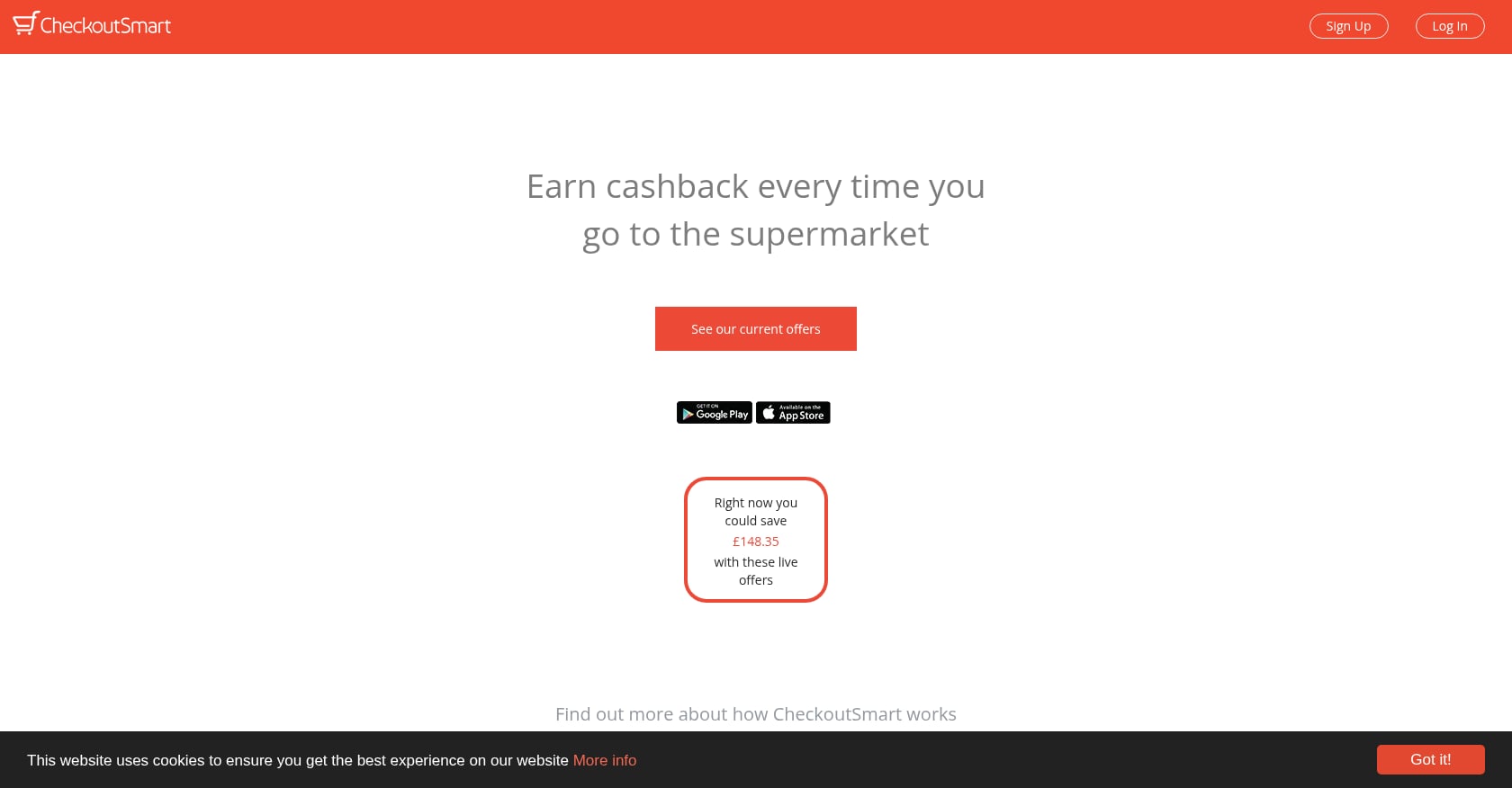
Best for: UK FMCG brands wanting combined cashback activation and continuous (“always-on”) review generation across all major UK grocers.
Pricing: Campaign-based. Not publicly listed, but positioned as accessible for mid-market FMCG brands. CheckoutSmart claims ROI of between 6x and 12x at gross margin level for their Always On review program.
Key features:
- SmartReputation Always On program delivers a continuous stream of genuine product reviews
- Panel of thousands of everyday grocery shoppers who purchase from leading retailers
- Three-metric review health scoring: minimum 30 reviews, latest three reviews no older than six months, top three reviews within 1.5 stars of average rating
- UK retailer coverage includes Tesco, Sainsbury’s, Asda, Morrisons, Aldi, Lidl, Waitrose, Iceland, Ocado, and M&S
- Also runs cashback activations for trial and repeat purchase
Limitations:
- Primarily a cashback platform with reviews as an adjacent service, not a dedicated review-generation specialist
- No in-store audit or field marketing capability
- No discreet product recall service
Real user perspective: On Trustpilot (112 reviews), shoppers say the app works well for cashback but some find offers repetitive and the cash-out process slow. Brand-side testimonials are limited to claims on their own website.
CheckoutSmart’s review health framework is worth noting regardless of which platform you choose. Their three metrics (volume, recency, rating consistency) provide a useful benchmark. For more on why review velocity matters, read our guide on product review campaigns.
3. Roamler
Best for: Brands needing pan-European retail audits with strong UK coverage, particularly for measuring shelf placement, pricing accuracy, and promotional compliance.
Pricing: Campaign-based. No public pricing. Roamler operates across the UK, Netherlands, Germany, France, and eight other European markets.
Key features:
- Crowdsourced retail intelligence via smartphone app
- “Audit” solution measures product availability, placement, price, and promotional activity
- “Benchmark” cross-references audit data with sales data
- “Correct” provides actionable recommendations to fix execution gaps
- Ratings and Reviews capability, primarily used for rapid review seeding on new product launches
Limitations:
- One of the smaller contributor networks compared to competitors like Clickworker and Premise
- No client-side reviews visible on G2 or Capterra, which makes independent evaluation difficult
- Review generation is a secondary capability, not the core product
- No discreet recall or product withdrawal service
Real user perspective: On Trustpilot (1,754 reviews), a long-term user described Roamler as “easily the best mystery shopping and task app out there,” praising consistent income and learning about “merchandising, stock supervision, and the inner workings of retail.” Others complain about low pay for time-intensive tasks and note that “they will reject the task at any opportunity.”
For brands evaluating in-store audit KPIs, our retail execution audit guide covers what to measure and why.
4. Bazaarvoice

Best for: Large global brands needing multi-retailer review syndication, primarily across US retail channels.
Pricing: Not publicly listed, but market intelligence paints a clear picture. Real-world quotes from practitioners range from $10,000-$40,000 per year for small DTC brands, $40,000-$80,000 for mid-market, and $100,000-$200,000+ for enterprise packages with full syndication. In 2018, Bazaarvoice disclosed that review syndication started at $7,000 per brand per year, a number that has increased substantially since.
Hidden costs to watch for:
- Premium human moderation is often a per-review surcharge
- API access requires the Enterprise package
- Sampling programs are priced separately, often $20,000+ per year
- Visual UGC (Bazaarvoice Vibe) is always a separate module at $15K-$50K+ per year
- Annual price escalators of 3-7% are common in contracts
Key features:
- The largest review syndication network globally
- Collects reviews centrally and distributes across retail partner websites
- Sampling programs to seed new products with reviews
- Strong integrations with US retailers (Walmart, Home Depot, Costco)
Limitations:
- Contracts are often rigid 3-year terms with no exit clause, according to multiple user reports
- UK grocery syndication is limited. Most UK supermarkets (Tesco, Sainsbury’s) run their own native review systems and don’t accept syndicated content.
- One Trustpilot reviewer manually audited their syndication network and found that many listed retailers no longer carried their products, several no longer existed, and some showed reviews over three years old. They estimated the useful syndication list was 40-60% smaller than claimed.
Real user perspective: On G2, one reviewer praised the syndication capability: “Reviews needed to go on other websites aside from ours and this does that wonderfully.” But criticism is pointed. Another called the team “unhelpful, unavailable, and untrained,” while others flagged “inconsistent support, unknowledgeable project leads, nonexistent technology experts.”
The core question for UK FMCG brands: if you’re selling through Tesco and Sainsbury’s (not through your own DTC store), Bazaarvoice’s syndication network offers limited practical value. As one practitioner put it, Bazaarvoice holds a “relative monopoly” on syndication, but that monopoly matters most in markets where retailers accept syndicated reviews. For a more detailed comparison, see our Bazaarvoice alternatives breakdown.
5. PowerReviews

Best for: Mid-market brands with their own e-commerce presence that need review collection and syndication with better customer support than Bazaarvoice.
Pricing: Custom SaaS pricing, not publicly listed. Practitioners consistently position PowerReviews as more cost-effective than Bazaarvoice, particularly for mid-market retailers. PowerReviews works with more than 1,000 global brands and retailers.
Key features:
- Review collection, moderation, and display for owned e-commerce sites
- Syndication network (smaller than Bazaarvoice but growing)
- Visual UGC and Q&A modules
- Strong customer support, with a G2 Quality of Support score of 9.0
Limitations:
- Primarily US-focused with limited UK grocery retailer integrations
- Not designed for the UK FMCG use case of getting reviews onto Tesco or Sainsbury’s PDPs
- Smaller syndication network than Bazaarvoice
- Better suited for brands with significant DTC traffic
Real user perspective: Users on G2 consistently praise the ease of use and responsive support, highlighting how the intuitive dashboard simplifies review management. Some note that the dashboard can be slow at times. The Trustpilot Quality of Support score sits at 7.2, lower than the G2 figure.
For UK brands specifically evaluating PowerReviews, our guide to PowerReviews alternatives for UK brands covers what to consider.
6. Field Agent UK
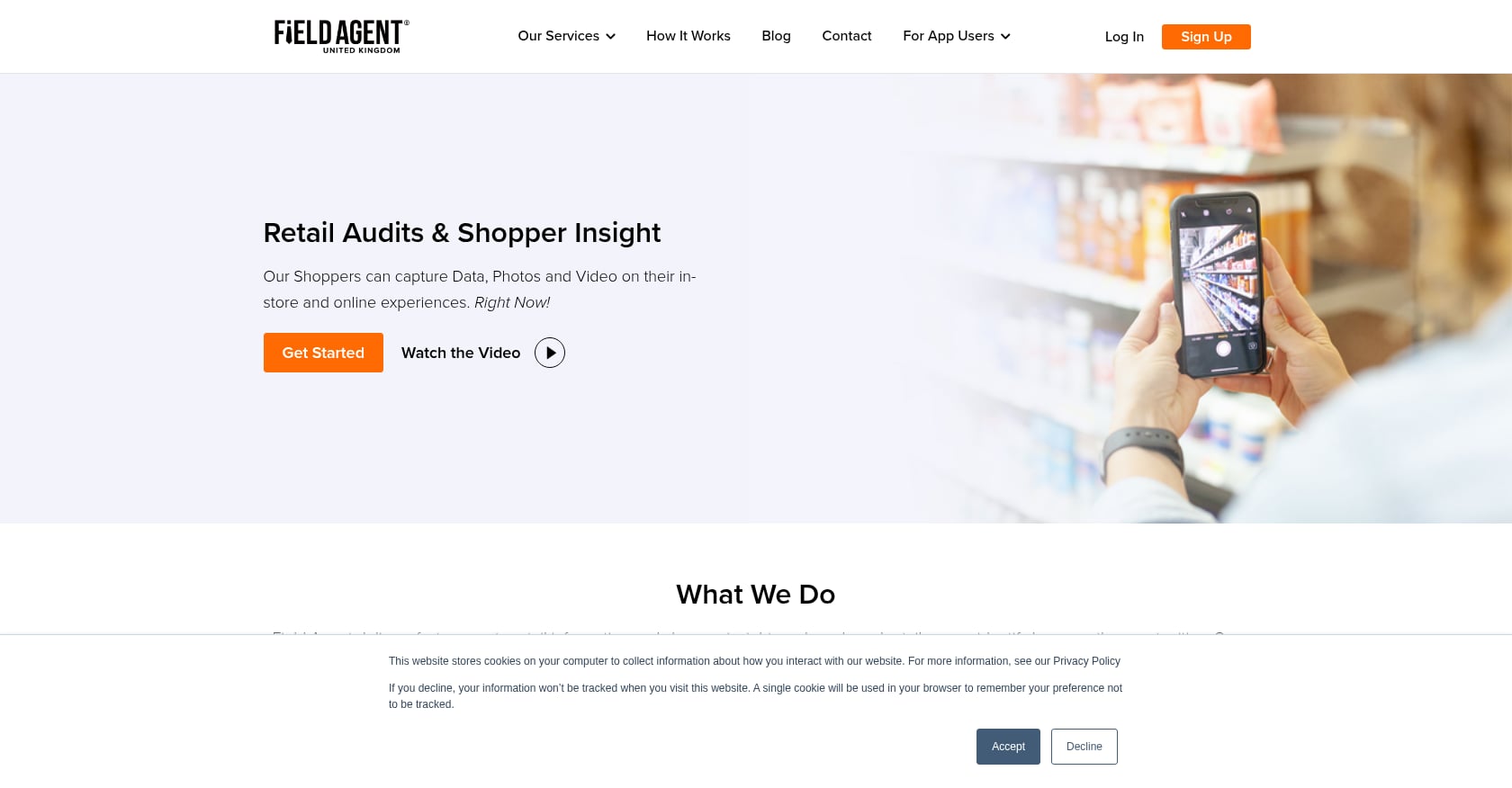
Best for: Quick, one-off in-store audits and product display checks, best used alongside a dedicated review or activation platform.
Pricing: Per-task basis. Field Agent has paid out more than $20 million globally since launching in 2010, operating across the US, Canada, Mexico, Australia, South Africa, and the UK.
Key features:
- Buy and Try: get paid to test products
- Buy, Try, and Share: post about products on social media
- Audits: check product display, availability, and shelving
- Mystery Shop: follow scripts or ask questions in-store
Limitations:
- UK job availability is inconsistent, with users on Trustpilot reporting gaps
- Covers fewer countries than competitors
- One user noted that tasks are “all buy products and get reimbursed, so therefore earning nothing,” suggesting the economics don’t always work for shoppers
- Not a review-generation platform for retailer PDPs
- No recall or withdrawal service
Real user perspective: Practitioners on forums generally view Field Agent as a supplementary tool rather than a primary platform. The inconsistent UK coverage makes it unreliable as a sole source of in-store intelligence. Pair it with a more UK-focused solution for ongoing audit needs.
7. Shopmium
Best for: FMCG brands wanting to drive mass product trial and collect first-party shopper data across UK retailers.
Pricing: Campaign-based. Shopmium works with over 600 leading FMCG companies.
Key features:
- 3 million+ UK app downloads, reaching more than 10% of UK households
- Multi-retailer cashback platform driving first purchase and repeat trial
- Captures proprietary first-party data based on multi-retailer purchase receipts
- Delivers cookieless seed data for digital targeting
- Partnership with Nielsen for enhanced audience modelling
Limitations:
- Does not generate product reviews on retailer PDPs
- Not an in-store audit or field marketing tool
- Primarily a trial-driving mechanism, not a long-term review or UGC strategy
Real user perspective: A Senior Shopper Marketing Manager shared in a Shopmium testimonial: “We’ve used Shopmium for a number of years, and is the go-to media for all our shopper campaigns. It ticks all the boxes!” The platform’s strength is scale, reaching over 10% of UK households is hard to match, but brands should pair it with a review-generation service to capture the downstream benefit of all those new trials.
For more context on how cashback promotions fit into the broader FMCG toolkit, that guide covers mechanics and compliance.
8. Savi
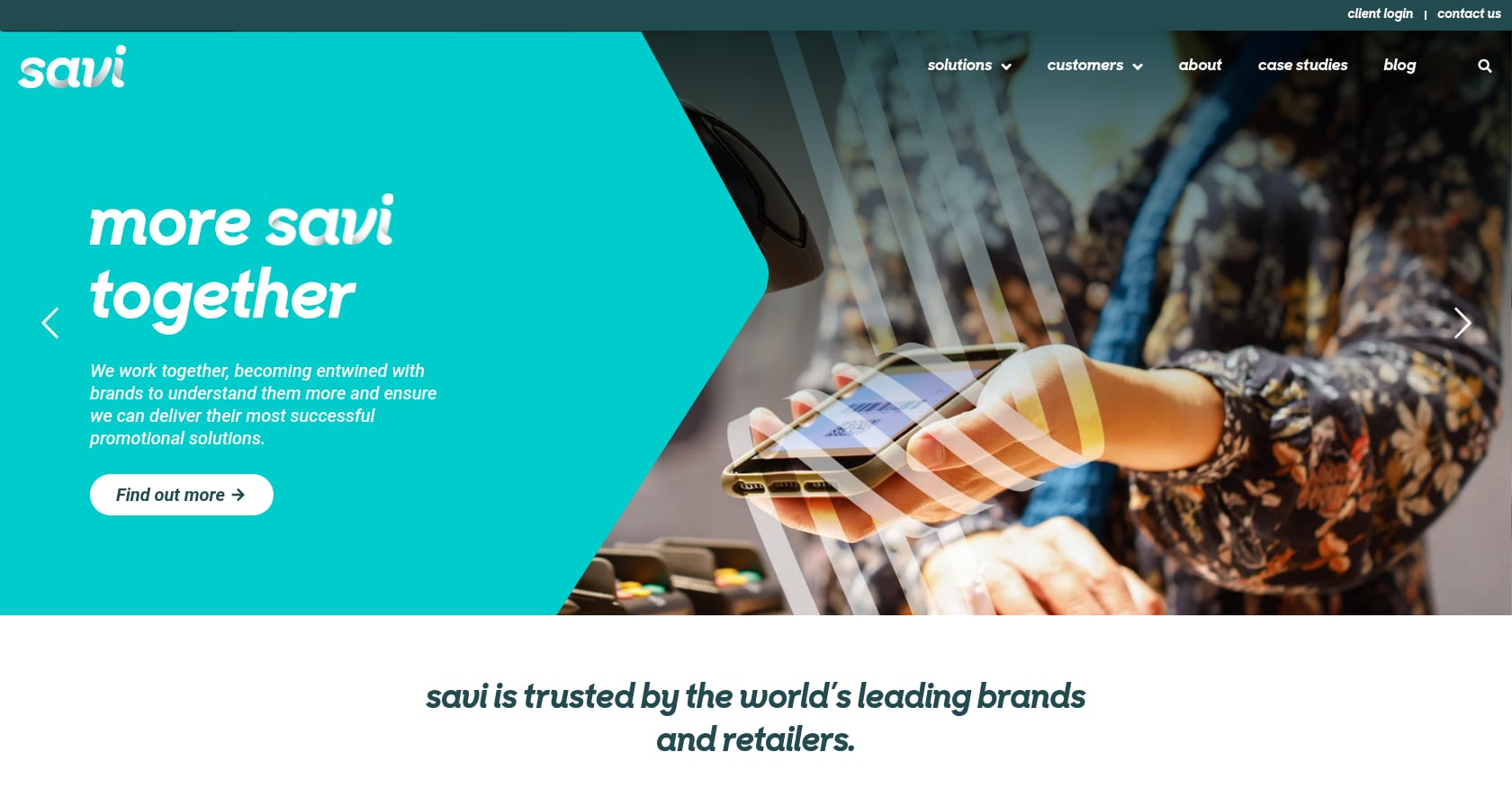
Best for: Coupon-led shopper activations in UK grocery and convenience retail.
Pricing: Campaign-based. Savi is UK-focused.
Key features:
- Digital coupon distribution and redemption across UK retailers
- Established presence in UK grocery and convenience channels
- First-party data collection from coupon redemptions
- According to a 2025 Savi UK Shopper Survey, 62% of UK shoppers are spending more than a year ago, underscoring the value of promotional support
Limitations:
- Not a review-generation platform
- No in-store audit or field marketing capability
- Limited to coupon mechanics, which don’t build the review volume or UGC content that increasingly drives retailer search ranking
- Less useful for brands whose primary gap is on the digital shelf rather than trial volume
Real user perspective: Savi’s strength is its focus on the UK market specifically, unlike the US-centric enterprise platforms. But for brands searching specifically for a shopper marketing platform to solve the review gap, Savi addresses a different part of the funnel entirely.
How to Choose the Right Shopper Marketing Platform for Your Brand
Start with one question: where is your biggest gap?
If your products have fewer than 30 reviews on key retailer PDPs, review generation should be your first priority. Brand Allies and CheckoutSmart both address this directly for UK grocery retailers. Brand Allies offers a pay-per-verified-review model with no SaaS commitment; CheckoutSmart bundles reviews with cashback activation in an always-on program.
If you have strong review coverage but poor in-store execution, a field audit platform like Roamler or Field Agent will surface the compliance issues hurting your sales. Poor shelf placement can reduce sales by 20% or more, and out-of-stocks hit even harder at 30-50%.
If you’re launching an NPD and need mass trial first, Shopmium or a cashback platform should come before review generation. Get the product into hands, then activate a review campaign to capture those trial experiences.
If you sell primarily through your own DTC site and need reviews there, Bazaarvoice or PowerReviews make sense. But be honest about whether you actually need syndication or just on-site review collection. If it’s the latter, there are cheaper options.
Budget brackets as a rough guide:
- Pay-per-review services (Brand Allies, CheckoutSmart): variable by campaign, no annual SaaS fee
- Mid-market SaaS (PowerReviews): custom but positioned below Bazaarvoice
- Enterprise SaaS (Bazaarvoice): £10,000-£200,000+ per year depending on modules and SKU count
- Campaign-based activation (Shopmium, Savi): varies by reach and retailer coverage
For brands wanting to understand review generation pricing in more detail, that guide breaks down cost structures across all major UK providers.
The Review Credibility Threshold Every FMCG Brand Should Know
Three numbers matter more than any platform feature list.
30 reviews minimum. Shoppers are significantly less likely to buy products with fewer than 20-30 reviews. This is the credibility threshold where conversion lifts become measurable. Below it, your star rating looks unreliable regardless of how high it is.
Six-month recency. CheckoutSmart’s framework requires the latest three reviews to be no older than six months. Stale reviews signal abandoned products. A steady flow of new reviews outperforms a one-time spike, which is why “always-on” programs exist.
Rating consistency. If your top-displayed reviews differ more than 1.5 stars from the average rating, shoppers notice the disconnect and trust erodes. Consistency across visible reviews matters as much as the average itself.
These thresholds explain why one-off sampling campaigns don’t solve the UK grocery review problem. You need sustained velocity. Products with higher ratings combined with strong review volume are more likely to rank higher in retailer search, get included in retailer media and promotions, and survive range reviews.
UK Compliance Considerations for Review Generation
New regulations are reshaping what UK FMCG brands can and can’t do in shopper marketing.
HFSS advertising restrictions from the ASA now ban paid online advertising for identifiable “less healthy” food and drink products. This makes organic review content and genuine shopper advocacy one of the few compliant routes to market for affected categories. Brands that previously relied on paid digital ads for HFSS products need alternative visibility strategies, and review generation on retailer PDPs is one of the most practical options.
ASA CAP Code on incentivised reviews requires transparency. If a shopper receives any form of reward (cashback, free product, payment) for leaving a review, this must be disclosed. Each UK grocery retailer has its own moderation policies and terms of service governing reviews. Some reject reviews that appear incentivised. This is why some reviews generated through any platform get rejected by retailer moderation, not a bug, but a feature of the compliance system working as designed.
Retailer moderation varies significantly. Tesco, Sainsbury’s, and Ocado each have different review submission processes and approval criteria. Brands working with review generation services should expect some rejection rate as normal. For a deeper look at the rules, our compliance guide for verified reviews covers ASA requirements and retailer-specific policies.
Conclusion: Which Platform Should You Pick?
For UK FMCG brands selling through major grocery retailers, the most practical starting point is a managed service with real UK shoppers who buy through real retailer checkouts. That’s the only way to get verified reviews onto Tesco, Sainsbury’s, and Ocado PDPs, because those retailers don’t accept syndicated or imported reviews.
Brand Allies offers the widest combination of capabilities for this specific problem: verified reviews on retailer PDPs, in-store compliance checks, and discreet product withdrawals, all through a 250,000+ UK shopper community with pay-per-verified-review pricing.
If your needs are more specialised (always-on review management, pan-European audits, mass trial, or global syndication), the other platforms in this guide each own a piece of the puzzle. Most serious FMCG brands end up using two or three platforms in combination.
→ Book a demo with Brand Allies to see how verified reviews, in-store audits, and discreet recalls work under one contract.
Frequently Asked Questions
What is a shopper marketing platform?
A shopper marketing platform is a tool or managed service that helps brands influence consumer purchasing decisions at or near the point of purchase. In the UK FMCG context, this typically means generating product reviews on retailer websites, running cashback or trial campaigns, conducting in-store audits, or managing UGC across retail channels. The term covers a range of tool types from SaaS review software to crowdsourced field marketing apps.
Why don’t standard review platforms work for UK grocery brands?
Most review platforms (Bazaarvoice, PowerReviews) were built for brands that own their e-commerce checkout and can embed review widgets directly. UK FMCG brands sell through Tesco, Sainsbury’s, and other grocers who run their own native review systems. You can’t import or syndicate reviews onto these retailer PDPs. You need actual shoppers making real purchases and posting reviews directly on the retailer’s website.
How many reviews do FMCG products need to drive conversion?
Research and industry benchmarks point to a credibility threshold of 20-30 reviews. Below that number, shoppers are significantly less likely to trust the rating and convert. Beyond volume, recency matters: reviews older than six months signal a stale or abandoned product. The most effective approach is a sustained, always-on review program rather than a one-time burst.
What does a shopper marketing platform cost in the UK?
Costs vary dramatically by platform type. Pay-per-review services like Brand Allies charge per verified review with no annual SaaS fee. Campaign-based platforms like CheckoutSmart and Shopmium price by campaign scope and retailer coverage. Enterprise SaaS platforms like Bazaarvoice range from $10,000 to over $200,000 per year depending on modules, SKU count, and contract length. Hidden costs (moderation fees, syndication surcharges, annual escalators) are common with SaaS models.
Are incentivised reviews compliant in the UK?
Yes, but with strict conditions. The ASA CAP Code requires that any material connection between a brand and a reviewer (payment, free product, cashback) is clearly disclosed. Each UK grocery retailer also has its own moderation policies. Some retailers reject reviews they identify as incentivised. Working with a platform that understands these retailer-specific rules reduces rejection rates and compliance risk.
How do HFSS advertising restrictions affect shopper marketing?
The ASA’s restrictions on paid online advertising for “less healthy” food and drink products mean that many FMCG brands can no longer run standard digital ads for affected SKUs. This has increased the value of compliant alternatives like organic product reviews and genuine shopper advocacy on retailer PDPs, which fall outside the paid advertising restrictions.
Can one platform handle reviews, in-store audits, and product recalls?
Brand Allies is currently the only UK platform offering all three capabilities (online product reviews, in-store activations, and discreet product withdrawals) under a single contract. Most brands otherwise need to work with two or three separate vendors to cover these functions, which adds complexity and cost.
Which UK retailers support review generation through shopper marketing platforms?
Coverage varies by platform, but the major UK retailers where review generation services operate include Tesco, Sainsbury’s, Asda, Morrisons, Waitrose, Ocado, Boots, Iceland, Holland & Barrett, and M&S. Some platforms also cover Amazon UK and TikTok Shop. Always confirm retailer coverage with your chosen platform before committing, as each retailer’s review policies can change.