
TL;DR: A merchandising check app is the mobile tool FMCG brands use to verify that products are actually on shelf, priced correctly, and displayed as agreed with retailers. This glossary defines every term you’ll encounter when evaluating these tools, from planogram compliance to Perfect Store Score, with UK-specific benchmarks and practical context for brands that may not have their own field team.
In-store execution in UK grocery is where commercial strategy either converts into sales or quietly falls apart. Research from POPAI UK suggests non-compliance rates run as high as 50% in many categories. That means half the time, your promotional display isn’t built, your POS material isn’t up, or your product is sitting in a back room instead of on the shelf.
If you’re a brand manager, trade marketing lead, or shopper marketing executive researching merchandising check apps for FMCG, you’re about to encounter a wall of jargon. Vendor demos, retailer scorecards, and auditing dashboards all use terms that sound interchangeable but mean very different things.
This glossary cuts through that. Every definition ties back to a commercial outcome, because a term only matters if it affects your sales, your retailer relationships, or your trade spend ROI.
If you already know your in-store execution has gaps but don’t have a field team to fix them, Brand Allies offers a managed compliance service built on a pre-existing UK shopper community of 250,000+ people.
What Is a Merchandising Check App?
A merchandising check app is a mobile tool that FMCG brands use to verify shelf conditions in retail stores. At its simplest, it answers one question: is the plan we agreed at head office actually happening at store level?
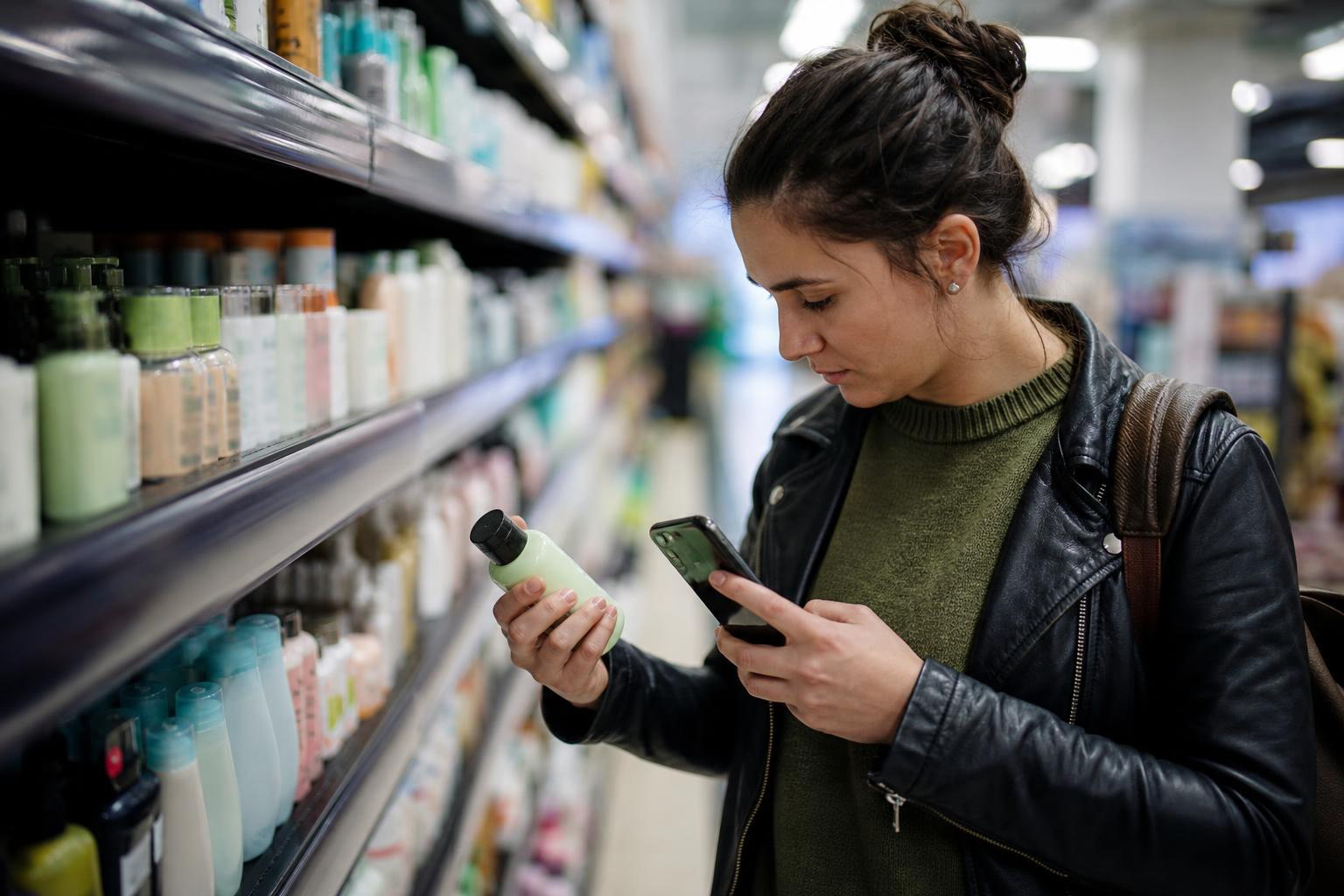
Most merchandising check apps combine two components. Field reps or crowdsourced shoppers use a mobile app to capture photos, check stock levels, verify pricing, and confirm that promotional displays are set up correctly. Back at HQ, managers access a web dashboard to assign tasks, track completion rates, and review store-level data, all without waiting for someone to email a spreadsheet.
There are two broad delivery models. In-house field team apps (like Repsly or GoSpotCheck by FORM) are designed for brands that employ their own reps and need route planning, visit scheduling, and performance tracking. Crowdsourced audit apps (like Field Agent, Roamler, or BeMyEye) route tasks to independent shoppers, giving brands wide geographic coverage without hiring anyone.
A third option exists for brands that want the data but don’t want to run the software or manage the workforce themselves: managed audit services. This is where an external partner handles both the shopper network and the reporting. For a deeper look at how these models compare, see this field team vs crowdsourced audits comparison.
Core Merchandising Terms: A Glossary for FMCG Brands
Shelf and Store Terms
Backstock
Inventory stored in the back room, still in cases or on pallets, waiting to be moved to the sales floor. A product can be “in stock” at store level but still out-of-stock on shelf if backstock hasn’t been replenished. This distinction matters because roughly 70-75% of out-of-stocks are caused by in-store replenishment failures, not supply chain problems.
Endcap
A display at the end of a store aisle. Endcaps command higher shopper attention than mid-aisle positions and are typically negotiated as part of promotional agreements with retailers. If you’re paying for an endcap and it’s not built, you’re burning trade spend.
Facing
The front-visible unit of a product on a shelf. More facings mean more visibility. If your planogram specifies four facings but the store has given you two, your share of shelf just halved.
Gondola
The main freestanding shelving unit that runs down a store aisle. When FMCG professionals talk about “gondola ends,” they mean the high-traffic endcap positions.
Cut-In
Shifting or removing existing merchandise to make room for new or promotional products on shelf. Cut-ins happen between major resets and are how retailers introduce new SKUs without waiting for a full category overhaul.
Mis-Pick
A product slotted in the wrong shelf position. Mis-picks confuse shoppers, distort category flow, and skew any automated share-of-shelf measurements.
Pack Out
The process of filling shelves using backstock inventory. In a merchandising check, a rep or shopper might note that a shelf is empty even though backstock exists, signalling a pack-out failure rather than a true out-of-stock.
Reset
A complete reorganization of shelves or displays according to a new planogram. Resets typically happen seasonally or when a retailer renegotiates category layouts.
KPI and Measurement Terms
On-Shelf Availability (OSA)
OSA measures whether your SKU is physically present on the shelf, facing forward, in the correct slot, at the moment a shopper walks up to buy it. This is different from warehouse stock or even store-level inventory. Top-performing CPG brands maintain OSA above 97%. For a full breakdown of how to audit this metric, see our on-shelf availability audit guide.
Out-of-Stock (OOS)
The condition where a product is completely absent from its designated shelf position. The global average FMCG out-of-stock rate sits around 8.3%, climbing to roughly 10% during promotional periods, exactly when your media spend is working hardest and your margin is highest. In the UK, grocery brands lose an estimated £2.1 billion annually to avoidable stock gaps. To understand the full revenue impact and how to run targeted audits, read this out-of-stock audit guide.
Planogram Compliance
The degree to which a store’s actual shelf layout matches the planogram (the designed shelf schematic). Planogram compliance rate is calculated as the percentage of products in their correct positions versus the total specified. The benchmark target is 90% or above, and brands that achieve strong planogram adherence can see sales lifts of up to 20%.
Perfect Store Score
A composite KPI that evaluates overall in-store execution quality across multiple metrics, typically including OSA, planogram compliance, display compliance, POSM presence, and pricing accuracy. Most FMCG brands target 80-90% as a healthy Perfect Store Score across covered outlets. Scores below 70% usually signal execution gaps in replenishment, merchandising, or field discipline.
Here’s a contrarian take worth considering. Practitioners on the Zivni FMCG blog argue that if 80% of your outlets are scoring “perfect,” your definition of perfect is broken. A real Perfect Store Score should sit in the 55-70% range for a healthy business, because it should be genuinely hard to achieve. A Perfect Store rate of 40% means 60% of your covered outlets have at least one compliance gap costing you conversion.
Share of Shelf
The percentage of total shelf space in a category occupied by your brand’s products versus competitors. Measured by facings or linear shelf metres. Share of shelf is a critical negotiation tool in retailer conversations and, in many categories, correlates directly with market share. For brands that want to benchmark this metric, our share of shelf audit guide walks through the formulas.
Display Compliance / Promo Compliance
Display compliance checks verify that promotional setups (endcaps, gondola ends, secondary placements, branded displays) are built as agreed with the retailer. Without merchandising management software, FMCG brands lose 20-40% of promotional ROI. When you consider that UK FMCG brands typically spend 15-25% of revenue on trade promotions, that leakage adds up fast.
Delivery Model Terms
Crowdsourced Audit
A retail audit conducted by independent shoppers recruited through an app, rather than by a brand’s own field team. Crowdsourced merchandising check apps route audit tasks to a network of shoppers who visit stores, take photos, and answer structured questions. The cost is typically $8-$15 per store, flat, with a 24-to-72-hour turnaround and 100% photo-verified data.
Practitioner reviews on app stores reveal an important tension for brand-side buyers. Field Agent App Store reviews show a consistent pattern: audits are legitimate, screening is fast, and payouts are quick, but shoppers increasingly report that platforms expect more work for less pay. This matters because the quality of your audit data depends directly on the quality of the crowdsourced workforce experience. If pay compresses too far, the best shoppers leave.
Field Team / Field Rep
A dedicated sales or merchandising representative who visits stores on behalf of a brand. Field reps use mobile field sales apps to capture orders, log visits, check stock, audit merchandising, and receive daily targets. The field team model offers the highest control but also the highest cost per store visit. For brands evaluating whether to build or outsource, our guide to FMCG field marketing agencies covers the options.
Managed Service
An outsourced model where a partner handles both the shopper workforce and the reporting. The brand gets the store-level data and photos without running software or managing reps. This model suits brands that don’t have a field team and don’t want to learn a new platform.
Brand Allies operates this model in the UK using a geo-indexed shopper community already onboarded and ID-verified. If this sounds like the right fit, explore the in-store compliance service to see how it works in practice.
Retail Execution Software
A digital platform that helps FMCG and CPG brands manage what happens at the retail shelf. It covers outlet visits, order booking, planogram compliance, and sales tracking. Named tools in this space include GoSpotCheck (by FORM), Repsly, YOOBIC, and PlanoHero. Brands that find these platforms too complex or too expensive for their current stage might consider a retail execution software alternative.
In-Store Marketing Terms
POSM (Point of Sale Material)
Branded signage, shelf-edge labels, wobblers, hanging signs, and display units placed in-store to promote products. POSM compliance is one of the most common things a merchandising check app audits, and one of the most common things that goes wrong. For a detailed look at what to check, see this POS material compliance guide.
TPR (Temporary Price Reduction)
A short-term price cut, usually retailer-led, designed to boost volume during a promotional window. TPRs are one of the most common promotional mechanics in UK grocery.
SKU (Stock Keeping Unit)
A unique identifier for each distinct product. A single brand might have dozens of SKUs across sizes, flavours, and pack formats. Merchandising check apps track compliance at the SKU level because aggregate “in stock” numbers hide the detail that matters.
FMCG (Fast-Moving Consumer Goods)
Products sold quickly and replaced frequently: food, beverages, personal care, household goods. FMCG is often used interchangeably with CPG (consumer packaged goods), though strictly speaking, FMCG is a subset of CPG, referring specifically to the highest-velocity items.
How Merchandising Checks Actually Happen: Delivery Models Compared
Understanding the terminology is one thing. Knowing which model delivers the data is another. There are three primary ways a merchandising check app (or service) gets eyes into stores.
Internal field teams offer the most control. Your reps know your brand, build relationships with store managers, and can fix problems on the spot (pack out a shelf, build a display, correct a mis-pick). The trade-off is cost. As one practitioner put it: “The field team is the most expensive way to see the fewest stores.”
Crowdsourced audits flip the equation. A network of independent shoppers visits stores, captures photo evidence, and submits structured reports through an app. You get broad geographic coverage and fast turnaround. Cost per store is a fraction of a field visit. The limitation is that crowdsourced shoppers can observe and report but typically can’t intervene, they won’t restock your shelf or build your display.
Managed services combine the workforce with the analysis. The provider handles recruitment, task assignment, quality control, and reporting. The brand gets clean data and action recommendations without touching a dashboard.
The emerging best practice is a blended model. Practitioners report that the smartest retail teams use crowdsourcing for broad sweeps across hundreds of stores and dedicated reps for the outlets where compliance history shows repeat problems. Practical use-case mapping looks like this: verifying a chain-wide rollout goes to a crowdsourced audit; fixing known out-of-stocks in your top 200 stores goes to a field team; benchmarking your shelf against a competitor across markets goes to a crowdsourced audit.
Key KPIs That Merchandising Check Apps Measure
Every merchandising check app for FMCG reports against a handful of core KPIs. Here’s what “good” looks like for each one.
| KPI | What It Measures | Benchmark |
|---|---|---|
| On-Shelf Availability | Is the product on shelf and shoppable? | 97%+ for top performers |
| Out-of-Stock Rate | Percentage of SKUs absent from shelf | Below 8.3% (global average) |
| Planogram Compliance | Does the shelf match the agreed layout? | 90%+ |
| Perfect Store Score | Composite execution quality across all metrics | 80-90% (though some practitioners argue this should be harder) |
| Share of Shelf | Your brand’s facings vs. category total | Category-dependent, track trend over time |
| Display/Promo Compliance | Are promotional setups built as agreed? | 100% is the target, reality is far lower |
For formulas and worked examples on how to calculate the ROI of improving these metrics, see these retail audit ROI benchmarks.
A telling data point about the gap between assumption and reality: research from YOOBIC and digital audit platforms found that leaders typically assume 80-85% compliance, while actual measured compliance sits at 55-65%. Merchandising check apps exist precisely to close that perception gap.
How AI Is Changing Merchandising Checks
AI image recognition is the fastest-growing area of FMCG merchandising technology. The premise is simple: instead of a human counting facings and checking shelf labels, a camera captures the shelf and software does the analysis.
The numbers are striking. AI-powered shelf audits achieve 95-97% SKU recognition accuracy, compared to 50-60% for manual audits by sales teams. Audit time drops from 30-90 minutes per store to under 7 minutes. About 14% of FMCG store audits are now conducted via robots or drones with AI, a share that’s growing quickly as costs fall.
For enterprise brands with thousands of stores and dedicated field teams, AI image recognition is becoming table stakes. Trax Retail, for example, has built its entire platform around computer vision for shelf intelligence.
For mid-market FMCG brands, the calculus is different. The setup cost and integration complexity of AI tools can outweigh the benefit when you’re covering hundreds of stores, not thousands. Many of these brands skip AI entirely and go straight to managed services or crowdsourced audits, getting photo-verified data from real shoppers at a fraction of the technology investment.
FAQ
What’s the difference between a merchandising check app and retail execution software?
A merchandising check app is focused on auditing: capturing what’s happening on shelf right now, through photos, checklists, and structured observations. Retail execution software is broader, covering visit planning, route optimisation, order booking, and team performance management alongside audit functionality. Think of the merchandising check as one function within a larger retail execution platform.
Do I need a field team to use a merchandising check app?
No. Crowdsourced audit apps let you get store-level data from independent shoppers without employing a single rep. Managed service providers like Brand Allies go further by handling the entire process, from field data collection to reporting, so you don’t need to run the app yourself either.
How much does a merchandising check app cost?
It depends on the model. Crowdsourced audits typically cost $8-$15 per store visit. Enterprise retail execution platforms (Repsly, YOOBIC, GoSpotCheck) charge SaaS subscription fees that scale with user count and features. Managed services are usually priced per store visit or per audit cycle. The right choice depends on how many stores you need to cover and whether you have people to run the tool.
What is a good Perfect Store Score?
Industry consensus puts the target at 80-90%. But experienced FMCG practitioners argue this is often too easy. If most of your outlets hit 80%, your scoring criteria probably aren’t rigorous enough. A Perfect Store Score in the 55-70% range often reflects a more honest assessment, because a truly “perfect” store should be difficult to achieve.
How often should merchandising checks happen in UK grocery?
For promotional compliance, check within the first 48 hours of a campaign going live, because that’s when most display failures occur. For ongoing OSA and planogram compliance, monthly checks are a common baseline, with weekly checks for top-performing stores or during high-stakes promotional periods. The right frequency depends on your category’s velocity and how much trade spend is at risk.
What’s the biggest source of out-of-stocks in FMCG?
It’s not the supply chain. Research consistently shows that 70-75% of out-of-stocks are caused by in-store replenishment practices: backstock not being moved to shelf, ordering errors, or pack-out delays. This is why merchandising check apps focus so heavily on what’s happening at the shelf, not just what’s in the warehouse.
The terminology in this space can feel overwhelming, but every term traces back to the same question: is the shopper finding your product, seeing your promotion, and having a reason to buy? A merchandising check app for FMCG is simply the tool that tells you whether the answer is yes or no.
If you’re a UK FMCG brand without a field team and want store-level compliance data without the overhead of running software, see our starter plan to find out how Brand Allies can help.