TL;DR
Most FMCG sampling campaigns waste budget not because sampling doesn’t work, but because of avoidable execution errors. The biggest sampling campaign mistakes FMCG brands make include targeting the wrong consumers, skipping follow-up, ignoring review generation, and failing to verify shelf availability. This guide covers 10 specific mistakes with data on what each one costs and clear fixes for every single one.
Why Sampling Works, but Most Campaigns Underperform
Product sampling remains one of the most effective tactics in FMCG marketing. Analysis of 12,500 in-store campaigns found that sampling drives a 95.2% average sales uplift, making it the top-performing in-store activation format. Around 78% of CPG brands use sampling as a core strategy, and 73% of consumers who try a sample are more likely to buy.
So sampling clearly works. The problem is that most campaigns leave enormous value on the table. Good sample-to-purchase conversion sits at 15–25% for established brands, but plenty of campaigns land well below that because of preventable errors in targeting, measurement, follow-up, and compliance.
This article names 10 specific sampling campaign mistakes FMCG teams make repeatedly, quantifies the cost of each, and offers a concrete fix. If you’re planning a campaign or post-morteming one that underperformed, this is your checklist.
Explore review generation services to see how sampling connects to retailer product page conversion.
At-a-Glance: 10 FMCG Sampling Mistakes and One-Line Fixes
| # | Mistake | Cost | Fix in One Line |
|---|---|---|---|
| 1 | Sampling to everyone instead of your target | 40%+ of samples wasted on freebie-hunters | Target by verified shopper profile, not footfall |
| 2 | No follow-up after the sample | 3–4× lower conversion vs. campaigns with follow-up | Build a next step (coupon, review, social share) into the journey |
| 3 | Treating distribution volume as the KPI | Spending without learning | Measure sample-to-purchase conversion and review uplift |
| 4 | Sampling a product that isn’t ready | Accelerated negative word of mouth | Validate with a small test panel first |
| 5 | Ignoring the review generation opportunity | Missing the fastest route to 20–30 reviews on retailer PDPs | Connect every campaign to a review collection mechanism |
| 6 | Sampling without verifying shelf availability | Intent created, nowhere to buy | Run compliance checks before, during, and after |
| 7 | Non-compliance with UK regulations | Fines, filtered reviews, reputational damage | Follow ASA CAP Code and DMCCA 2024 rules |
| 8 | Choosing the wrong channel for the product | Low conversion despite high distribution | Match channel to trial duration needed |
| 9 | Overspending on venue or creative | Fewer samples, lower reach | Let the product speak, not the booth |
| 10 | One-off spikes instead of sustained campaigns | Reviews age, momentum dies | Run always-on sampling to keep review recency fresh |
1. Sampling to Everyone Instead of Your Target Audience
Best described as: The most expensive form of generosity.
One of the most common sampling campaign mistakes FMCG brands make is choosing locations or channels simply because they’re busy. A campaign may distribute thousands of samples in a high-footfall train station while producing almost no meaningful sales impact, because the people grabbing those samples were never likely to buy the product.
The freebie-hunter problem is real and quantifiable. In 2025, more than 40% of sample requests on the Sampl platform were filtered out before fulfilment, mostly non-target consumers and serial freebie collectors. A practitioner on LinkedIn from Sampl described how campaign links get shared through “private Facebook groups within minutes of a campaign going live,” draining stock before genuine prospects even see the offer.
What this costs: If 40% of your samples go to people who will never buy, you’re effectively paying a 67% premium per genuine trial. On a £50,000 campaign, that’s roughly £20,000 in waste.
The fix: Target by verified shopper profile, not venue footfall. Receipt-verified digital sampling, where consumers prove a qualifying purchase before receiving a sample or rebate, screens out most freebie-hunters automatically. For more on building audiences that actually convert, read our guide on high-intent sampling audiences.
2. No Follow-Up Strategy After the Sample
Best described as: Creating a moment, then letting it evaporate.
If the sampling campaign ends the moment the product is handed over, the value is largely lost. Someone tries your granola, likes it, and then nothing happens. No coupon. No prompt to leave a review. No way to find them again. The trial existed in isolation.
The data here is striking. Campaigns with a clear “next step” mechanism see 3–4× higher conversion than campaigns that just hand out samples. FMCG 360 documented a campaign where 92% of consumers opened the follow-up link, 67% provided feedback, and the repeat purchase rate tripled in 60 days.
What this costs: Without follow-up, you keep the cost of every sample but forfeit most of the downstream value.
The fix: Build the next action into the sampling journey from day one, whether that’s a digital coupon with a redemption deadline, a QR code linking to a feedback survey, or a prompt to leave a review on a retailer website. Our detailed follow-up strategy guide covers the mechanics.
3. Treating Distribution Volume as the Success Metric
Best described as: Confusing activity with outcome.
Field marketing teams need to justify budgets to sceptical finance departments, and “we distributed 10,000 samples” is easy to report. But distribution volume tells you almost nothing about whether the campaign worked. If there’s no capture at the point of trial, no redemption code, no way to track who tried the product or whether they bought, then the campaign is spending without learning.
Practitioners on forums describe this problem bluntly: you end up with a distribution number and nothing else. The brand manager gets a nice-looking report, and the finance team gets increasingly sceptical about next quarter’s sampling budget.
What this costs: Inability to prove ROI erodes future budget allocation. It also prevents optimisation, because if you don’t know what worked, you can’t improve it.
The fix: Define conversion KPIs before launch. Useful metrics include sample-to-purchase conversion rate, review generation rate, coupon redemption rate, incremental sales lift in sampled stores vs. control stores, and social mentions. If you want to put a number on the return, our guide to calculating review ROI walks through the maths.
4. Sampling a Product That Isn’t Ready
Best described as: Paying to manufacture negative word of mouth.
This is the most expensive sampling mistake in FMCG because it doesn’t just waste the budget. It actively damages the brand. If the formula is off, the taste is wrong, or the experience disappoints, a sampling campaign delivers that verdict to thousands of people faster and more convincingly than any bad review could.
Think about it from the consumer’s perspective. They received a product for free, which creates goodwill. If the product still disappoints despite that goodwill, the rejection is emphatic. And they will tell people.
What this costs: Negative first impressions are extremely difficult to reverse. Research consistently shows that negative experiences are shared more widely than positive ones. A premature sampling campaign can poison a market before you’ve even properly entered it.
The fix: Only sample your best product. If you’re launching a new SKU, validate with a small, controlled test panel before scaling to a full sampling campaign. Fix the product first. The sampling budget will still be there when the product is right.
5. Ignoring the Review Generation Opportunity
Best described as: The biggest modern gap in FMCG sampling strategy.
This is the sampling campaign mistake FMCG brands make that competing articles almost never mention. Most brands think about sampling as trial leading to purchase. That’s only half the equation. Sampling is also the fastest and most reliable way to generate product reviews on retailer websites.
The numbers make the case. The average organic review rate for grocery products sits at roughly 0.1–0.3%. At that rate, a new product needs thousands of purchases before it hits the 20–30 review credibility threshold that meaningfully affects shopper behaviour. Products with reviews can see up to 120% higher conversion rates on retailer product pages.
Bazaarvoice has reported getting roughly 45 reviews per 50 samples sent. That’s a 90% response rate when the sampling programme is designed around review collection from the start. Compare that to waiting for organic reviews to trickle in.
What this costs: Every month a product page sits with fewer than 20 reviews, it’s losing conversion, ranking lower in retailer search, and becoming less likely to be included in retailer media or promotions.
The fix: Connect every sampling campaign to a review collection mechanism on actual retailer websites (Tesco, Sainsbury’s, Boots, Ocado, and others). This means the sample isn’t just creating a trial, it’s creating a durable, public, searchable asset on the digital shelf.
See how review generation works for UK grocery and health-and-beauty retailers.
6. Sampling Without Verifying Shelf Availability
Best described as: Creating demand and sending it to an empty shelf.
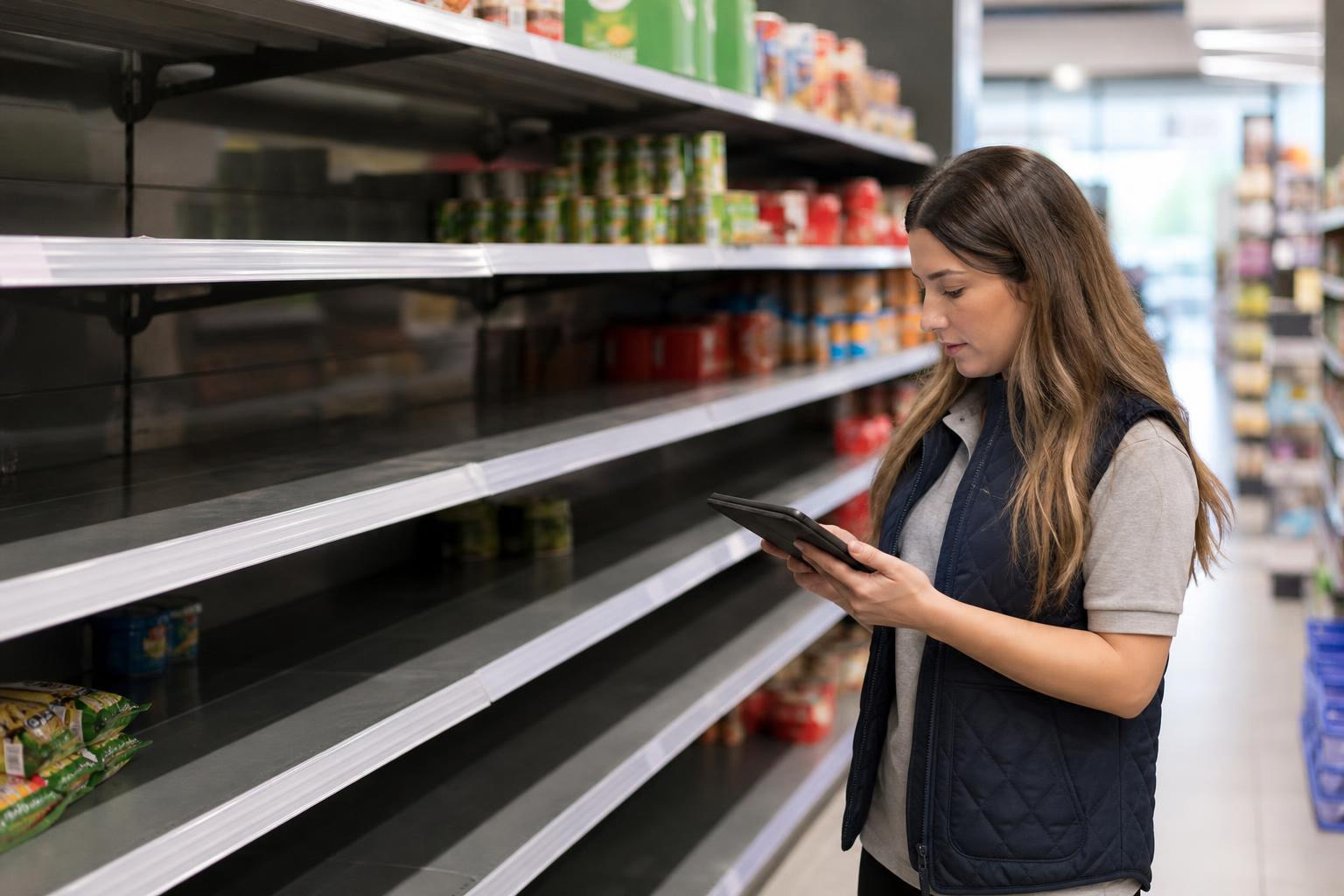
Sampling creates buyers, and buyers need somewhere to buy. If your product isn’t on shelves in the stores where you’re sampling, or if distribution is thin, you’ve spent money making people want the product and then sent them to discover it doesn’t exist where they shop. That intent evaporates.
The scale of in-store availability problems is worse than most brand managers realise. Up to 30% of products can be missing or incorrectly merchandised in-store at any given time. Out-of-stocks can reduce sales by 30–50% immediately, and poor shelf placement can cut sales by 20% or more.
What this costs: The entire sampling investment, plus the opportunity cost of the demand you created but couldn’t convert. Even worse, some of those consumers will try a competitor product instead.
The fix: Pair sampling campaigns with in-store compliance checks to verify availability before, during, and after the campaign. For a step-by-step process, our retail distribution audit checklist covers what to check and when.
7. Non-Compliance with UK Regulations (ASA/CMA/DMCCA)
Best described as: The regulatory mistake that can invalidate your entire programme.
This is a UK-specific sampling campaign mistake FMCG brands need to take seriously, particularly when sampling is tied to review generation. The Digital Markets, Competition and Consumers Act (DMCCA) 2024 banned practices including submitting or commissioning fake reviews, concealing incentives provided for reviews, and publishing reviews in a misleading way. The CMA now has powers to enforce this through administrative proceedings, including compliance directions and significant fines.
Under Rule 3.45 of the ASA CAP Code, when reviewers have received any incentive to leave a review, that incentive must be clearly disclosed. Critically, the incentive must not be conditional on a positive review. Consumers must remain free to share their genuine experience, whether that’s five stars or two stars.
What this costs: Fines, retailer sanctions (some retailers will filter or remove non-compliant reviews), and reputational damage that’s hard to recover from.
The fix: Any sampling-for-reviews programme must disclose incentives, never suppress negative reviews, and never require positive ratings. For the full picture, our UK compliance checklist covers ASA, CMA, and retailer-specific rules.
8. Choosing the Wrong Sampling Channel for the Product
Best described as: Forcing the product into a context where it can’t win.
In-store sampling became the default because it’s familiar, retailers understand it, and a busy store feels like proof of success. But not every product performs well in an aisle demo. A skincare serum judged from one dab under fluorescent lighting. A supplement that needs three weeks of daily use. A premium coffee that tastes unremarkable from a tiny paper cup beside the milk display.
The channel needs to match the product. Compiled statistics from Zipdo show that digital sampling has a 25% higher conversion rate than physical sampling across categories, partly because digital channels can better match products to consumers and allow at-home trial under realistic conditions.
What this costs: High distribution numbers with weak conversion, creating the false impression that the product itself is the problem when actually the sampling format was wrong.
The fix: Match the channel to the product type and the trial duration it needs. Receipt-verified digital sampling suits grocery staples. In-store demos work for impulse food and drink where immediate taste is the decision driver. At-home sampling suits anything that needs repeated use. For a deeper comparison, see our guide to in-store vs. digital sampling.
9. Overspending on Venue or Creative Instead of Reach
Best described as: Winning the Instagram photo, losing the P&L.
A dog treat brand might be tempted to sample at a prestigious dog show. The brand activation looks fantastic. The photos are beautiful. But the high fixed cost of the venue, the stand, the branded booth, and the staffing reduces the number of samples the budget can actually distribute. Reach shrinks while cost per trial balloons.
The same applies to over-engineering the creative. With sampling, the product itself is the message. A 10-minute interactive experience, a virtual reality headset, or an elaborate game mechanic might generate social buzz, but if the goal is trial leading to purchase, none of that matters as much as getting the product into the right person’s hands.
What this costs: Fewer samples per pound spent. Lower overall reach. A beautiful activation deck that masks mediocre commercial results.
The fix: Let the product speak. Allocate the majority of the budget to sample quantity and targeting quality, not venue hire and production design. The creative should support the product, not compete with it for attention.
10. One-Off Sampling Spikes Instead of Sustained Campaigns
Best described as: Treating sampling as an event when it should be an always-on function.
Most FMCG brands run sampling as a campaign, a burst of activity tied to a launch window, a seasonal moment, or a retailer promotion. The burst generates a cluster of trials, maybe some reviews, and then stops. Those reviews age. The momentum dies. Three months later, the product page looks stale.
This matters because recency is a factor in how retailer algorithms rank products. A steady flow of new reviews outperforms a one-time spike. Products with both higher ratings and recent review volume are more likely to rank higher in retailer search, get included in retailer media and promotions, and survive range reviews.
What this costs: Diminishing returns on a campaign that could have delivered compounding value if sustained over time.
The fix: Shift from campaign-based sampling to always-on sampling. Even a modest, continuous programme that generates a handful of new reviews each week will outperform a single burst that produces 50 reviews in one month and then nothing for the rest of the year. For the mechanics of maintaining review freshness, read our guide on improving review velocity.
How to Build a Sampling Campaign That Actually Converts
Avoiding these 10 FMCG sampling campaign mistakes isn’t complicated, but it does require treating sampling as a measurable commercial programme rather than a brand-building exercise.
Here’s the summary checklist:
- Target verified shoppers, not just high-footfall venues
- Build the next step (review, coupon, survey) into every sampling touchpoint
- Define conversion KPIs before a single sample goes out
- Only sample products you’re confident about
- Connect sampling to review generation on actual retailer product pages
- Verify shelf availability before, during, and after the campaign
- Follow UK compliance rules for incentivised reviews (ASA CAP Code, DMCCA 2024)
- Match the channel to the product’s trial requirements
- Prioritise reach over venue spectacle
- Run sustained programmes, not one-off bursts
The brands that get this right turn sampling from a cost centre into a flywheel that feeds trial, reviews, retailer search ranking, and repeat purchase simultaneously.
Explore Brand Allies’ promotions and activation services to see how these principles work in practice across UK grocery and health-and-beauty retailers.
Frequently Asked Questions
What is a good sample-to-purchase conversion rate for FMCG?
For established FMCG brands, a good conversion rate is 15–25%. New product launches typically see 8–15%. If your campaign is significantly below these benchmarks, one or more of the mistakes in this article is likely the cause.
How many product reviews can a sampling campaign generate?
When sampling is designed around review collection, conversion rates are high. Bazaarvoice has reported getting roughly 45 reviews for every 50 samples sent. The key is building the review prompt into the sampling journey rather than hoping consumers leave reviews unprompted.
Is it legal to give free samples in exchange for reviews in the UK?
Yes, but with strict conditions. Under the DMCCA 2024 and ASA CAP Code Rule 3.45, any incentive must be disclosed, the review cannot be conditional on a positive rating, and negative reviews must not be suppressed. Our UK compliance guide covers the specific rules.
Should FMCG brands use in-store or digital sampling?
It depends on the product. In-store demos work well for impulse food and drink where immediate taste drives the decision. Digital and at-home sampling works better for products that need repeated use (supplements, skincare, cleaning products) or where targeting precision matters more than volume.
How do you measure the ROI of a sampling campaign?
Track sample-to-purchase conversion rate, review generation rate, coupon redemption rate, incremental sales lift in sampled stores vs. control stores, and retailer search ranking changes. Distribution volume alone is not an ROI metric.
Why do so many FMCG sampling campaigns fail?
The most common reasons are targeting the wrong consumers (freebie-hunters), having no follow-up mechanism, treating distribution as the goal rather than conversion, and failing to verify that the product is actually available on shelves where consumers will look for it. These are all fixable problems.
How often should FMCG brands run sampling campaigns?
Always-on sampling programmes outperform one-off bursts because they maintain review recency, which affects retailer search ranking and inclusion in retailer promotions. Even a modest continuous programme delivers better long-term results than a single large campaign.
What’s the biggest sampling campaign mistake FMCG brands overlook?
Ignoring the review generation opportunity. Most brands think about sampling only as trial leading to purchase. But sampling is also the fastest route to building review volume on retailer product pages, where the average organic review rate is just 0.1–0.3%. That makes structured sampling-for-reviews one of the highest-ROI activities an FMCG brand can run.